Executive Summary: A Strategic Defense of Northern Peru
In a proactive effort to fortify northern Peru against the looming threat of the El Niño phenomenon, the Ministry of Defense (Mindef) has launched a large-scale engineering operation along the Piura River. The primary objective is the massive extraction of over 1.8 million cubic meters of sediment. By clearing the riverbed in seven critical zones spanning 15.5 kilometers—specifically between the Independencia and Bolognesi bridges—the Peruvian Army aims to increase the hydraulic capacity of the river, thereby mitigating the risk of catastrophic flooding that has historically devastated the region.
This intervention is not merely a logistical task; it is a strategic defense maneuver designed to protect the lives of over 16,000 citizens, safeguard approximately 8,000 homes, and preserve 400 hectares of vital agricultural land. As the country prepares for potential climate-induced disasters, this mobilization represents one of the most significant preventative engineering projects undertaken by the Army in recent years.
Chronology of Intervention: Deploying the Engineering Battalions
The deployment is the result of months of hydrological studies and vulnerability assessments conducted by the Comando de Apoyo al Desarrollo Nacional del Ejército del Perú (COADNE).
- Phase I: Strategic Mobilization: The operation began with the tactical deployment of specialized engineering units. Recognizing the scale of the sediment buildup, the Ministry of Defense ordered the integration of four distinct battalions: the 51st and 211th Combat Engineering Battalions (based in Sullana and Tumbes) and the 116th Jungle Combat and 1st Construction Battalions (based in Amazonas).
- Phase II: Site Preparation and Logistics: Prior to the arrival of heavy machinery, engineers mapped the seven identified "critical points" along the 15.5-kilometer stretch. The logistical challenge involved moving heavy equipment through rural terrain to ensure that the work could proceed simultaneously across all zones.
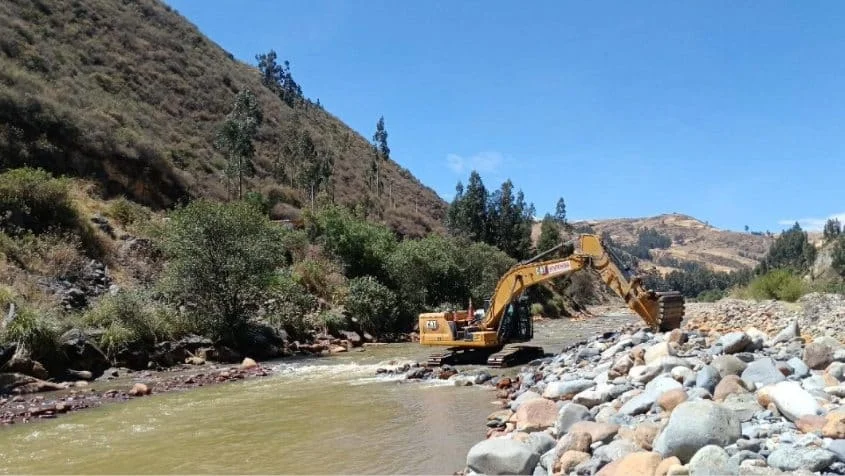
- Phase III: Active Extraction: Currently, the operation is in its most intensive phase. The project utilizes a fleet of three caterpillar tractors, three excavators, three front loaders, and five heavy-duty dump trucks. These units work in a synchronized loop to dredge, move, and transport sediment away from the river’s path, effectively deepening the channel to allow for greater water flow during potential heavy rains.
Technical Data and Capacity: The Mechanics of Mitigation
To understand the gravity of the work, one must look at the technical specifications of the project. The removal of 1.8 million cubic meters of material is an engineering feat of immense proportions. To put this into perspective, this volume is equivalent to filling hundreds of Olympic-sized swimming pools with alluvial deposits that have choked the Piura River for years.

The Inventory of Response
The Army has deployed a specialized mechanical response force to ensure the project meets its deadlines before the anticipated peak of the El Niño season. The key assets currently operational include:
- Earthmoving Assets: Caterpillar tractors and excavators tasked with breaking down compacted sediment banks.
- Logistical Support: Front loaders and high-capacity dump trucks operating in continuous shifts to clear the riverbanks.
- Human Capital: Specialized personnel trained not only in construction but in emergency hydraulics, capable of assessing river behavior under stress.
The strategic importance of the Piura River cannot be overstated. As a vital artery for the region’s economy, its overflow has historically resulted in the isolation of towns, the destruction of irrigation systems, and the loss of entire harvest seasons. By maintaining the integrity of the riverbed, the Ministry is essentially creating a buffer zone between the water and the populated urban centers.
Official Responses and Strategic Vision
The Minister of Defense, Rafael Belaunde Llosa, has framed this operation as the cornerstone of a broader, national strategy for climate resilience. Under his directive, the COADNE has transitioned from a reactive posture to a proactive, "preventative-first" model.
"The goal is to move beyond the traditional cycle of emergency response and transition toward long-term mitigation," a Ministry spokesperson noted. "By building resilience into our infrastructure now, we are saving billions of soles in potential reconstruction costs and, more importantly, we are preserving the social fabric of our communities."

This strategy extends far beyond Piura. The Army currently maintains a nationwide force structure consisting of 22 Engineering Battalions and 219 immediate-response mechanical teams. These teams are pre-positioned to act as a "rapid response force" for natural disasters, capable of clearing debris, rebuilding damaged bridges, and restoring transport connectivity within hours of an incident.
Implications: A Model for National Resilience
The intervention in Piura serves as a pilot for similar operations across the country. Simultaneous to the work in the north, military contingents are engaged in preventive cleaning and desilting operations in regions like Ancash, where 2.3 kilometers of rivers and creeks have already been cleared.
Social and Economic Impact
- Urban Protection: The 16,414 residents living in the immediate vicinity of the intervention zone are the direct beneficiaries. For these families, the work represents a tangible reduction in the anxiety that accompanies the rainy season.
- Agricultural Security: With 400 hectares of land protected, the local economy—heavily dependent on agriculture—is shielded from the catastrophic loss of crops. This stability prevents local price spikes and ensures food security for the region.
- National Preparedness: The success of the Piura project provides a roadmap for the government to manage the vulnerability of the central and northern highlands. Future plans include the expansion of these activities into the Canta and Santa Eulalia corridors, areas frequently prone to landslides and river surges.
Challenges and Future Outlook
Despite the success of the current deployment, the challenge of climate change in Peru is persistent. The sediment accumulation in the Piura River is a recurring issue driven by the geography of the Andes and the intensity of El Niño-related precipitation.
Experts from the Ministry of Defense emphasize that while the current dredging operation is essential for short-term safety, it must be paired with long-term infrastructure projects, such as the construction of permanent dikes and the implementation of sophisticated flood-warning systems. The Army’s current deployment is a bridge—a way to ensure that while the country plans its permanent infrastructure, its citizens remain safe from the immediate threats of the coming season.

Conclusion: A Disciplined Approach to Climate Risks
The Peruvian Army’s role in this operation highlights the versatility of the armed forces in a modern context. By leveraging their engineering expertise and logistical capabilities, they are fulfilling a crucial humanitarian mandate. As the clouds gather over the Pacific and the indicators of El Niño become more pronounced, the work being done on the banks of the Piura River stands as a testament to the country’s resolve. Through careful planning, heavy-duty engineering, and a unified command structure, Peru is demonstrating that it is no longer waiting for disaster to strike—it is actively reshaping its landscape to survive it.
The ongoing efforts in Piura are a stark reminder of the intersection between military discipline and national development. By clearing the path for the water, the Army is clearing the path for a safer, more resilient future for all Peruvians. As the machinery continues to roar along the banks, the message to the nation is clear: the defense of the country is as much about protecting the soil as it is about securing the border.