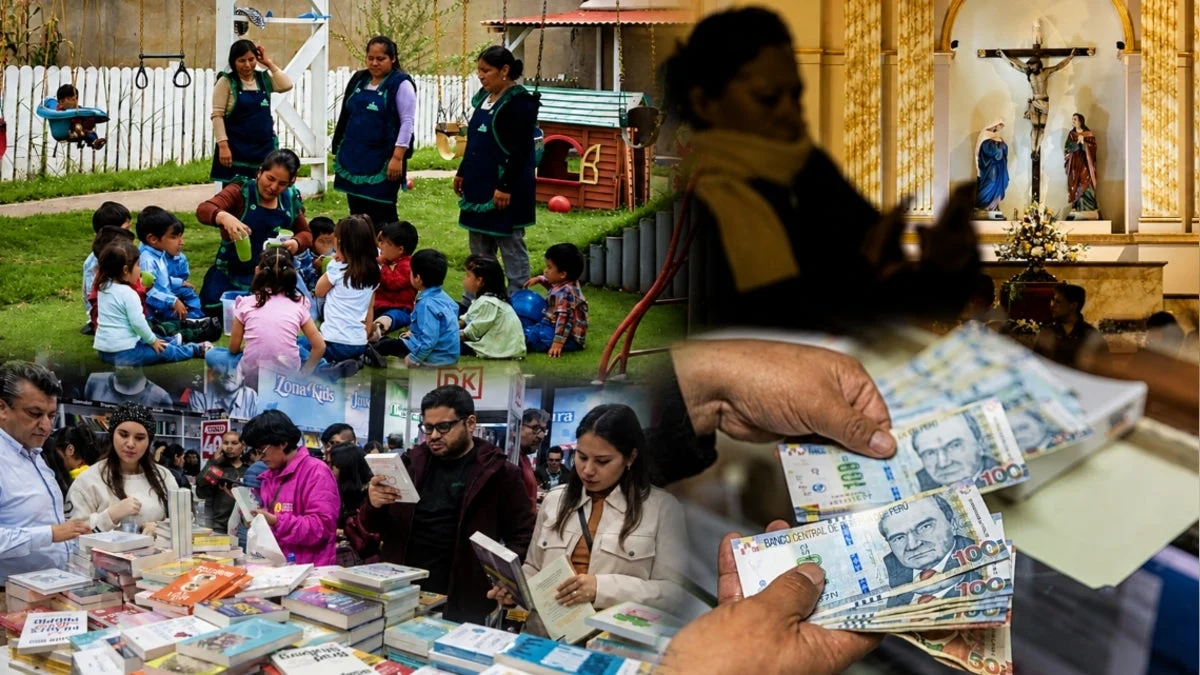
As the 2026 fiscal year draws to a close, the Peruvian government finds itself at a critical juncture regarding its tax policy landscape. With 13 distinct tax benefits—ranging from interest on savings accounts to incentives for the publishing industry—scheduled to expire, policymakers are under pressure to determine which of these measures still serve the public interest and which have outlived their utility. This legislative expiration carries a potential fiscal impact of S/848 million, a figure that has sparked a national debate over economic equity, social responsibility, and the efficiency of state spending.
The Landscape of Expiring Benefits
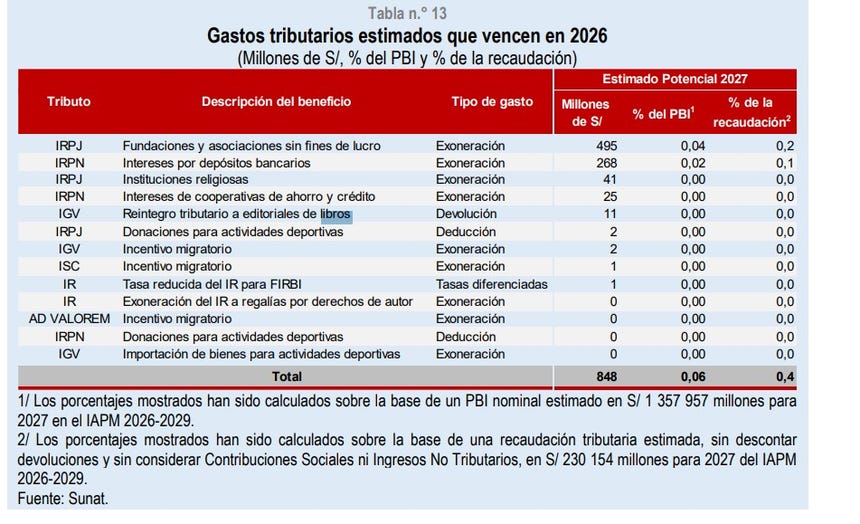
The expiration of these 13 tax benefits is not merely a bureaucratic deadline; it is a moment of reckoning for the Ministry of Economy and Finance (MEF). According to official projections, if these measures were to be extended into 2027, the "fiscal cost"—the amount the government foregoes in potential tax revenue—would reach S/848 million. While this represents a modest 0.06% of the national Gross Domestic Product (GDP), it is a significant portion of a broader, more complex tax expenditure landscape that, according to the tax authority (SUNAT), will reach over S/27 billion in 2027.
The concentration of these benefits is striking. Nearly 90% of the total value of these expiring exemptions is tied to just two sectors: non-profit entities and interest earned on bank savings.
1. Non-Profit Organizations: Social Pillars or Fiscal Holes?
The largest of these items is the exemption from Income Tax for foundations and non-profit associations, which accounts for a staggering S/495 million in potential fiscal cost. Tax experts like Miguel Carrillo emphasize that these entities are fundamentally different from commercial enterprises. Their primary mandate is not to generate profits for shareholders, but to funnel resources into education, healthcare, and social assistance.
"The fundamental objective of these entities is to complement the state’s efforts," Carrillo notes. "Everything they generate must be reinvested into their core mission, which often involves filling the gaps where public services fall short."
2. The Savings Account Exemption
The second major benefit concerns the interest earned on personal savings accounts. Currently, these earnings are largely shielded from income tax. While there has been public anxiety regarding a potential "tax on savings," the MEF has officially dismissed plans to impose a new levy, aiming to maintain stability in the financial system. The preservation of this benefit carries an estimated cost of S/268 million, representing a delicate balance between encouraging domestic savings and maintaining tax collection targets.
Beyond the Big Two: Culture, Religion, and Sport
While the bulk of the fiscal cost is concentrated in two areas, the remaining 10% of expiring benefits covers a diverse array of sectors that reflect the complex social fabric of Peru.
- The Publishing Industry: The government currently provides a tax reimbursement mechanism for book publishers to offset the costs of production and commercialization. This S/11 million incentive is viewed by many as a vital lifeline for the national literary and educational sector.
- Religious Institutions: These organizations account for S/41 million in fiscal benefits, a legacy of long-standing arrangements that recognize their role in social cohesion.
- Cooperatives: Interest generated by savings and credit cooperatives, which play a crucial role in financial inclusion for lower-income segments, benefits from a S/25 million exemption.
- Sporting Initiatives: Small but symbolically significant, deductions for donations to sports activities represent S/2 million in tax incentives aimed at fostering athletic development.
The Mechanics of Renewal: How the Process Works
For these benefits to continue into 2027, the legislative clock is ticking. Under Peruvian tax law, an exemption cannot simply be extended by administrative decree; it requires explicit legislative action.
The Role of Congress
According to legal experts, there are two primary paths for renewal. The most likely path is the introduction and approval of a law by the Congress of the Republic. Alternatively, the Executive branch could request special legislative powers to decree these extensions, though this is often a point of political friction.
"Any tax exemption is essentially a legislative extension," explains Carrillo. "For these benefits to remain valid past December 31, 2026, a law must be passed before that date."
Historical Precedents
The political volatility of Peru adds a layer of uncertainty to this process. Observers often point to the late-term extensions of cultural subsidies, which have historically been finalized just days before expiration. The 2026 cycle is expected to follow this pattern, where intensive lobbying and legislative maneuvering will likely push the decision to the final weeks of the year.
Economic Implications and the "Cost-Benefit" Mandate
The debate over these expirations is fueled by the stringent requirements set out in the Preliminary Title of the Tax Code. This code dictates that any proposal to grant or extend a tax benefit must be accompanied by a thorough "exposé des motifs" and a technical analysis of its impact.
The Need for Rigor
Minister of Economy and Finance, Elmer Cuba, has been vocal about his intention to clean up the tax expenditure system. The goal is to move away from "blanket" exemptions and toward evidence-based policy.
"We must perform a cost-benefit analysis," says Carrillo. "The state needs to quantify exactly how much it is losing in revenue and, more importantly, whether that loss is justified by a tangible social or economic gain."
The Amazon and Agro-Export Paradox
The discussion surrounding these 13 measures is part of a larger, more aggressive review of the Peruvian tax system. The government is currently under pressure from international bodies like the OECD to re-examine long-standing incentives. For instance, while the IGV exemption in the Amazon is designed to lower costs in a geographically challenged region, critics argue that the benefits are often captured by intermediaries rather than being passed on to the consumer in the form of lower prices.

Similarly, the 2025 Agrarian Law—which reduced the income tax rate for major agro-exporters—is already facing scrutiny. With the sector showing significant growth, there is a growing consensus among some legislators that the "infant industry" argument no longer applies, and that the state is forfeiting millions that could be redirected to public infrastructure.
Conclusion: A Balancing Act for 2027
As 2026 draws to a close, the government faces a binary choice: either streamline the tax code by eliminating ineffective exemptions or opt for a "business-as-usual" approach that preserves the status quo.
The S/848 million at stake is more than just a number; it is a reflection of the state’s priorities. The decision-making process will require a delicate balancing act—ensuring that non-profit social programs and the financial stability of the middle class are protected, while simultaneously ensuring that the Peruvian tax system does not continue to subsidize sectors that no longer require state support.
Ultimately, the resolution of these 13 points will set the tone for fiscal policy in 2027. Whether through a last-minute legislative sprint or a carefully planned series of reforms, the outcome will signal whether Peru is prepared to transition toward a more transparent, efficient, and equitable tax framework. For now, the stakeholders—from non-profits and cooperatives to the banking sector and the general public—remain in a state of watchful waiting, as the legislature holds the keys to the upcoming fiscal year.