The landscape of PC gaming is undergoing a seismic shift, one where hardware limitations are increasingly being bypassed by the sheer ingenuity of artificial intelligence. At Gamescom 2026, NVIDIA took center stage to announce its most ambitious leap in graphical fidelity to date: DLSS 4.5 Ray Reconstruction. This next-generation evolution of NVIDIA’s proprietary AI upscaling technology promises to deliver hyper-realistic visuals and optimized performance without necessitating an immediate and costly hardware upgrade for current GeForce RTX users.
As the industry pushes toward ever-more complex lighting and geometry, NVIDIA’s latest iteration serves as a bridge between the high-end demands of modern engines and the accessibility required by the broader gaming community.
Main Facts: A New Era of Visual Fidelity
The core announcement at Gamescom centered on the deployment of DLSS 4.5 Ray Reconstruction, a technology that utilizes advanced neural networks to "reconstruct" game scenes in real-time. Unlike traditional denoisers that often blur fine details, Ray Reconstruction replaces them with an AI model trained on supercomputers, capable of identifying and preserving spatial data during ray-traced rendering.
The impact is immediate: sharper images, more accurate reflections, and significantly reduced ghosting artifacts in motion. The technology is launching with immediate support for 30 major titles, cementing its place as an industry standard. Key titles receiving this update include:
- Cyberpunk 2077
- Call of Duty: Black Ops 7
- Alan Wake 2
- DOOM: The Dark Ages
- Hogwarts Legacy
- Indiana Jones and the Great Circle
- Marvel’s Spider-Man 2
This is not merely a graphical filter; it is a fundamental shift in how light and shadow are calculated in virtual spaces. By offloading the burden of image reconstruction to dedicated Tensor cores, NVIDIA allows developers to push visual complexity to new heights without sacrificing the frame rates essential for competitive and immersive gameplay.
Chronology: A Trajectory of Innovation
To understand the significance of DLSS 4.5, one must look at the rapid evolution of NVIDIA’s roadmap over the last few years:
- Early 2024: NVIDIA solidifies the industry’s reliance on DLSS 3.5, introducing Ray Reconstruction to select titles. The community response confirms that AI-driven denoising is superior to traditional methods.
- Late 2025: Rumors of "RTX Mega Geometry" begin to circulate among tech enthusiasts, as developers seek ways to handle the polygon count of next-gen assets.
- August 26, 2026 (Gamescom Opening Night): NVIDIA officially unveils DLSS 4.5. The company demonstrates how it integrates seamlessly with existing RTX architectures, proving that the hardware cycle doesn’t always have to reset to see massive gains.
- September 15, 2026: Scheduled update for 007 First Light, which will introduce full ray-tracing capabilities powered by the new 4.5 architecture.
- October 6, 2026: The highly anticipated release of Gears of War: E-Day, acting as the flagship showcase for the combined power of DLSS 4.5 and the new "RTX Mega Geometry" engine.
Supporting Data: Understanding the "Reconstruction" Advantage
For the average gamer, the technical jargon of "denoising" and "neural upscaling" can be overwhelming. In simple terms, traditional ray tracing relies on casting rays into a scene and then cleaning up the "noise" (grainy pixels) that remains. This cleaning process often discards important visual information, leading to muddy shadows or blurry reflections.
DLSS 4.5 changes the equation. By using AI, the engine doesn’t just clean the noise; it uses the data from previous frames to intelligently guess what the image should look like, filling in the gaps with extreme precision.
The RTX Mega Geometry Impact
Accompanying the DLSS 4.5 launch is the introduction of RTX Mega Geometry. Debuting in Gears of War: E-Day, this tech addresses the bottleneck of rendering complex environments. Historically, rendering millions of polygons at high speeds was the exclusive domain of cinematic CGI. With Mega Geometry, NVIDIA is bringing this level of detail to interactive, real-time environments, allowing for lifelike ruins, intricate textures, and dynamic lighting that reacts instantly to player movement.
Official Responses and Developer Integration
Industry feedback has been overwhelmingly positive, with major developers highlighting how NVIDIA’s tools have streamlined their workflows.

"The integration of DLSS 4.5 allows our artists to focus on the intent of the scene rather than struggling with the limitations of hardware budgets," said a lead technical director from a major studio involved in the rollout. "We are no longer choosing between ‘beautiful’ and ‘playable’; with this technology, we can achieve both simultaneously."
NVIDIA’s official stance, communicated during the keynote, emphasizes sustainability for the consumer. "We understand that our users invest heavily in their rigs," said a spokesperson for the company. "Our goal with 4.5 is to unlock the dormant potential already sitting in their machines. If you own an RTX-series card, you aren’t just buying a piece of hardware; you are buying into a living ecosystem that gets better with every software update."
Implications: The Future of PC Gaming
The implications of this announcement are profound, affecting everything from hardware purchasing decisions to the future of cloud gaming.
The End of the "Upgrade-or-Die" Cycle
For years, the PC gaming community has feared the "hardware wall"—the moment a new game releases that forces a costly GPU upgrade. DLSS 4.5 signals a change in philosophy. By prioritizing software-led efficiency, NVIDIA is extending the lifecycle of current GPUs. While the most cutting-edge performance will always belong to the latest flagship cards, the "middle class" of gamers—those using mid-range RTX 30 and 40 series cards—will find their hardware capable of running next-gen titles for years longer than previously expected.
GeForce NOW and the Democratization of Power
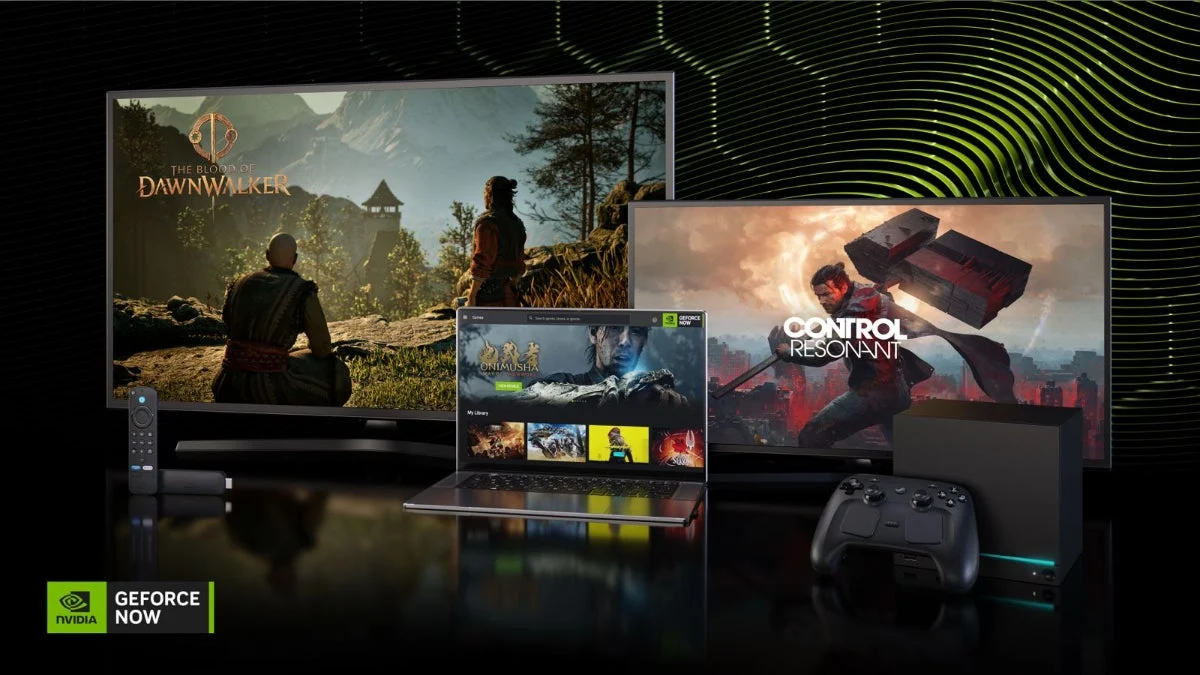
Perhaps the most significant implication lies in GeForce NOW. By bringing DLSS 4.5 to the cloud, NVIDIA is effectively decoupling high-end graphics from high-end local hardware. Players on low-spec laptops, tablets, or even the Fire TV Stick can now access games like Gears of War: E-Day and CONTROL Resonant at settings that match a high-end desktop.
This move broadens the market. Gaming is no longer gated by a $1,000+ PC investment. Instead, it is becoming a service-based experience where quality is delivered via fiber optics rather than local silicon.
Preserving Gaming History: RTX Remix
Finally, the application of this technology to classic games through RTX Remix cannot be overlooked. By retrofitting titles like The Elder Scrolls III: Morrowind and Painkiller with modern lighting, shadows, and textures, NVIDIA is curating a digital museum of gaming history. It allows veteran players to revisit their favorite worlds with a level of clarity that was only possible in their imagination two decades ago.
Conclusion: A New Baseline
As we look toward the remainder of 2026 and into 2027, the focus of the industry is shifting from pure raw power to the intelligent application of software. NVIDIA’s DLSS 4.5 is the current gold standard in this pursuit. By blending the artistic vision of game developers with the computational power of artificial intelligence, NVIDIA is ensuring that the PC gaming experience remains the most technically advanced, flexible, and immersive way to play.
Whether you are a competitive shooter fan chasing frames in Call of Duty or a narrative gamer looking to get lost in the dark, atmospheric corridors of Alan Wake 2, the message is clear: the future of your graphics card is not in the hardware you hold, but in the intelligence you download. As the software matures, we are likely to see even more impressive feats of engineering, proving that in the world of high-end gaming, the only constant is the speed of innovation.