Executive Summary: A Strategic Partnership for Public Safety
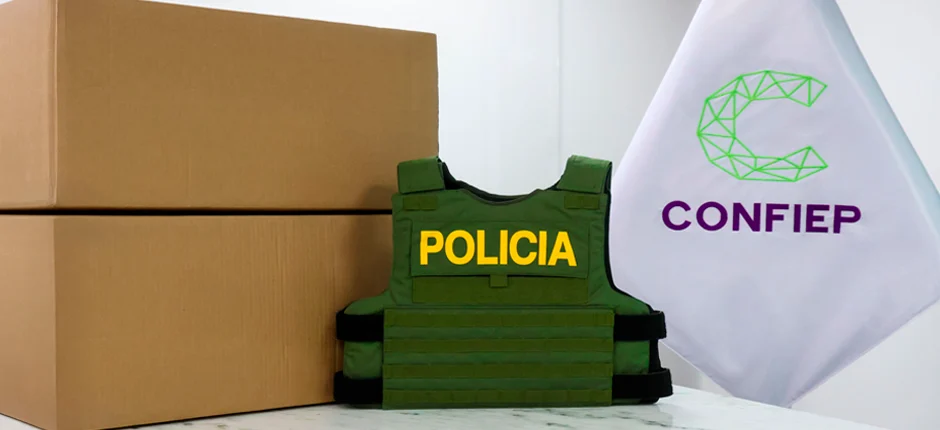
In a significant move to address the escalating challenges posed by organized crime and urban insecurity, the National Confederation of Private Business Institutions (CONFIEP) has formally delivered a substantial shipment of ballistic vests to the Peruvian National Police (PNP). This contribution, executed under the framework of a formal Interinstitutional Cooperation Agreement with the Ministry of the Interior, represents a pivotal moment in the synergy between the private sector and state security forces.
The high-grade protective gear is earmarked specifically for the personnel of the Intelligence Division of the National Directorate of Criminal Investigation (DIVIIC-DIRNIC). By equipping frontline investigators with the necessary defensive tools, the private sector aims to mitigate the physical risks faced by law enforcement officers tasked with dismantling criminal syndicates that have increasingly challenged the rule of law in Peru.
The Chronology of Commitment: A Sustained Effort
The recent delivery of ballistic vests is not an isolated incident, but rather the latest milestone in a sustained campaign of support spearheaded by CONFIEP. The timeline of this private-sector engagement reveals a deliberate strategy to bolster police efficacy through technological and material resource allocation.
Phase 1: The Foundation of Cooperation
The partnership began with the formalization of the Interinstitutional Cooperation Agreement between CONFIEP and the Ministry of the Interior. This document established the legal and operational framework that allows private entities to contribute resources toward public security goals, ensuring transparency and accountability in the transfer of equipment.
Phase 2: Strengthening Administrative Infrastructure
Before the focus shifted to tactical equipment like ballistic vests, the initial phase of the agreement focused on administrative capacity. CONFIEP facilitated the delivery of advanced computer systems and office infrastructure to the Special Group Against Organized Crime (GRECCO). Recognizing that intelligence-led policing is as much about data processing and administrative coordination as it is about boots on the ground, this initiative provided the backbone for more complex investigative operations.
Phase 3: Tactical Support and Current Operations
The current phase marks a shift toward operational safety. Recognizing the heightened danger faced by intelligence officers who operate in the shadows to track high-value criminal targets, CONFIEP has prioritized the acquisition and delivery of ballistic vests. This equipment is considered essential for the safety of personnel who operate in high-risk environments, ensuring that those leading the charge against organized crime are protected while executing their duties.
Supporting Data: Why Modernization is Critical
The urgency of this intervention is underscored by the current security landscape in Peru. Recent statistical reports indicate a surge in complex criminal activities, including extortion, human trafficking, and illicit drug trade, which require a sophisticated and well-equipped response.
The DIVIIC-DIRNIC Factor
The Intelligence Division of the DIRNIC sits at the center of Peru’s anti-crime efforts. Its mission is to map the hierarchies of criminal organizations, identify their funding streams, and predict their operational movements. Because these officers often conduct surveillance in volatile neighborhoods or interact with high-risk informants, the provision of ballistic vests is a force multiplier—not only in terms of protection but in terms of morale.
The Broad Scope of the Campaign
CONFIEP’s broader campaign extends beyond body armor. The comprehensive initiative seeks to fill critical gaps in the PNP’s logistics:
- Aerial Surveillance: The integration of tactical drones to monitor criminal hotspots that are difficult for traditional patrols to access.
- Digital Transformation: Providing high-performance computers to modernize the police’s digital investigative capabilities, allowing for faster processing of forensic data.
- Personal Protection: Ongoing procurement of ballistic materials and other specialized gear to ensure that every officer in critical units is equipped with modern, certified protective equipment.
Official Responses and Stakeholder Perspectives
The partnership has been met with positive reception from both state authorities and business leaders, who view this collaboration as a model for public-private synergy.
The Ministry of the Interior
Government officials have emphasized that the state’s resources, while substantial, often face bureaucratic hurdles that can slow the acquisition of urgent equipment. The partnership with CONFIEP allows for a more agile response. A spokesperson for the Ministry noted that the equipment provided by the business sector allows the government to reallocate budget lines toward other essential services, effectively increasing the total security investment in the country.
The Business Perspective
Leaders within CONFIEP have consistently maintained that economic development is impossible without stability. "Public security is the cornerstone of a functional economy," noted a representative during the handover ceremony. For the private sector, this investment is not viewed as a charitable donation, but as a strategic necessity. By protecting the police, the private sector is protecting the integrity of the market, the safety of their employees, and the overall stability of the national investment climate.
Implications for Public Security in Peru
The implications of this private-sector involvement are far-reaching and signal a shift in how Peru addresses its internal security challenges.
1. Enhancing Operational Continuity
When law enforcement agencies are well-equipped, the rate of successful criminal investigations increases. By providing the tools for better intelligence gathering, CONFIEP is helping the PNP move from a reactive posture to a proactive one. Increased protection for officers means fewer injuries, which in turn ensures that highly trained personnel remain on duty, maintaining the continuity of complex investigations.
2. Boosting Police Morale
The psychological impact of receiving state-of-the-art equipment cannot be overstated. When officers feel that their lives are valued by both the state and the private sector, their commitment to the mission is reinforced. This public-private partnership serves as a morale booster, signaling to the police force that they have the backing of the nation’s economic leaders.
3. A Model for Regional Security
The Peruvian approach of engaging the private sector in police logistics is increasingly being viewed as a potential model for other Latin American nations grappling with similar organized crime issues. If successful, this collaboration could pave the way for a permanent, institutionalized system of support where the private sector provides the "technology and gear" while the state provides the "personnel and intelligence," creating a robust defense against criminal encroachment.
The Future: Toward a Safer Peru
As the partnership between CONFIEP and the Ministry of the Interior continues to evolve, the focus is expected to broaden. Beyond physical equipment, there is talk of future collaborations involving training programs, cybersecurity partnerships, and technological exchanges that could further modernize the PNP.
The delivery of ballistic vests to the DIVIIC-DIRNIC is a clear statement of intent: that the private sector is no longer a passive observer of the security crisis but an active participant in the solution. While equipment alone cannot solve the deeply rooted issues of organized crime, it provides the essential foundation upon which a modern, effective, and protected police force can stand.
In conclusion, this initiative serves as a vital bridge between national interests and civic responsibility. As the Peruvian National Police continue their tireless work to maintain order, the support of the business community ensures that they are better equipped to face the challenges of the modern security landscape. The path forward remains long, but the collaborative spirit demonstrated by this partnership provides a beacon of hope for a more secure and resilient Peru. By investing in the individuals who put their lives on the line, the private sector is ultimately investing in the future of the nation itself.