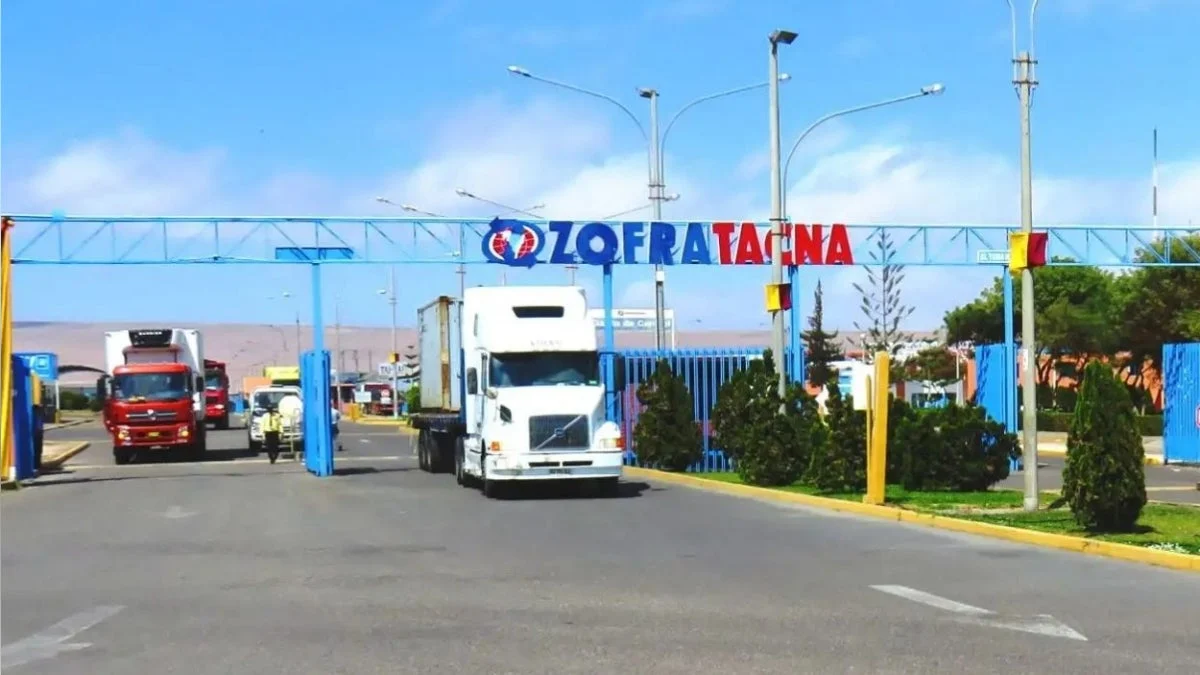
In a landmark decision aimed at revitalizing the southern economic landscape, the Peruvian government has officially authorized the entry of foreign private capital into the Zona Franca de Tacna (Zofratacna). Through a supreme decree, the state has cleared a significant legal hurdle, opening 384.6 hectares of land to international investors for industrial, agro-industrial, and service-oriented activities.
This move is not merely a bureaucratic adjustment; it represents a calculated maneuver to transform Tacna into a high-octane logistics and manufacturing hub, leveraging its unique position on the border with Chile to integrate deeper into global supply chains.
Main Facts: Unlocking the Frontier
The core of this policy is the formal declaration of "public necessity" regarding foreign private investment within the Zofratacna complex. This legal designation is critical because it bypasses the stringent restrictions imposed by Article 71 of the Peruvian Constitution. Under normal circumstances, foreign individuals or companies are prohibited from acquiring or possessing property within 50 kilometers of the national border.
By declaring these specific 384.6 hectares as a zone of public necessity, the Executive branch has authorized the administration of Zofratacna to enter into "contracts of cession in use" (right-to-use agreements) with foreign entities. It is essential to note that this is not a land sale. The Peruvian State retains full ownership of the territory, ensuring that sovereignty remains intact while providing the legal security required by international corporations to install large-scale facilities.
The available land, distributed across five strategic lots, is designed to host a variety of high-value activities:
- Industrial Manufacturing: Processing raw materials for re-export.
- Agro-industry: Adding value to agricultural products before they hit international markets.
- Maquila Operations: Assembly and finishing services that benefit from the zone’s tax-exempt status.
- Logistics and Services: Enhancing the regional supply chain efficiency between Peru and the wider South American market.
Chronology: The Road to Liberalization
The road to this decree has been paved by years of lobbying by regional stakeholders and economic planners who argued that the potential of the Tacna border was being stifled by outdated regulatory rigidity.
- Initial Planning (2020-2022): The Ministry of Foreign Trade and Tourism (Mincetur) began aligning the development of Special Economic Zones (SEZs) with the "National Multisectoral Policy for Foreign Trade 2040."
- The Security Assessment (Early 2024): A critical step in the process was securing the approval of the Joint Command of the Armed Forces. Military authorities conducted an extensive review to ensure that the influx of foreign capital would not compromise border security.
- The Approval Phase (Mid-2024): The Council of Ministers reviewed the proposal, weighing the potential economic windfall against the constitutional restrictions. The consensus was that the economic development of the southern border is, in itself, a matter of national security.
- Official Publication (Late 2024): The decree was published in the official gazette, El Peruano, marking the immediate commencement of the transition period for investors.
Supporting Data: Why Tacna?
Tacna is arguably Peru’s most vital land-based gateway to the South. As a border region, it serves as a natural bridge for trade with Chile and Bolivia. However, for decades, its potential as a manufacturing powerhouse remained dormant.
The 384.6 hectares now available are already registered with the National Superintendency of Public Registries (SUNARP), providing a transparent legal framework for investors. The region offers several inherent advantages:
- Tax Incentives: Zofratacna offers significant tax exemptions, including relief from Income Tax, General Sales Tax (IGV), and Selective Consumption Tax, provided the goods produced are destined for export or for sale in the Tacna commercial zone.
- Infrastructure Readiness: The zone is already equipped with basic utilities and is slated for further state-funded upgrades to support heavy industrial operations.
- Human Capital: Tacna boasts a growing workforce with increasing technical skills, supported by local universities and vocational training centers focused on international trade and logistics.
Official Responses and Regulatory Oversight
The government has balanced the deregulation of land access with a robust oversight mechanism. Mincetur will serve as the primary supervisory body, conducting periodic audits to ensure that the activities conducted on the land remain within the scope of the original permits.
The Ministry of Defense remains a key stakeholder. In an effort to maintain transparency, the Joint Command of the Armed Forces will perform an annual inspection of the facilities. This dual-layered oversight (economic via Mincetur and security via the military) is intended to reassure both local residents and international stakeholders that the economic opening is both responsible and sustainable.
"We are not just selling land; we are offering a partnership," a Ministry spokesperson noted during the press announcement. "The state will hold the title, the investor will hold the opportunity, and the country will hold the prosperity."
Implications: A New Era for Regional Trade
The long-term implications of this decree are profound. By integrating foreign firms into the Zofratacna ecosystem, Peru is positioning itself to be more than just an exporter of raw materials.
Boosting Regional Competitiveness
The arrival of international manufacturing firms is expected to create a "multiplier effect." For every industrial plant established, dozens of ancillary services—from legal and accounting firms to specialized maintenance and logistics companies—will be required. This will likely lower the unemployment rate in Tacna and diversify the regional economy, which has historically been overly dependent on commercial services and tourism.
Integration into Global Value Chains
The focus on "maquila" and value-added agro-industry is a direct response to the global demand for shorter, more resilient supply chains. As global companies seek to diversify their manufacturing footprints away from purely Asian-centric models, Peru’s stable legal environment and favorable trade agreements make Tacna an attractive "nearshoring" destination for the Latin American market.
Strengthening Diplomatic and Economic Ties
The proximity to Chile suggests that this initiative will foster deeper cross-border collaboration. With the potential for joint ventures between Peruvian and Chilean companies, the border could shift from a point of separation to a hub of shared industrial activity. This creates a "win-win" scenario: Chile gains access to more efficient manufacturing hubs, and Peru gains the capital and technical expertise necessary to modernize its industrial base.
Challenges Ahead
Despite the optimism, the success of this initiative will depend on execution. Infrastructure gaps, such as water supply and energy reliability in the border region, must be addressed to attract high-tier global companies. Furthermore, the administrative process for obtaining the "cession in use" contracts must remain streamlined and free from the corruption that often plagues infrastructure projects in developing nations.
Conclusion: The Path Forward
The opening of 384.6 hectares of the Zona Franca de Tacna is a bold, forward-looking policy that demonstrates the Peruvian government’s commitment to economic liberalization. By navigating the complexities of constitutional law and security requirements, the state has unlocked a strategic asset that has the potential to redefine the southern border’s economic identity.
As investors evaluate these newly available tracts of land, the focus will now shift to the quality of the incoming capital. If the government can successfully attract firms that prioritize sustainability, technological transfer, and high-quality job creation, Tacna could well become the flagship of a new era of Peruvian industrialization. The foundation is laid; now, the work of building a modern, globalized border economy begins.