The race for the Municipalidad de Lima has taken a dark and contentious turn, shifting from a contest of urban development proposals to a theater of legal threats and accusations of defamation. Carlos Bruce, the mayoral candidate representing Somos Perú, has issued a formal ultimatum to his rival, Rafael López Aliaga, demanding a public retraction regarding a controversial social media post that links Bruce to a defunct drug trafficking network dating back to the year 2000.
The dispute, which has dominated headlines and political commentary, highlights the increasingly aggressive nature of local election cycles in Peru, with candidates resorting to dredging up decades-old, unsubstantiated allegations to undermine their opponents.
The Core Conflict: A Question of Defamation and Integrity
The friction began when Rafael López Aliaga, leader of the Renovación Popular party, shared a publication on his official channels alleging that Carlos Bruce was involved in a drug trafficking scheme at the turn of the millennium. The post cites a supposed "declassified report" purportedly authored by a DEA special agent, which claims that the export firm "Unixa"—a company in which Bruce held shares alongside his brother—was utilized as a front for shipping cocaine from the Port of Callao to Italy.
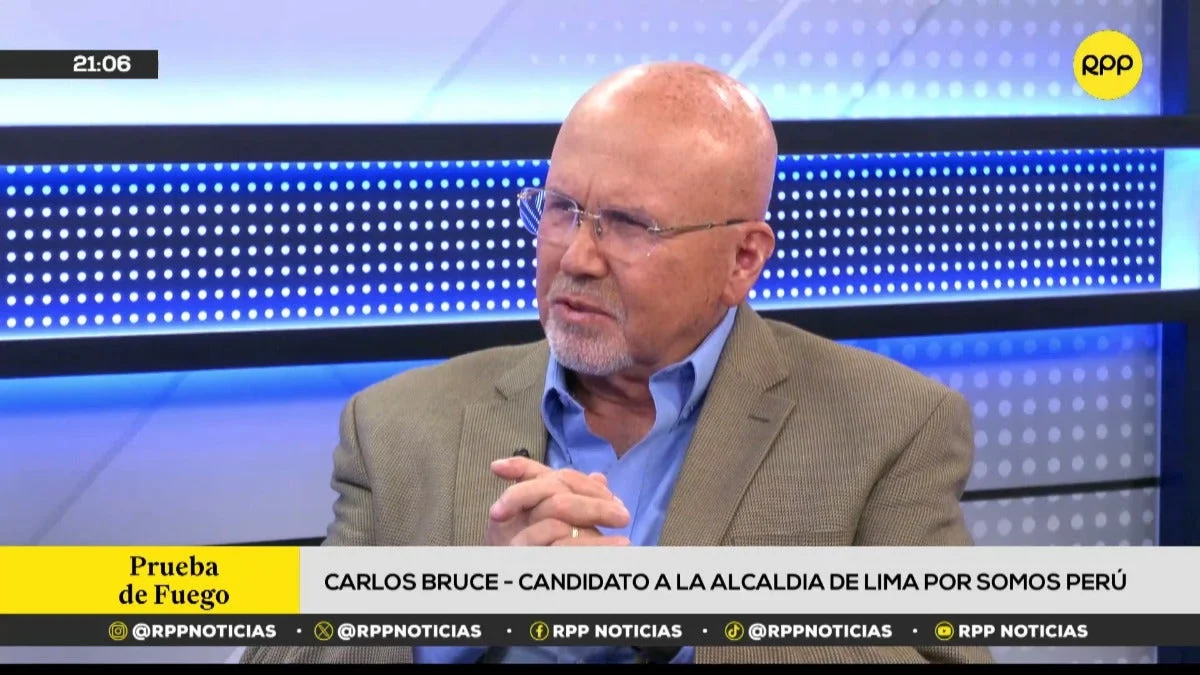
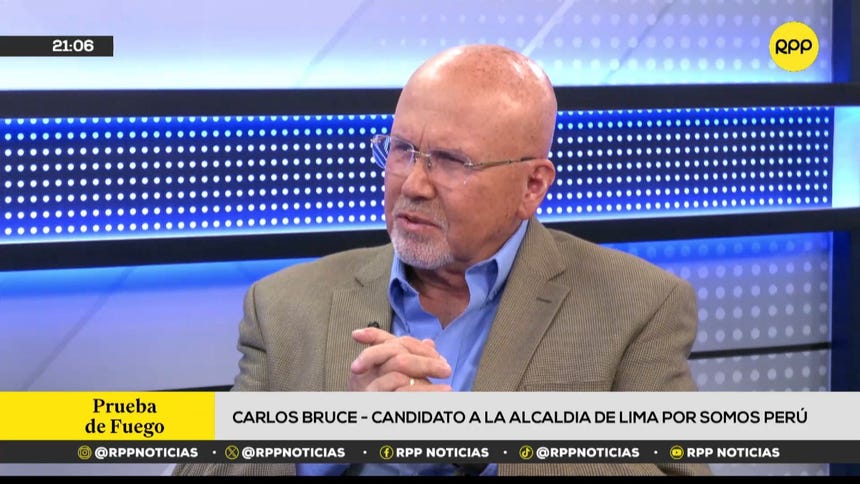
During an interview on RPP’s Prueba de Fuego, an visibly frustrated Carlos Bruce described the allegations as "burdo" (crude) and reminiscent of the darkest days of the Alberto Fujimori and Vladimiro Montesinos era. Bruce, a seasoned politician, emphasized that the lack of any fiscal records, police investigations, or judicial processes at the time proves the accusation is a fabricated smear campaign.
"It is pathetic that a campaign, which should be defined by its proposals and vision for the city, descends into such crude montages," Bruce stated. "López Aliaga is significantly degrading the political debate in this country. Those of us who have witnessed and participated in the national trajectory know how detrimental it is to the country when politics becomes a platform for such ad hominem attacks."
A Chronology of the Allegations and the Legal Ultimatum
The timeline of this confrontation underscores the rapid escalation from political mudslinging to potential litigation:
- Year 2000: The timeframe of the alleged illicit activities. At the time, Carlos Bruce served as the president of the Association of Exporters (ADEX). He was a vocal critic of the government’s economic policies, specifically regarding the exchange rate.
- Late August 2026: Rafael López Aliaga shares a publication referencing the alleged DEA report.
- August 28, 2026: Carlos Bruce confirms that his legal counsel has issued a formal letter to López Aliaga, demanding a public retraction.
- The Ultimatum: Bruce has made it clear: if the retraction is not issued, a formal criminal complaint (querella) for defamation will be filed, potentially setting the stage for a protracted courtroom battle in the heat of the campaign.
The Defense: Refuting the "Montesinos" Narrative
In defending his record, Bruce provided context that he believes makes the accusation logically impossible. During the year 2000, Bruce was a prominent public figure in the business community and an outspoken critic of the ruling administration.
"In that era, I was the president of ADEX and a firm opponent of the government on economic fronts. Do you honestly think someone openly criticizing the government would be involved in such a high-stakes criminal operation?" Bruce asked rhetorically. "Under the Montesinos regime, if you were a political target, they would destroy you. Your ‘cases’ would be fabricated and leaked to the press immediately. The fact that there was no fiscal file and no police investigation back then is proof that this is a modern-day montage."
Bruce’s argument relies on the premise that if such evidence had existed against him during the Fujimori-Montesinos administration, the intelligence services—notorious for their surveillance of political opponents—would have used it to neutralize him instantly. The absence of any contemporary action, he argues, confirms the current claims are a retrospective fabrication.
The Broader Implications for the Lima Mayoral Election
Beyond the personal conflict, this incident raises critical questions about the quality of the electoral process in Lima. The diversion of public discourse away from pressing urban issues—such as public safety, infrastructure, and public transport—toward personal attacks threatens to alienate voters.
The Debate Participation Debate
Despite the hostility between the two camps, Carlos Bruce has maintained a surprising position regarding his opponent’s participation in upcoming municipal debates. While he finds López Aliaga’s campaign tactics reprehensible, he believes the candidate should still be allowed to face his peers on the debate stage.
"He is effectively running for mayor, and the people of Lima deserve the right to contrast the positions of everyone who intends to lead this city for the next four years," Bruce noted. He further argued that if the National Jury of Elections (JNE) were to disqualify López Aliaga on technical grounds, the entire process would be "stained from the start."
This stance underscores a strategic calculation: Bruce likely prefers to dismantle his opponent’s credibility through open public debate and by exposing the fallacies of his claims, rather than relying on electoral technicalities that might garner sympathy for his rival.
Political Analysis: The Strategy of "Dirty" Campaigning
Political analysts suggest that the strategy employed by the López Aliaga camp is designed to create doubt in the minds of undecided voters. By circulating "leaked" or "declassified" documents—regardless of their authenticity—the intent is to generate a headline that sticks, even if it is later proven false.
The use of international entities, such as the DEA, adds a layer of perceived legitimacy to these accusations. In the context of Peruvian politics, where corruption scandals are frequent, allegations involving international drug cartels carry significant weight. However, as Bruce points out, the burden of proof rests on the accuser, and the lack of a judicial trail is a significant hurdle for those leveling the charges.
The Path Forward: Legal and Electoral Consequences
As the campaign progresses, the legal threat issued by Bruce remains a looming shadow over López Aliaga’s candidacy. If a querella is filed, it could result in:
- Public Scrutiny of Evidence: The legal process would force a formal investigation into the source of the "DEA report," potentially exposing those who manufactured or disseminated the content.
- Impact on Polls: Historical trends in Peruvian politics suggest that voters often react negatively to candidates who focus on personal destruction rather than policy. Whether this benefits or harms the parties involved will be determined in the coming weeks.
- Media Accountability: The episode also raises questions about the responsibility of social media platforms and the candidates who use them to amplify unverified, potentially defamatory content.
Conclusion: A City at a Crossroads
The confrontation between Carlos Bruce and Rafael López Aliaga is symptomatic of a larger malaise in Peruvian democratic discourse. When the path to the Mayor’s office in the capital city is paved with accusations of drug trafficking and comparisons to dictatorial regimes, the democratic process itself becomes the casualty.
For the citizens of Lima, the priority remains the resolution of the city’s systemic problems. Whether the electorate will reward or punish the protagonists of this "montage" drama remains to be seen. What is clear, however, is that the legal repercussions of this dispute will likely echo well beyond the election day, shaping the professional reputations of both men for years to come.
As the JNE prepares for the upcoming debates, the focus will undoubtedly remain on whether the candidates can pivot back to the substantive issues that define the quality of life for millions of Limeños, or if they will continue to feed the cycle of hostility that currently characterizes the race.