By Editorial Staff, Peru Construye
In a significant stride toward modernizing the logistical backbone of Chile’s central region, the "Conexión Vial COVI Ruta 78 – Ruta 68" project has officially surpassed the 20% completion mark. This ambitious mega-infrastructure initiative, designed to bridge the gap between two of the country’s most vital transport arteries, represents a paradigm shift in how goods and commuters will navigate the Santiago metropolitan area. With a total investment of $262 million, the project is not merely an engineering feat but a strategic cornerstone for Chile’s international trade competitiveness.
Main Facts: A Gateway to Global Markets
The COVI project is a 9.4-kilometer high-standard highway corridor that serves as the critical "missing link" in the logistical chain of central Chile. By connecting the Ruta 78 (Autopista del Sol) with the Ruta 68 (Autopista Santiago-Valparaíso), the project addresses one of the most significant bottlenecks in the Santiago transport network.
The primary objective of this highway is to streamline the transit of heavy cargo destined for the ports of San Antonio and Valparaíso. Currently, freight vehicles face congested urban routes that increase transit times, fuel consumption, and operational costs. By providing a dedicated, high-speed connection, the project aims to reduce travel times between the municipalities of Maipú and Pudahuel from an arduous 40-minute journey to a mere five minutes.
The technical specifications of the highway include:

- Infrastructure: Dual lanes in both directions, designed to accommodate high-volume heavy-duty vehicle traffic.
- Engineering Works: The inclusion of complex interchanges, reinforced bridges, and modern overpasses to ensure continuous traffic flow.
- Urban Integration: A holistic design that incorporates dedicated bicycle lanes and widened pedestrian walkways, ensuring the highway serves as an asset to local communities rather than a barrier.
Chronology of Development
The realization of the COVI project is the culmination of years of rigorous planning and environmental impact assessments.
- Initial Planning (2020–2022): The project underwent extensive feasibility studies to evaluate the best route to minimize environmental impact while maximizing connectivity between the major port-bound highways.
- Contracting and Mobilization (2023): The tender process concluded with the awarding of the construction contract, followed by the initial clearing of rights-of-way and the relocation of critical urban utilities.
- Groundbreaking (Early 2024): Formal construction activities commenced, marked by the mobilization of heavy machinery and the establishment of base camps.
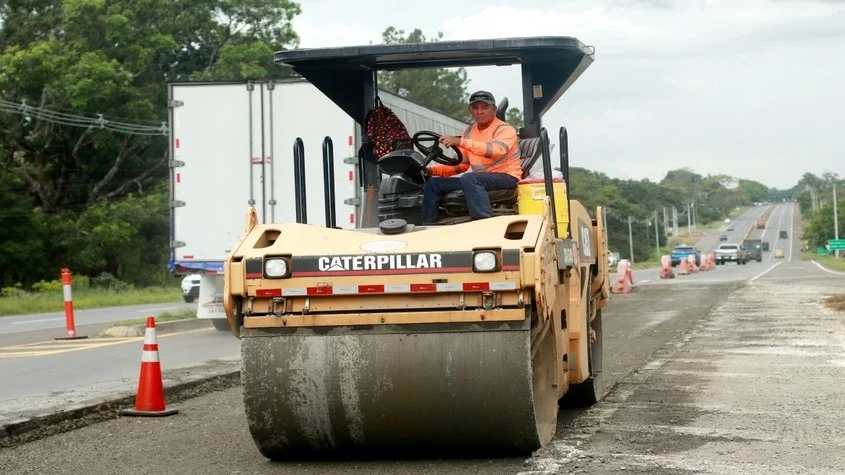
- The 20% Milestone (Mid-2026): Current reports confirm that the structural phase is well underway. Foundations for bridges are being cast, and the primary roadbed for the first sections is nearing completion.
- Future Outlook: The project is currently on track to enter its peak construction phase by late 2026, with full operational status anticipated as per the original project timeline.
Supporting Data: Economic and Logistical Impact
The economic implications of the COVI highway are profound. Chile, an export-oriented economy, relies heavily on its port infrastructure. The port of San Antonio, in particular, handles a significant portion of the country’s containerized cargo.
Employment Generation
During the height of its construction cycle, the project is estimated to create upwards of 1,000 simultaneous jobs. This employment spike is not limited to civil engineers and machinery operators; it spans a broad spectrum of the construction industry, including materials logistics, environmental management, safety coordination, and administrative support.
Logistics Efficiency
The reduction in transit time from 40 to five minutes for heavy-duty trucks translates into massive gains in efficiency. For logistics companies, this reduction lowers the "cost-per-trip" significantly, allowing for more frequent port rotations and improved inventory turnover for exporters. By diverting heavy traffic away from residential streets and secondary roads, the project also reduces the carbon footprint associated with idling vehicles and frequent stop-start cycles in congested zones.
Official Responses and Perspectives
Government officials and industry leaders have lauded the project as a benchmark for future infrastructure development. During a recent site inspection, representatives from the Ministry of Public Works emphasized the "urban-social" approach taken in the design.

"This is not just a road for trucks," noted one project spokesperson. "It is an investment in the quality of life for the residents of Maipú and Pudahuel. By integrating pedestrian walkways and cycling infrastructure into the design, we are ensuring that the development serves the people living around the highway, not just the cargo moving through it."
Furthermore, industry experts have pointed out that the 20% progress milestone is a critical indicator of the project’s financial and logistical health. "Maintaining this pace in the face of current global supply chain fluctuations speaks to the robust planning and the high technical competence of the consortium involved," said a lead consultant for the regional transport authority.
Implications: A Sustainable Future
The COVI project represents a shift in philosophy for Chilean infrastructure. It acknowledges that in a rapidly urbanizing environment, traditional highway designs are no longer sufficient.
Environmental and Urban Impact
The incorporation of green spaces and improved public utility zones along the highway’s perimeter acts as a mitigation strategy for the noise and visual impact typical of large-scale road projects. This approach ensures that the surrounding neighborhoods maintain their property values and environmental quality, a key requirement for modern public works projects that seek to gain community approval.
Long-term Regional Competitiveness
Looking ahead, the connection between the Ruta 78 and Ruta 68 is expected to be a magnet for logistical investment. The area surrounding the new highway is likely to see the development of new distribution centers, warehouses, and logistics hubs. This concentration of activity will create a "logistics cluster," further cementing Chile’s position as a regional leader in maritime trade connectivity.

As the project enters the next phase of construction, all eyes will remain on the progress of the major interchanges. These structures represent the most challenging aspects of the build, requiring precision engineering to minimize disruption to existing traffic flows.
In conclusion, the "Conexión Vial COVI Ruta 78 – Ruta 68" is far more than a simple road project. It is a strategic intervention that addresses the immediate need for efficient goods transport while setting a new standard for how major infrastructure should interact with the urban fabric. With a 20% completion rate, the project serves as a beacon of progress for the Chilean construction sector, promising a more efficient, safer, and more connected future for the nation’s central logistics corridor.
For more information on ongoing infrastructure projects in the region, keep following Peru Construye via our WhatsApp newsletter or subscribe to our weekly industry update.