Introduction
The Amazon basin, a cornerstone of global climate stability and biodiversity, is facing a transformative crisis. In the Peruvian region of Ucayali, the intersection of industrial agricultural expansion and illicit crop cultivation has created a complex web of economic, social, and environmental instability. As global demand for commodities clashes with the territorial rights of Indigenous peoples, a critical question emerges: Who holds the reins of power, and where is the money flowing?
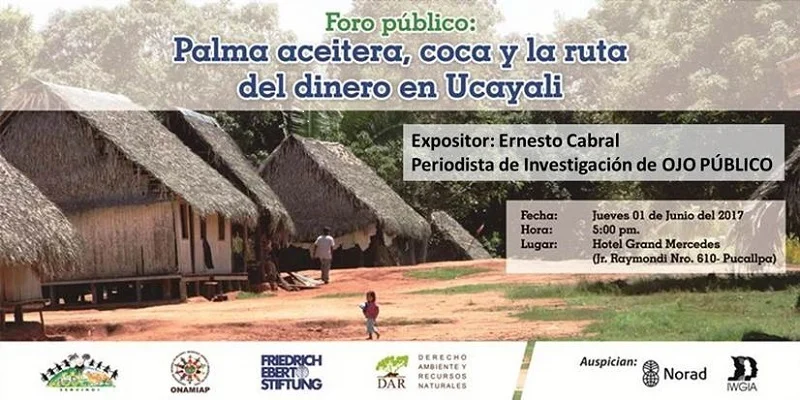
To address these urgent issues, a coalition of civil society organizations and Indigenous representatives is convening in Pucallpa for a landmark public forum: "Palm Oil, Coca, and the Route of Money in Ucayali." This event serves as a catalyst for deeper investigation into the mechanisms that drive deforestation, land grabbing, and the erosion of governance in one of Peru’s most vital rainforest frontiers.
Main Facts: The Pucallpa Forum
On June 1, 2017, the Hotel Grand Mercedes in Pucallpa will host a high-level discussion aimed at demystifying the economic drivers behind the region’s environmental degradation. The forum brings together investigative journalists, legal experts, and Indigenous leadership to dissect the impact of palm oil plantations and coca cultivation.
Key Participants
- Keynote Speaker: Ernesto Cabral, a seasoned investigative journalist from the portal OjoPúblico.pe, known for uncovering complex financial networks in the Amazon.
- Moderator: Ítalo García, representing the Network of Indigenous Communicators of Peru (REDCIP-Ucayali).
- Expert Panel:
- Claudia Zúñiga Carrillo (Derecho, Ambiente y Recursos Naturales – DAR).
- Raúl Vásquez Meza (Director of ProPurús Ucayali).
- Lizardo Cauper (President of the Regional Organization of the Interethnic Association for the Development of the Peruvian Rainforest, ORAU).
The event is organized by a consortium including the National Organization of Andean and Amazonian Indigenous Women (ONAMIAP), the Friedrich Ebert Foundation, DAR, and Servindi.
Chronology of Crisis: From Forests to Fincas
To understand the current state of Ucayali, one must look at the timeline of its transformation.
- 1990s–2000s: The "pioneer" phase of palm oil expansion begins, marketed as a development tool for the region. However, lack of oversight leads to the clearing of primary forests rather than utilizing degraded lands.
- 2010–2015: As palm oil infrastructure grows, so does the prevalence of small-scale, unregulated coca cultivation in remote forest areas. The overlapping of these two industries creates a blurred map of land ownership.
- 2016: Major reports surface regarding the use of "shell companies" and front organizations to secure land titles in Indigenous territories.
- June 1–3, 2017: The convening of the "Governance and Transparency" workshop marks a shift toward proactive Indigenous surveillance and digital accountability, signaling a new era of grassroots resistance against land-use corruption.
Supporting Data: The Economic Engine of Deforestation
The economic narrative in Ucayali is not merely one of poverty vs. profit, but one of systemic opacity. According to research often cited by investigative outlets like OjoPúblico, the "route of money" involves complex offshore and local financial structures that facilitate the conversion of forest land into high-value agricultural assets.
The Palm Oil Paradox
Palm oil is a global commodity, but in the Peruvian Amazon, its expansion has frequently bypassed environmental impact assessments (EIAs). Data indicates that:
- Land Concentration: Large-scale plantation companies have been accused of acquiring land through questionable title transfers, often displacing Indigenous communities.
- Infrastructure Correlation: The construction of roads—often authorized under the guise of agricultural access—acts as a precursor to illegal logging and coca planting.
- Market Integration: Despite the "green" label sometimes applied to palm oil, the lack of supply chain traceability means that "dirty" palm oil frequently enters the national market, mixed with sustainable stocks.
The Coca-Economy Nexus
Coca cultivation provides the liquidity that feeds illegal land clearing. In regions like Ucayali, the presence of narcotrafficking organizations creates a climate of fear, preventing local authorities and Indigenous rangers from patrolling communal lands. The "money trail" here is largely cash-based, making it difficult to trace, yet its influence on local politics—through the financing of regional campaigns—is an open secret.
Official Responses and Governance Challenges
The Peruvian state faces significant hurdles in governing the vast Ucayali territory. While the government has implemented various forest conservation programs, the disconnect between Lima (the capital) and the Pucallpa frontier remains wide.
The Role of International Oversight
The current forum is supported by the Norwegian Agency for Development Cooperation (NORAD), the International Work Group for Indigenous Affairs (IWGIA), and the German GIZ’s "Pro Tierras" program. This international backing reflects a growing global concern: the failure of local governance to protect the Amazon from "dirty" investments.
Indigenous Perspectives
Indigenous leaders, such as those from ORAU, argue that existing laws are sufficient but lack enforcement. Their primary demand is the legal titling of ancestral lands. Without formal title, Indigenous communities are legally invisible, making it easier for palm oil companies or illegal land traffickers to seize their territory.
Implications: The Path Toward Transparency
The goal of the June 1st forum and the accompanying workshop, "Forest Governance: Transparency and Forest Surveillance," is to equip the next generation of Indigenous communicators with the tools of digital investigation.
1. Strengthening Indigenous Surveillance
By training Indigenous spokespeople to use satellite mapping (like Global Forest Watch) and financial transparency databases, the project aims to turn local communities into the "eyes and ears" of the forest. This creates a deterrent effect against illegal land clearing.
2. The "Follow the Money" Strategy
The collaboration with OjoPúblico is essential. By mapping the corporate structures behind large-scale plantations, the initiative seeks to hold parent companies accountable for the actions of their subsidiaries. If the financial incentives for deforestation are removed, the illegal land market will lose its primary engine.
3. Climate Change and Global Responsibility
The preservation of the Ucayali forests is not just a Peruvian issue; it is a global imperative. The transparency of "climate funds"—international money earmarked for forest protection—is under scrutiny. Participants at the forum will discuss how these funds can be redirected to support direct community-led conservation rather than being absorbed by bureaucratic, ineffective state structures.
Conclusion
The forum in Pucallpa represents a crucial intersection between journalism, activism, and international policy. As Ernesto Cabral and his fellow panelists prepare to present their findings, the message is clear: the era of unchecked exploitation in Ucayali must come to an end.
By exposing the route of the money, questioning the legality of land titles, and empowering Indigenous communities through technical training, the organizers are building a framework for long-term sustainability. The survival of the Amazon depends on the ability of the people living within it to demand, monitor, and defend their rights against the encroachment of the global commodity market. The outcome of these discussions will undoubtedly resonate far beyond the borders of Ucayali, serving as a blueprint for forest governance in the tropical regions of the world.
Annex: Workshop Objectives (June 1–3, 2017)
- Objective 1: Improve the capacity of Indigenous communicators to report on forest-related corruption.
- Objective 2: Establish a decentralized monitoring system for land-use changes in Indigenous territories.
- Objective 3: Foster dialogue between Indigenous organizations and the state to ensure that "climate finance" reaches the forest floor, rather than being lost in the corridors of power.
The commitment of organizations like ONAMIAP, DAR, and Servindi highlights a unified front. As the forum concludes, the call to action remains: transparency is the most potent weapon in the fight against the destruction of the Amazon.