Introduction: A Shield Against the Elements
In the high-altitude Andean regions and the remote corridors of the Amazon basin, the concept of a home transcends the basic notion of shelter. For thousands of Peruvian families, a home is a primary defense mechanism against the increasingly volatile climate. Since 2014, the Peruvian government, through the Ministry of Housing, Construction, and Sanitation (MVCS), has spearheaded a transformative policy known as Wasiymi (a Quechua term meaning "my home").
By July 2026, this ambitious program, managed under the National Rural Housing Program (PNVR), reached a significant milestone: the construction of 85,570 bioclimatic rural homes. This massive undertaking has provided a lifeline to vulnerable populations across 22 regions, effectively mitigating the lethal effects of frost, sub-zero temperatures, and severe weather events.
The Genesis and Chronology of the Wasiymi Program
The Wasiymi initiative did not emerge in a vacuum. It was the result of a paradigm shift in how the Peruvian state approached rural development. Before 2014, rural housing policies were often criticized for being generic, failing to account for the specific geographical and thermal challenges of the Peruvian highlands (sierra) and the rainforest (selva).
A Timeline of Progress:
- 2014 – 2016 (The Foundation): The PNVR shifted its focus toward technical innovation, prioritizing materials that retain heat and ensure structural integrity in seismic zones. The initial phase focused on pilot programs in the Puno and Cusco regions, which historically suffer the most during the "friaje" (cold waves) season.
- 2017 – 2020 (Scalability): With proven results in thermal regulation, the program expanded its reach. Government funding was stabilized, and inter-institutional coordination with local municipalities became the standard for identifying the most vulnerable beneficiaries.
- 2021 – 2024 (Technological Adaptation): The program began incorporating more sustainable materials and architectural designs that improved ventilation and sanitation, moving beyond simple shelter to create "healthy housing."
- 2025 – 2026 (The Current Horizon): By the middle of 2026, the program hit the 85,570-unit mark. The focus has now turned to long-term sustainability and the integration of these modules into broader rural development plans, including access to clean water and sanitation.
Technical and Social Selection Criteria: The Rigor of Inclusion
The Wasiymi program is not merely a construction project; it is a meticulously managed social intervention. To ensure resources reach those who need them most, the PNVR employs a dual-layered evaluation process.

The Social Filter
The primary requirement for eligibility is grounded in objective data. Households must be registered in the System of Household Targeting (SISFOH) and hold a socioeconomic classification of "poor" or "extremely poor." Beyond this, residency requirements are strict: the beneficiaries must be the legal possessors of the land and must occupy the dwelling permanently. This prevents the "ghost town" effect, ensuring that the infrastructure directly supports the active rural workforce.
The Technical Filter
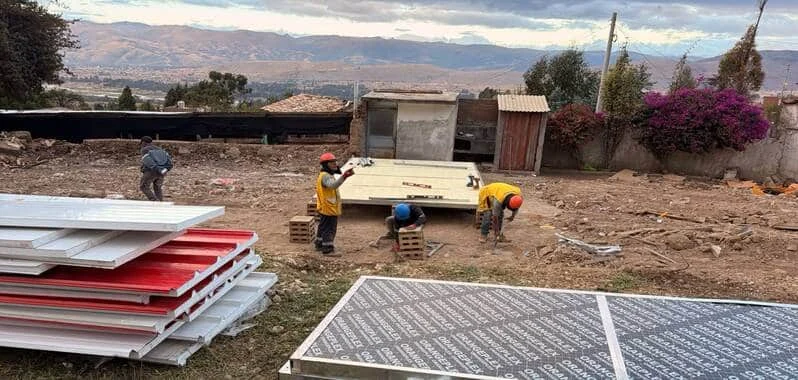
Not every plot of land is suitable for a Wasiymi module. Field teams from the PNVR, often accompanied by local community leaders, conduct on-site evaluations. Key criteria include:
- Structural Integrity: Assessing if the existing home is dilapidated or beyond repair.
- Geographical Safety: Ensuring the land is not prone to landslides, flooding, or other geological risks.
- Environmental Compliance: Confirming that the land is not part of a protected natural area or an intangible cultural heritage site.
The Bioclimatic Advantage: Engineering for Survival
The core innovation of the Wasiymi home is its bioclimatic design. In regions where temperatures can drop well below freezing, these homes act as thermal batteries. They utilize specific orientation to maximize solar heat gain during the day, which is then trapped by high-density walls and specialized roofing. This keeps the interior temperature significantly higher than the external environment, reducing the incidence of respiratory diseases, particularly among children and the elderly.
Official Perspective: A Commitment to Closing the Gap
Minister of Housing, Mauricio Arnillas, recently highlighted the moral and social imperative of this program. "We are bringing adequate housing to the families who need it most, especially those living in the most challenging conditions," he stated. "Our commitment is not just to build walls, but to close the national housing gap and ensure that geography is no longer a death sentence for our citizens."

The Minister’s words underscore a shift in government policy: viewing housing as a fundamental human right that is inextricably linked to health outcomes and economic stability. By reducing the physical toll of the climate on the rural population, the government is also reducing the long-term burden on the public healthcare system.
Implications for the Future of Rural Peru
The success of the Wasiymi project has profound implications for the future of rural development in the Andean nation.
1. Reducing Migration to Urban Centers
One of the primary drivers of migration from the countryside to cities like Lima is the lack of adequate infrastructure. By improving the quality of life in rural areas, the state is making it more viable for families to stay on their ancestral lands, preserving cultural heritage and agricultural practices.
2. Economic Empowerment
When a family is not spending their limited income on constant repairs to a leaking or crumbling structure, they have more resources for education, health, and agricultural investment. The construction phase itself also stimulates local economies by hiring regional labor and, where possible, sourcing materials from nearby providers.

3. A Model for Climate Resilience
As global climate change makes weather patterns more erratic, the Wasiymi model serves as a case study for other nations in the Andean region. Countries like Bolivia, Ecuador, and Colombia face similar challenges and have expressed interest in the technological protocols developed by the Peruvian PNVR.
Challenges Ahead: Beyond the 85,000 Milestone
While 85,570 homes is a significant achievement, the demand remains vast. The challenges moving forward are threefold:
- Logistics: Reaching the most isolated communities in the Amazon requires complex supply chains that can significantly increase the cost per unit.
- Maintenance: Ensuring that the families have the training and resources to maintain the bioclimatic features of their homes over the next two decades.
- Scaling: Finding the fiscal space to accelerate construction without sacrificing the rigorous selection and quality control processes that have made the program successful to date.
Conclusion: Building a Legacy
The Wasiymi program represents more than just statistics or engineering; it is a manifestation of the social contract between the state and its most vulnerable citizens. By focusing on the intersection of technical excellence and social equity, the Ministry of Housing has created a model that provides dignity in the face of nature’s harshest trials.
As Peru moves forward, the lessons learned from the Wasiymi project will be vital. The path ahead requires continued investment, but the foundation laid between 2014 and 2026 has proven that with the right approach, even the most remote and climatically hostile regions can be transformed into places where families can thrive, grow, and call home. The Wasiymi homes stand as quiet sentinels in the high peaks and deep valleys of Peru—a testament to what is possible when policy is guided by the needs of the people.