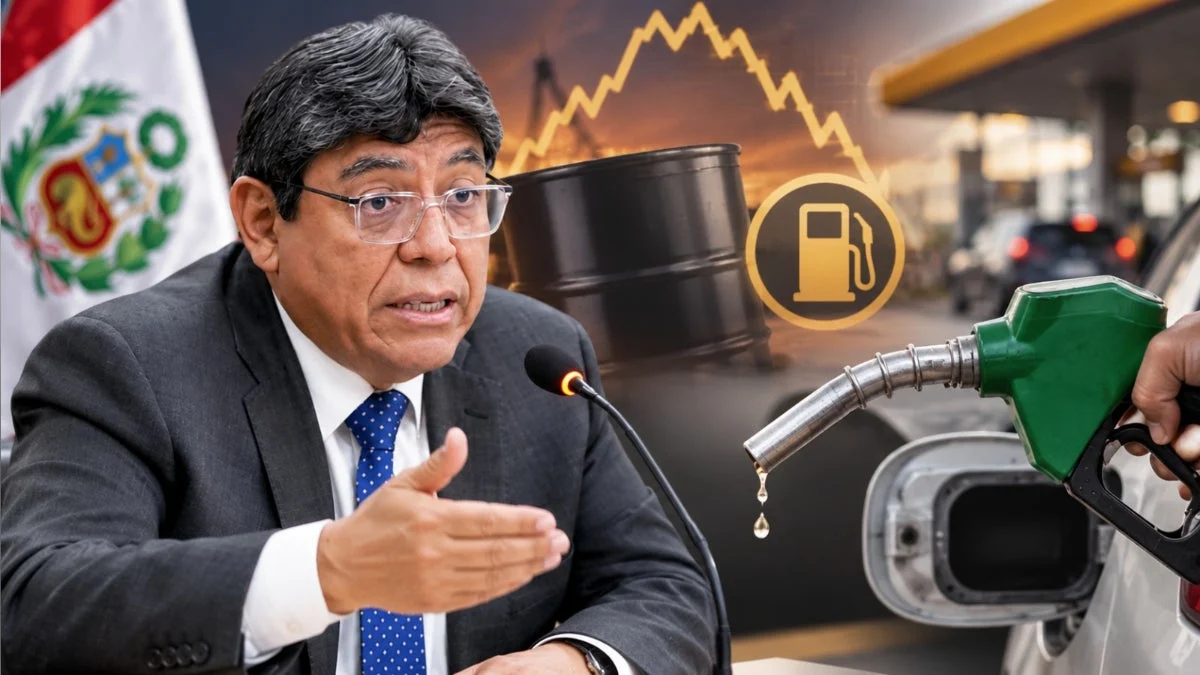
In a strategic move to insulate the domestic economy from the turbulent fluctuations of the global energy market, the Peruvian government has announced the imminent implementation of a fiscal stabilization fund for fuels. The initiative, spearheaded by Minister of Economy and Finance Elmer Cuba, aims to mitigate the inflationary pressures triggered by the ongoing geopolitical tensions in the Middle East, which have sent crude oil prices on a volatile upward trajectory.
The announcement marks a significant shift in economic policy, positioning Peru as one of the few nations in the region with the fiscal resilience to deploy such a mechanism. By decoupling local fuel prices from sudden international price shocks, the government hopes to provide much-needed stability to both individual consumers and the broader industrial sector.
The Core Strategy: How the Stabilization Mechanism Works
The proposed fund is designed as a "shock absorber" rather than a permanent subsidy. Minister Cuba explained that the mechanism is intended to prevent the immediate and full pass-through of global oil price hikes to the final consumer.
The Buffer Concept
The logic of the fund is straightforward: when the international price of a barrel of oil spikes—for instance, jumping from $60 to $100—the government’s fund will intervene to ensure that local prices reflect a more moderate figure, such as $80. This creates a temporal buffer, allowing the economy to adjust to the cost increase incrementally rather than absorbing the entire shock at once.
A Self-Correcting Cycle
Crucially, the Minister emphasized that the fund is designed to be revenue-neutral over the long term. When global oil prices eventually decline, the mechanism will operate in reverse. During these periods of lower costs, the fund will recover the resources expended during the price spikes. By operating as a revolving facility, the government expects the fund to avoid becoming a permanent drain on the national treasury.
"This is not a subsidy in the traditional, perpetual sense," an economic analyst noted. "It is an instrument of financial smoothing. The fiscal space Peru has cultivated over recent years allows us to front-load these costs, which will be recouped once the geopolitical situation in the Middle East stabilizes."
Chronology of the Crisis: From Stability to Escalation
To understand the necessity of this intervention, one must look at the recent trajectory of the Peruvian fuel market.
- Q1 2024: The year began with relative price stability. Inflationary indicators, specifically the core inflation rate, were hovering around 1.5%, comfortably within the target range established by the Central Reserve Bank of Peru (BCRP).
- March 2024: The initial signs of a shift appeared as global supply chain pressures began to mount, exacerbated by renewed political instability in oil-producing regions.
- Early-to-Mid 2024: The situation in the Gulf reached a boiling point. Global crude oil prices saw a sharp escalation, leading to immediate adjustments in local pricing. Within a two-week period, major fuel distributors in Peru, including Petroperú and Repsol, were forced to adjust diesel and gasoline prices upward by as much as 30%.
- Present Day: Recognizing that the volatility was not a temporary blip but a sustained trend, the Ministry of Economy and Finance (MEF) transitioned from observation to intervention, announcing the stabilization fund as a formal policy priority.
Supporting Data: The Impact on the Consumer
The urgency of this measure is underscored by the tangible impact on the Peruvian wallet. Minister Cuba estimates that, depending on the severity and duration of international fluctuations, the fund could reduce the final price of fuel by as much as S/1 per gallon.
For the average citizen, this represents a significant reprieve. Transportation costs, which form the backbone of the price of essential goods in Peru, are highly sensitive to fuel fluctuations. By stabilizing the price of diesel and gasoline, the government is indirectly protecting the price of food, logistics, and public transit.
Furthermore, the data regarding the national inflation rate is telling. Following the "fuel shock" that began in March, annual inflation climbed to approximately 4%. This breached the BCRP’s target range, creating a classic "cost-push" inflationary scenario—one that is notoriously difficult for monetary policy alone to solve.
Official Responses and Economic Implications
The decision has garnered a mixed but generally optimistic reaction from economic stakeholders. The government’s proactive stance is seen as a necessary evolution of its fiscal framework.
Addressing Inflationary Pressure
Minister Cuba highlighted the symbiotic relationship between this fiscal measure and the BCRP’s monetary policy. Traditionally, when inflation rises, central banks raise interest rates to cool the economy. However, because the current inflation is driven by an external "supply shock" (the price of oil) rather than domestic demand, raising interest rates might hurt the economy without effectively lowering fuel prices.
"We are collaborating with the anti-inflationary efforts of the coming months," Cuba stated. "We want to ensure the Central Bank does not feel compelled to shift its monetary policy, such as raising interest rates, solely due to an inflationary spike caused by international energy prices."
Political and Fiscal Context
The current administration has been vocal about its predecessor’s failure to act on this front. By positioning the fund as a product of sound fiscal management, the current Ministry of Economy is attempting to bolster public confidence in its ability to manage external crises. Critics, however, warn that the success of the fund will depend entirely on the duration of the Middle East conflict. Should the instability persist for years, the "fiscal space" currently available could be tested.
The Path Forward: Challenges and Opportunities
As the government moves toward the final implementation of the fund, several questions remain regarding the technical execution of the policy.
1. Transparency in Execution
The efficacy of the fund will hinge on transparent communication between the Ministry, the refineries, and the retailers. If the public does not perceive a direct benefit at the pump, the political capital invested in the fund will be wasted. The government must establish a clear regulatory framework to ensure that the S/1 per gallon benefit is passed on to the consumer and not absorbed by intermediaries.
2. The Global Energy Transition
While the fund provides a necessary short-term fix, it does not solve Peru’s long-term reliance on imported fuels. Some experts argue that the fiscal resources currently being allocated to stabilization could eventually be redirected toward accelerating the country’s transition to renewable energy sources, thereby reducing future exposure to the volatility of global oil markets.
3. Maintaining Fiscal Discipline
The government’s claim that the fund is revenue-neutral is theoretically sound but practically challenging. The "recovery" phase—where prices are held higher than the global average to replenish the fund—is often politically unpopular. Managing public expectations during these cycles will be the true test of the government’s resolve.
Conclusion
The implementation of the fiscal stabilization fund for fuels is a calculated response to a global crisis that has reached the doorstep of every Peruvian household. By creating a buffer against the volatile prices of the Middle East, the Ministry of Economy is attempting to provide a floor for consumer purchasing power and a ceiling for inflationary growth.
As Minister Elmer Cuba noted, the goal is not to defy the laws of the global market, but to ensure that the Peruvian economy can navigate the waves of international uncertainty without capsizing. With the details of the implementation forthcoming, the nation watches with guarded optimism, waiting to see if this mechanism can provide the stability needed to keep the wheels of the economy turning in an increasingly unpredictable world.