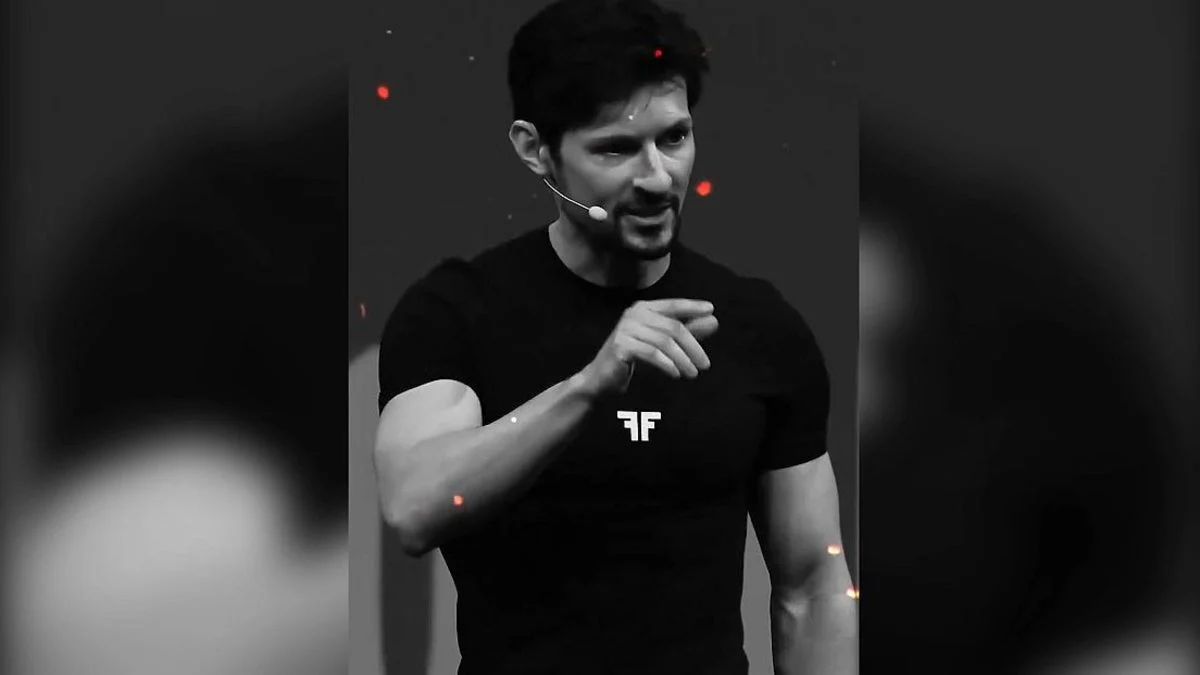
In an escalation that marks a definitive fracture between the Russian state and one of its most prominent technological prodigies, the Federal Security Service (FSB) of Russia has officially declared Pável Dúrov, the founder of the global messaging giant Telegram, a wanted man. The move, characterized by a formal international arrest warrant, follows the initiation of a criminal investigation accusing Dúrov of complicity in terrorist activities—a charge that, under Russian law, carries the potential for a life sentence.
This development is not merely a legal dispute; it is a geopolitical confrontation between a state apparatus seeking total control over its digital information landscape and a platform architect who has long prided himself on absolute user privacy and resistance to government surveillance.
The Charges: Allegations of Complicity and Sabotage
The FSB’s indictment is sweeping and severe. According to a statement released on the agency’s official portal, the Russian security apparatus alleges that Telegram has become a primary instrument for hostile intelligence services and extremist cells. Specifically, the FSB contends that the platform has systematically ignored Russian mandates to purge content linked to Ukrainian intelligence agencies, extremist factions, and organized criminal syndicates.
The FSB alleges that these groups utilize Telegram’s encrypted chats, bots, and channels to orchestrate sabotage, carry out high-profile assassinations, and execute sophisticated cyber-fraud schemes within Russian territory. The agency claims that these activities have resulted in significant loss of life, including among women and minors, and have caused billions of dollars in material damage to national infrastructure.
A chilling element of the FSB’s report describes a pattern of psychological manipulation: agents allegedly posing as romantic interests on the platform. By entrapping victims through social engineering, these actors allegedly extort money and force targets to participate in arson attacks against transportation hubs, power grids, and banking institutions. The FSB cited the recent detention of 46 individuals, aged 18 to 22, who were reportedly radicalized or coerced via a Telegram chatbot service, illustrating the state’s contention that the platform serves as a pipeline for domestic terrorism.
A Chronology of Defiance
The tension between Dúrov and the Russian state is deeply rooted in a history of mutual suspicion dating back over a decade.
- 2011: Pável Dúrov rises to prominence as the founder of VKontakte (VK), often dubbed the "Facebook of Russia." When the holding company Mail.ru attempted to acquire full control of the platform, Dúrov famously responded by posting a photograph of himself giving the middle finger to the camera—a gesture that has recently resurfaced on Telegram’s official X (formerly Twitter) account in response to the latest FSB warrant.
- 2014: Dúrov departs VKontakte after the company is brought under the control of Mail.ru, effectively ending his tenure at the social network he created.
- 2018: The Russian government officially attempts to block Telegram after the company refuses to hand over encryption keys to the FSB. The ban, while technically enforced, proved largely ineffective as users shifted to VPN services to maintain access.
- 2024: The current escalation reaches a boiling point, with the FSB transitioning from regulatory pressure to international criminal prosecution.
The Legal Landscape: Extradition and Consequences
The legal ramifications for Dúrov are profound. According to Vladímir Zherebenkov, a prominent attorney commenting on the case to the Russian news agency TASS, the charges are among the most severe in the Russian penal code. "It is a grave accusation," Zherebenkov noted. "If found guilty, the founder of Telegram could face life imprisonment."
The Russian authorities are expected to seek an arrest in absentia, which would theoretically trigger a request for extradition via Interpol. However, the viability of such a request remains a subject of intense speculation. Dúrov, who holds citizenship in multiple countries, has spent years operating Telegram from decentralized international hubs, maintaining a nomadic lifestyle that has kept him outside the direct reach of Moscow’s judicial long arm.
Official Responses and Digital Defiance
The response from the Telegram camp was swift and characteristically dismissive. Rather than issuing a traditional legal rebuttal, the company’s official social media presence re-shared the iconic 2011 photo of Dúrov, signaling a continued commitment to his brand of defiant, anti-establishment posture.
For the Russian state, the necessity of the crackdown is framed as a matter of national security. The FSB emphasizes that the uncontrolled nature of Telegram—coupled with its massive reach—represents a direct threat to the stability of the Russian Federation. While Russia promotes its own domestic alternatives, such as the messaging service MAX, which claims over 86 million users, the popularity of Telegram remains stubborn. Despite the state’s efforts to restrict the platform, millions of Russians continue to utilize VPN technology to access it, highlighting a profound disconnect between the Kremlin’s digital policy and the reality of consumer preference.
Implications: The Future of Encrypted Communication
The case against Pável Dúrov is likely to serve as a bellwether for the future of end-to-end encrypted messaging platforms. Several critical implications emerge from this standoff:
1. The Erosion of Digital Sovereignty
Governments worldwide are increasingly viewing encrypted communication as a "black box" that facilitates criminal activity. The Russian approach—criminalizing the platform founder rather than merely attempting to block the software—represents a dangerous new tactic. If successful, it could embolden other authoritarian regimes to pursue similar legal strategies against Silicon Valley or global tech executives.
2. The Fragmentation of the Internet
The ongoing struggle reinforces the "splinternet" phenomenon. As nations mandate backdoors for intelligence agencies, the global, open nature of the internet is being replaced by localized, state-approved ecosystems. For users in Russia, the choice is increasingly between sanctioned, monitored domestic apps and "illegal," high-risk, but private international alternatives.
3. The Personalization of Policy
By targeting Dúrov personally, the FSB is attempting to turn a structural problem—the nature of encryption—into a personal liability. This strategy aims to deter other tech entrepreneurs from building tools that prioritize user privacy over state-mandated surveillance. It forces a binary choice upon developers: either cooperate with the security apparatus or face life as a global fugitive.
4. The Resilience of Decentralization
The fact that Telegram continues to function within Russia despite the state’s multi-year effort to eradicate it speaks to the limitations of traditional censorship. VPNs and decentralized server architectures provide a level of resilience that state agencies struggle to overcome. The legal war against Dúrov may, in the end, be more about optics and psychological deterrence than actual technical suppression.
Conclusion
As the Russian Federation formalizes its attempt to bring Pável Dúrov to justice, the world watches a high-stakes drama that pits the traditional power of the state against the modern, borderless nature of digital technology. Whether this leads to a landmark legal precedent or remains a symbolic, albeit intense, struggle for control, the case underscores the fundamental vulnerability of digital communication in the 21st century.
For Pável Dúrov, the middle finger he displayed in 2011 remains the defining symbol of his philosophy. Whether he can continue to maintain that position while being pursued by the machinery of the Russian state is a question that will undoubtedly shape the future of digital freedom for years to come. The digital age has entered a phase of permanent conflict, and the battle over Telegram is only the latest, and perhaps most significant, theater in that war.