The landscape of retirement planning in Peru is undergoing its most significant transformation in decades. As the government moves to finalize the regulatory framework for the recently enacted pension reform, millions of workers affiliated with the Private Pension System (SPP)—managed by the Administradoras de Fondos de Pensiones (AFPs)—stand at a critical juncture. For the first time, the systemic gap between the public and private sectors is narrowing, as the state prepares to implement a minimum pension mechanism for AFP members, mirroring the protections historically reserved for the Oficina de Normalización Previsional (ONP).
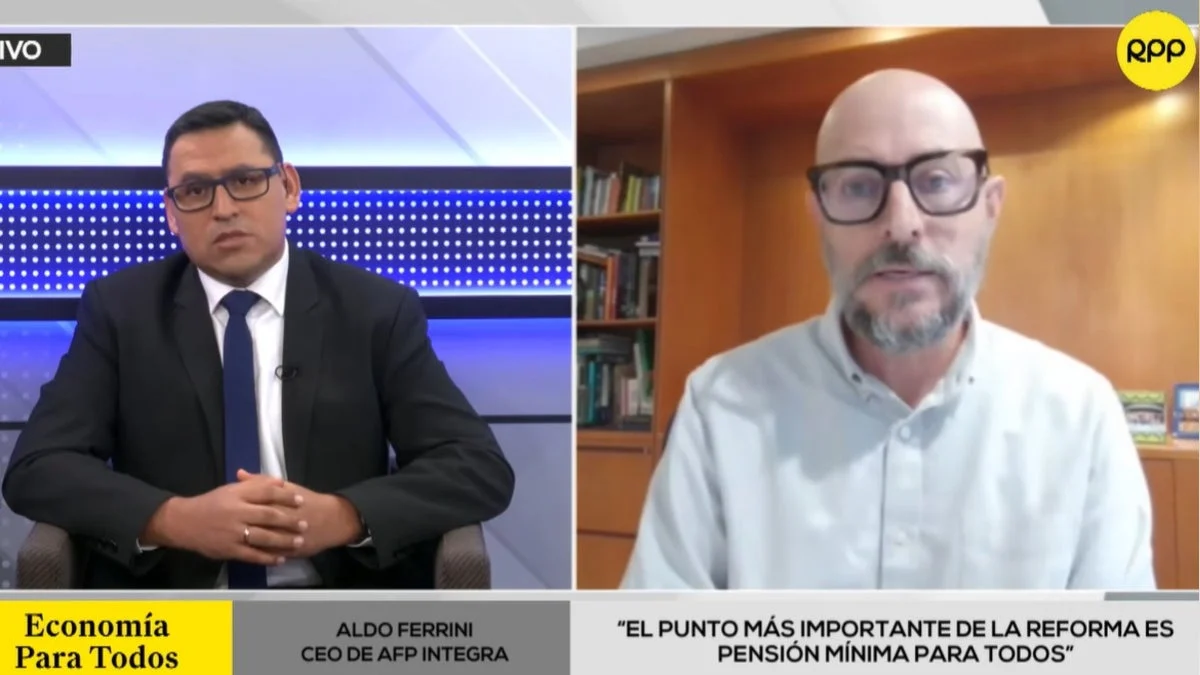
Aldo Ferrini, CEO of AFP Integra, recently confirmed that the regulatory machinery is nearly complete. With a 99% completion rate, the final technical details are being ironed out in high-level deliberations between the Superintendencia de Banca, Seguros y AFP (SBS), the ONP, and the Ministry of Economy and Finance (MEF). This development marks a pivotal shift in how Peruvians perceive retirement security.
Main Facts: The New Pension Architecture
The core of the reform is the introduction of a guaranteed minimum pension for AFP affiliates. This policy is designed to address the volatility and insufficiency often associated with individual retirement accounts, particularly for those who have faced long periods of unemployment or informal labor.
The Requirements for Eligibility
To qualify for the full minimum pension, which currently stands at S/600—the same threshold applied to the public system—an affiliate must demonstrate a contribution history of 20 years, or 240 months of payments.
For those who have not reached the two-decade mark, the reform introduces a "proportional pension" tier. Affiliates with between 10 and 20 years of contributions will be eligible for a scaled-down benefit, currently estimated between S/250 and S/350. This tier is a strategic inclusion, aimed at recognizing the efforts of workers who, while falling short of the full 20-year requirement, have still maintained a consistent relationship with the formal labor market.
For those with less than 10 years of contributions, the option remains to withdraw their accumulated individual savings, as the current framework does not qualify these individuals for a state-subsidized pension.
Chronology of the Reform Process
The path to this reform has been marked by years of political debate and economic analysis.
- Pre-2023: Growing public dissatisfaction regarding the "pension gap"—the discrepancy between those protected by the ONP’s minimum pension and those in the AFP system who were entirely dependent on market fluctuations—fueled demands for reform.
- Early 2024: The legislative push gained momentum as the Peruvian Congress prioritized pension structural changes, aiming to harmonize the systems.
- Mid-2024: The pension reform law was passed, introducing the concept of a state-guaranteed minimum pension for the private sector.
- Q3-Q4 2024: The regulatory phase began. The SBS, MEF, and ONP commenced the tedious process of defining the technical mechanics, such as how the state would top up funds that fall short of the minimum requirement.
- Present Day: As indicated by industry leaders like Aldo Ferrini, the regulation is in the final stages of ministerial review. Once published, AFPs will face an implementation period to update their digital platforms and administrative protocols to facilitate the new requests.
The Mechanism: Bridging the "Fund Gap"
A critical concern for many contributors is what happens if their individual AFP account, after 20 years of work, is mathematically insufficient to cover the S/600 minimum pension.
The new regulation provides a pragmatic, albeit decisive, solution. If an affiliate meets the 20-year contribution threshold but their individual fund balance is below the amount required to finance a S/600 monthly pension for their remaining life expectancy, they have a choice. The affiliate may opt to transfer their total accumulated balance to the State. In exchange, the State—through the ONP—assumes the responsibility of covering the gap, ensuring the retiree receives the guaranteed minimum of S/600 for the rest of their life.
This essentially creates a "hybrid" model. The AFP acts as the initial accumulation vehicle, while the State acts as the ultimate guarantor of last resort, provided the individual meets the necessary contribution milestones.
Supporting Data and Strategic Implications
The implications of this reform are profound for the Peruvian labor market and the financial stability of the elderly.
Empowering the Individual Choice
It is crucial to note that the minimum pension is not an automatic imposition. It is an optional benefit. Upon reaching the age of retirement, the affiliate will effectively have three distinct paths:
- The Minimum Pension: Choosing the state-guaranteed floor (if they meet the 20-year requirement).
- The 95.5% Withdrawal: Retaining the right to withdraw the vast majority of the fund as a lump sum, a popular feature of the current private system.
- The Annuity (Renta Vitalicia): Purchasing a private insurance product that provides a monthly payment based on the total fund, which may be higher or lower than the minimum pension depending on the individual’s total savings.
As Aldo Ferrini noted, this "levels the playing field." It creates a competitive environment where the choice of a pension system—public or private—is no longer a gamble on whether one will have access to a minimum safety net.
Financial Literacy and Compliance
The move to 20 years of contributions as a benchmark for the full pension is expected to have a secondary effect: it may incentivize formal employment. For the first time, workers who were previously indifferent to the exact duration of their contributions now have a concrete, state-guaranteed incentive to reach the 240-month mark. This could, in theory, improve the collection rates of pension contributions and slightly mitigate the pervasive issue of labor informality in Peru.
Official Responses and Industry Outlook
The industry reaction, spearheaded by figures like the CEO of AFP Integra, has been largely one of cautious optimism. There is a recognition that the system needed to evolve to maintain its legitimacy.
"It is one more alternative that balances the field," Ferrini emphasized. By providing a regulatory safety net, the government is acknowledging the systemic risks inherent in private market investments. However, the success of this policy will depend heavily on the final technical regulations. Specifically, the SBS and MEF must ensure that the transition of funds from the AFPs to the ONP is seamless and that the administrative burden does not fall on the shoulders of the retirees.
Furthermore, the fiscal impact of this reform remains a topic of scrutiny. By guaranteeing a minimum pension for AFP members, the State is essentially taking on a long-term contingent liability. If a large number of affiliates have insufficient funds, the fiscal strain on the national treasury will increase. The "details" currently being debated by the SBS and the Ministry of Economy are likely focused on exactly this: balancing the sustainability of the public treasury with the social mandate to prevent old-age poverty.
The Path Forward: What Should Affiliates Do?
As the regulation nears its final publication, experts advise that affiliates should:
- Verify Contribution History: Access their "Estado de Cuenta" to confirm the exact number of months contributed.
- Evaluate Future Scenarios: Compare the potential for a larger private pension (via a private annuity) against the stability of the S/600 state-guaranteed minimum.
- Stay Informed: Follow official communications from the SBS and their specific AFP, as the administrative process for requesting the minimum pension will likely require a formal application once the regulation is enacted.
The upcoming months represent a transitional period for the Peruvian pension system. While the framework provides a long-awaited layer of security, the complexity of the transition—moving from a purely individual-account model to one with a state-backed floor—will require clear communication and robust digital infrastructure to ensure that no citizen is left behind in the shift toward a more inclusive, hybrid retirement system.
In conclusion, the reform is not merely a technical adjustment; it is a fundamental shift in the social contract between the Peruvian state, the private pension providers, and the millions of workers who form the backbone of the economy. By integrating a minimum pension into the private system, Peru is taking a definitive step toward addressing the vulnerabilities of the aging population, provided the final implementation maintains the fiscal balance necessary to keep the system solvent for generations to come.