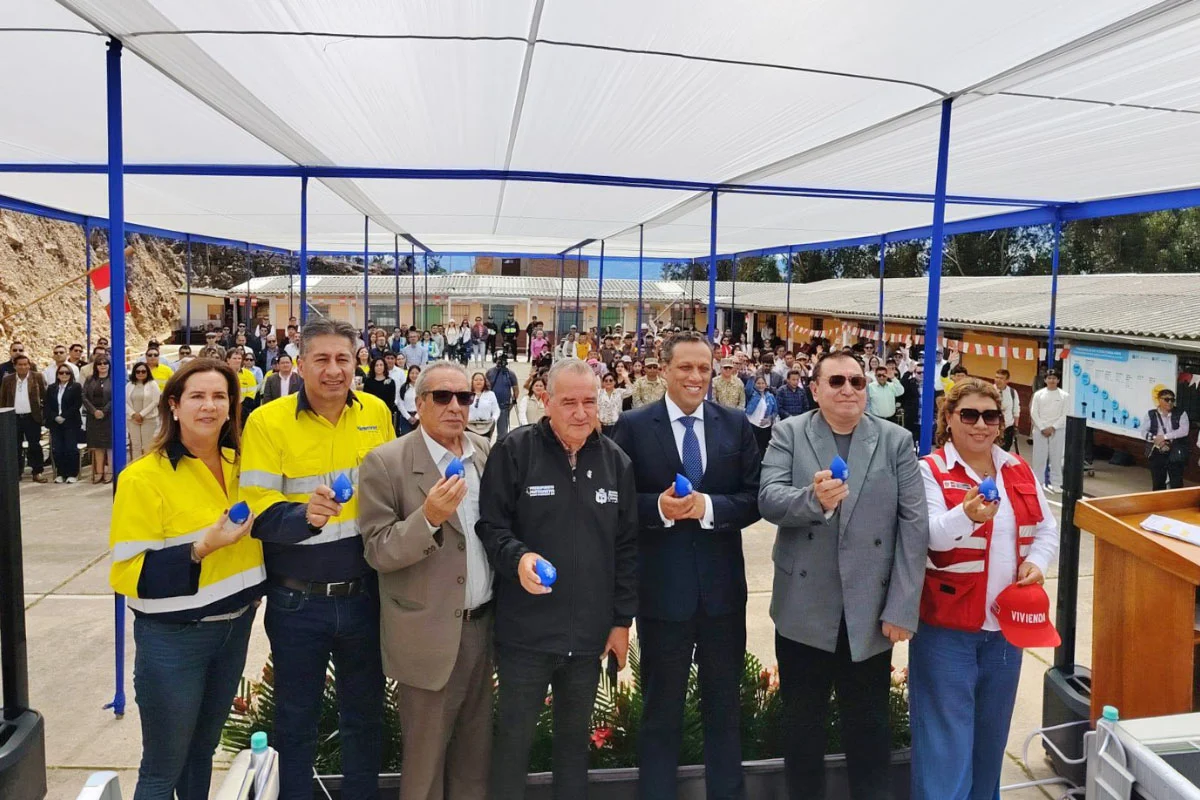
Cajamarca, a region historically challenged by water scarcity, is witnessing a monumental shift in its infrastructure landscape. Through a strategic alliance defined by public-private partnership and academic rigor, the city is successfully bridging the gap in water access. The recent inauguration of two new tubular wells in the Ajoscancha sector marks a critical milestone for the “Agua para Cajamarca” (Water for Cajamarca) program—an initiative that serves as a blueprint for regional development across Peru.
This project, executed via the “Obras por Impuestos” (Works for Taxes) mechanism, represents the collaborative synergy between the Provincial Municipality of Cajamarca, Newmont Yanacocha, and the National University of Cajamarca. By pooling resources, technical expertise, and local governance, these stakeholders are transforming the quality of life for 40,000 residents, with a long-term vision to achieve near-total water coverage for the city.
The Core Facts: Strengthening the City’s Hydrological Spine
The “Agua para Cajamarca” program is not merely a collection of wells; it is a comprehensive strategy designed to address the city’s water deficit systematically. With the operational launch of the two new wells in Ajoscancha, the program has now brought a total of four high-capacity wells online.
These installations are critical for the municipal water network, providing a consistent and reliable supply to neighborhoods that have long struggled with intermittent service. The immediate impact is a measurable improvement in sanitation, hygiene, and overall standard of living for tens of thousands of citizens. However, the scope of the project extends far beyond these immediate gains. The current plan encompasses a portfolio of 12 distinct infrastructure projects, which, once completed, are projected to close 97% of the total water supply gap in Cajamarca.
A Chronology of Progress: From Concept to Reality
The success of the Ajoscancha wells did not happen in a vacuum. It is the result of a multi-year effort to synchronize political will with technical execution.
- Initial Planning and Stakeholder Engagement: The early stages of the program involved intense coordination between the Provincial Municipality and Newmont Yanacocha to identify the most critical pressure points in the city’s water grid. The National University of Cajamarca played a pivotal role during this phase, providing the geological surveys and technical validation necessary to ensure the project’s sustainability.
- The Pilot Phase: The first set of wells served as a proof of concept, demonstrating that the “Obras por Impuestos” model could bypass traditional bureaucratic delays and deliver results directly to the community.
- Expansion (2026): The activation of the latest wells in Ajoscancha confirms the scalability of the model.
- Future Milestones (2027): Looking ahead, the city has slated the construction of five additional wells. These are currently in the development pipeline and are expected to be fully operational by the end of 2027, representing the next major leap in the program’s trajectory.
- Long-Term Horizon: The overarching timeline includes the completion of the Chonta Dam, a project of historic proportions that will provide the necessary water storage capacity to buffer against seasonal climate fluctuations, ensuring long-term water security for the region.
Supporting Data: By the Numbers
To understand the magnitude of this initiative, one must look at the key performance indicators that define the program’s success:

- Direct Beneficiaries: Currently, 40,000 residents are enjoying improved water access thanks to the first four wells.
- Infrastructure Portfolio: The complete plan targets the construction of 12 major infrastructure assets.
- The 97% Goal: The ultimate metric of success is the closure of 97% of the city’s water supply gap, a target that would effectively eliminate the systemic water insecurity that has historically plagued the province.
- Strategic Expansion: With five more wells entering construction this year, the pace of development is accelerating, ensuring that the momentum gained in 2026 continues into 2027.
Official Responses and Local Sentiment
The success of these initiatives relies heavily on the integration of local leadership and community participation.
The Vision from the Municipality
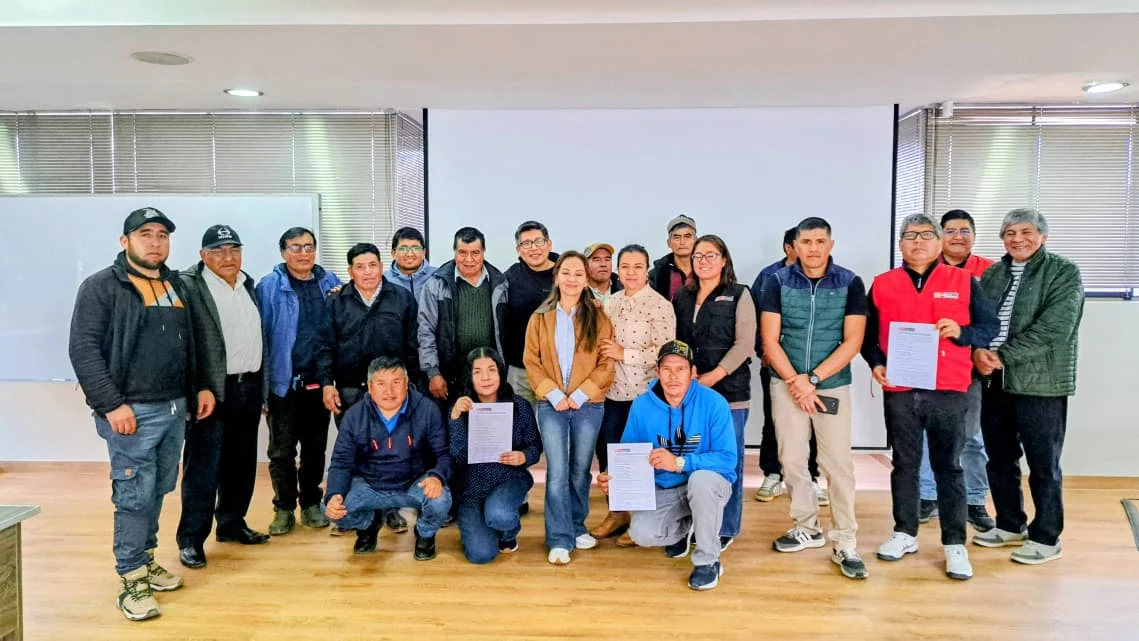
Eduardo Quiroz, the Mayor of Cajamarca, emphasized that the collaboration is driven by a shared commitment to the city’s future. "The joint work is oriented toward water, and we are finally beginning to feel the results," Mayor Quiroz stated during the inauguration. He further highlighted the recent signing of a new agreement aimed at expanding the network into the Huacariz and Chontapaccha sectors, demonstrating the city’s intent to keep the momentum moving forward without interruption.
The Voice of the Community
For the residents, the impact is personal. Eduardo Cusquisiban, president of the management committee for the Shudal sector, spoke on behalf of the community members who have been at the heart of the social monitoring of these works. "We were involved from the beginning—from the socialization meetings to the final execution," Cusquisiban noted. "Now that the project is a reality, it will bring water to all the neighbors in the lower part of the city. It was a need we had with great urgency to improve our quality of life."
The Strategic Importance of the Chonta Dam
While the tubular wells provide an immediate and effective solution to urban water needs, the long-term sustainability of the region rests on the Chonta Dam. This project has recently secured the necessary approvals and financing, representing a landmark achievement for regional water management.
The dam will serve as the backbone of the city’s water strategy, capturing and storing water that would otherwise be lost to runoff. By combining the immediate output of the tubular wells with the long-term storage capabilities of the Chonta Dam, Cajamarca is moving from a state of crisis management to a model of proactive, sustainable water governance.
Implications: A Blueprint for Public-Private Cooperation
The “Agua para Cajamarca” program carries significant implications for how mining regions and urban municipalities can interact. Often, the relationship between extractive industries and local communities is defined by tension. However, in Cajamarca, the shift toward a collaborative model—where the private sector provides the capital and technical expertise through tax-based infrastructure investment—is changing the narrative.

Strengthening Institutional Trust
When the private sector works alongside the municipal government and the local university, it builds a layer of institutional trust that is difficult to replicate through traditional government contracting. The presence of the National University of Cajamarca as a technical validator ensures that the projects meet international standards and that the data being used for planning is transparent and accurate.
Economic and Social Development
Water is the primary engine of development. Reliable water access is not only a public health imperative but also an economic one. It allows for more stable small-scale agriculture, promotes better local business conditions, and reduces the time and financial burden on families who previously had to rely on trucked water or untreated sources.
A Model for Peru
The success of this program serves as a case study for other provinces in Peru that face similar developmental challenges. By demonstrating that “Obras por Impuestos” can be used effectively to deliver large-scale, life-changing infrastructure, Cajamarca is providing a replicable roadmap. The key takeaways for other regions are clear:
- Integrated Planning: Projects must be part of a broader, multi-year master plan.
- Tripartite Collaboration: Success is highest when government, private industry, and academia are all at the table.
- Community Socialization: Residents must be included in the process from the planning phase to foster ownership and transparency.
Conclusion: A Future Built on Solid Foundations
As the fifth and sixth, and eventually the twelfth, wells come online, Cajamarca is successfully rewriting its story. What was once a narrative defined by the struggle for basic resources is now becoming one of technological advancement and collaborative success.
The “Agua para Cajamarca” program is more than just a list of construction projects; it is a testament to what can be achieved when stakeholders look past short-term conflicts and focus on the common goal of public welfare. With the Chonta Dam on the horizon and a robust schedule for the remaining wells, the city is well on its way to securing a sustainable future, ensuring that the 97% gap is not just a target, but a reality for every household in the region.