By Investigative Desk
June 2, 2017
In the rugged, high-altitude landscapes of Cajamarca, Peru, a collective sense of urgency has crystallized into a firm vow of resistance. As of June 2, 2017, the Ronderos (peasant patrol members) from the province of San Pablo and four major river basins have mobilized to form a protective wall around the 284 lagoons of Alto Perú. Their mission: to serve as the official "Guardians of the 284 Lagoons," a grassroots initiative designed to prevent the mining giant Yanacocha from encroaching upon and potentially destroying a vital wetland ecosystem that sustains thousands of lives.
The Catalyst: A Looming Judicial Crisis
The mobilization is not merely a precautionary measure; it is a direct response to a looming, highly controversial ruling expected from Peru’s Tribunal Constitucional (TC). Social organizations in the region have expressed profound alarm over reports that the TC may issue a decision favorable to Yanacocha, effectively granting the company the legal mandate to initiate extractive operations within the sensitive Alto Perú watershed.
For the residents of San Pablo, the stakes are existential. The region’s water security is already fragile, and the prospect of large-scale industrial mining in the headwaters of their primary water sources has triggered a defensive posture that echoes the historic conflicts surrounding the Conga mining project. The Comité Interinstitucional para la Conservación y Turismo Lagunas de Alto Perú y Anexos de la Cuenca del Jequetepeque—the primary organizing body—has warned that the judicial process appears compromised.
Central to this skepticism is the role of Magistrate José Luis Sardón. Critics point to Sardón’s decade-long tenure at the NGO "Reflexión Democrática," an organization presided over by Roque Benavides, the owner of Yanacocha. This perceived conflict of interest has fueled accusations that the judiciary is being maneuvered to favor corporate interests over environmental and community rights.
Chronology of the Resistance
The formation of the "Guardians" is the latest chapter in a long-standing struggle for territorial sovereignty in the northern Andes.
- April 2017: Initial reports surface regarding the potential bias of the Tribunal Constitucional, citing the professional history of Magistrate Sardón. This triggers a wave of local assemblies across Cajamarca.
- May 2017: The Comité Interinstitucional consolidates, bringing together community leaders from the Llaucano, Marañón, Cajamarquino, and Jequetepeque basins.
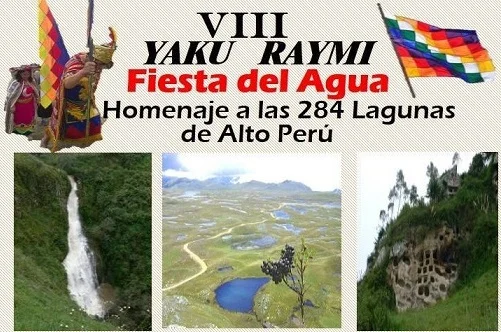
- June 2, 2017: The commencement of the VIII Yaku Raymi (Festival of the Water). This traditional celebration serves as the backdrop for the formal organization of the defensive brigades.
- June 3, 2017: The formal swearing-in ceremony of the "Guardians of the 284 Lagoons" at Alto Perú. These individuals are tasked with functions identical to those who defended the Conga lagoons: fiscalization, environmental monitoring, and the physical presence required to deter unauthorized entry or industrial activity.
The VIII Yaku Raymi: A Cultural Shield
The decision to link the swearing-in of the Guardians with the VIII Yaku Raymi is a strategic assertion of cultural identity. By framing the protection of the lagoons as a "Festival of the Water," the organizers are highlighting that their resistance is not merely political, but spiritual and ancestral.
The Yaku Raymi serves to remind the Peruvian state and the international community that these lagoons are not "barren resources" awaiting exploitation, but rather the lifeblood of the agricultural and pastoral economies of the region. By formalizing the patrol, the Ronderos are asserting their role as the rightful stewards of the land, backed by the authority of the Federation of Rondas of the Cajamarca Region.
Supporting Data: Why Alto Perú Matters
The hydrological importance of the Alto Perú region cannot be overstated. It acts as a natural "water tower" for the surrounding basins.
- Biodiversity: The wetlands are a critical habitat for high-altitude Andean species, many of which are endemic to the region.
- Hydrological Regulation: The 284 lagoons provide a steady, regulated flow of water throughout the year, preventing both drought and flooding in the downstream communities.
- Social Dependency: Thousands of farmers in the Jequetepeque and surrounding valleys rely exclusively on these water sources for irrigation. Any significant contamination or reduction in water quality due to mining acid drainage would effectively destroy the regional agricultural economy.
The Comité has consistently demanded that the Peruvian government designate Alto Perú as a Ramsar site—a wetland of international importance—to provide it with a layer of global protection that local legislation has thus far failed to offer.

Official Responses and Threat of Escalation
The rhetoric coming from the Comité Interinstitucional is stark. They have explicitly warned that any ruling favoring the mining company would trigger a "second regional or provincial strike." This threat is significant, as previous strikes in Cajamarca have effectively paralyzed the region’s economy and drawn international attention to the conflict.
Furthermore, the committee has declared that if the Tribunal Constitucional rules in favor of Yanacocha, they will officially name the President of the Tribunal a "persona non grata." This public denunciation reflects the complete collapse of trust between the rural population of Cajamarca and the judicial apparatus in Lima.
"The primary problem in these recent years is the scarcity of water and the prevalence of contaminated water sources," the committee stated in their official manifesto. "A verdict favorable to the mining company would generate a terrible social conflict that the government is clearly unprepared to handle."
Implications: A Looming Conflict
The situation in Alto Perú serves as a microcosm of the broader struggle between extractivism and community-led sustainable development in Latin America. The "Guardians of the 284 Lagoons" represent a sophisticated evolution of rural resistance. They are not acting as an unorganized mob; they are a structured, disciplined force that utilizes the language of legal fiscalization and international conservation standards.
The Constitutional Dilemma
The case also raises fundamental questions about the impartiality of Peru’s constitutional democracy. If a judicial body is perceived to be influenced by the very corporations it is supposed to regulate, the social contract in mining-affected regions effectively dissolves. The suspicion surrounding Magistrate Sardón has transformed a localized land-use dispute into a national debate about corporate capture of the state.
The Future of Cajamarca
As of June 2017, the eyes of the nation are fixed on the tribunal. Should the TC decide to greenlight mining in the Alto Perú watershed, the region is bracing for a period of intense civil unrest. The Ronderos have made it clear: they consider the lagoons non-negotiable.
The demand for a "World Hydrological Observatory" in the region—a project proposed by students from Cajamarca currently studying in Lima—highlights a constructive alternative to the "mining-or-nothing" narrative. By proposing a center for scientific study and water preservation, the residents of Alto Perú are attempting to rebrand their territory as a hub for climate science rather than a site for industrial extraction.
Conclusion: The Vigil Begins
As the Yaku Raymi concludes, the atmosphere in San Pablo is one of quiet determination. The Guardians, now sworn to their duty, have begun their patrols. They do not carry high-tech surveillance gear, but they possess an intimate knowledge of the terrain and a collective resolve that has proven difficult for both the state and multinational corporations to overcome in the past.
The story of the 284 lagoons of Alto Perú is far from over. It is a narrative of water, identity, and the struggle for a future that is not defined by the depletion of resources, but by the preservation of the essential elements of life. For now, the Guardians stand watch, waiting to see if the law will serve the people or the interests of the powerful. The world watches with them, aware that the fate of these high-altitude waters will resonate far beyond the borders of Cajamarca.