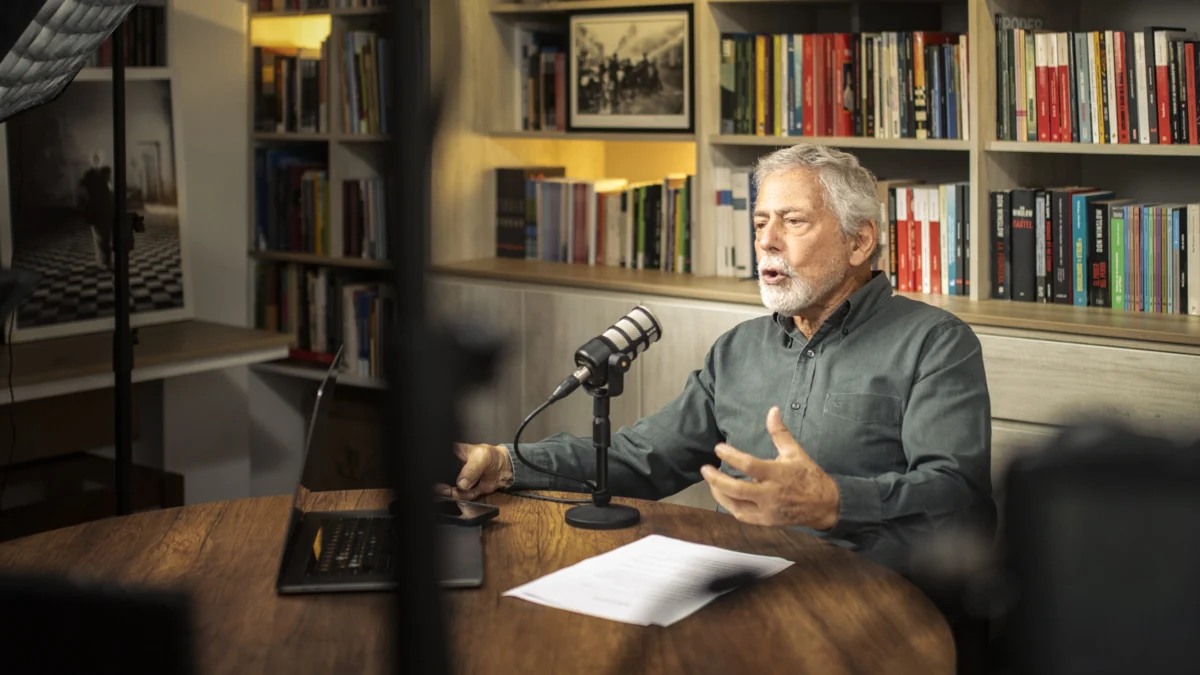
The landscape of investigative journalism in Peru is currently witnessing an unprecedented assault. Gustavo Gorriti, the venerable founder and director of the investigative outlet IDL-Reporteros, finds himself at the center of a judicial and political storm that threatens not only his personal liberty but the very foundations of journalistic independence in the Andean nation. Following a relentless campaign of disinformation, harassment, and legislative maneuvering, Gorriti now faces the credible threat of criminal investigation, a development that human rights organizations and international press watchdogs have condemned as a calculated attempt to silence those who brought the darkest secrets of the Lava Jato scandal to light.
The Nexus of Corruption and the Parliamentary Offensive
The current crisis stems from a report approved on June 12 by a Peruvian congressional committee—a move that has been widely characterized as a "grotesque" conflict of interest. The committee, dominated by right-wing and far-right factions, has recommended that criminal charges be brought against both the prosecutors overseeing the Lava Jato case and Gorriti himself.
The allegations leveled against the journalist are sweeping, ranging from bribery and influence peddling to obstruction of justice. The crux of the parliamentary argument rests on the claim that IDL-Reporteros allegedly offered "media favors" in exchange for influencing the decisions of the Public Ministry regarding the "effective collaboration" (plea bargain) agreements signed in 2019 with the Brazilian construction giant, Odebrecht.
Gorriti, however, views these charges through a different lens: self-preservation by the political elite. "It is an almost grotesque example of a conflict of interest," Gorriti remarked in an interview with elDiario.es. "The five congressmen who make up the commission are themselves being investigated within the framework of the Lava Jato case."
A Chronology of Investigation and Retaliation
To understand the gravity of the current situation, one must look back at the origins of IDL-Reporteros. Founded by Gorriti, a journalist whose career has been defined by his fearless pursuit of truth, the outlet became the vanguard of anti-corruption reporting in Peru.
- 2011: IDL-Reporteros begins its systematic investigation into the sprawling web of corruption involving state contracts and political kickbacks.
- 2015: The scope of the investigation expands significantly as Gorriti and his team travel to Brazil to collaborate with the Federal Police and the Lava Jato Task Force. Recognizing the transnational nature of the crime, Gorriti spearheads a regional network of investigative journalists across Latin America.
- 2019: The "effective collaboration" agreements are signed between the Peruvian Judiciary and Odebrecht. These agreements become the catalyst for the most significant breakthroughs in the case, breaking the pact of silence among corrupt officials.
- 2022–2023: As the legal cases against former presidents and high-ranking officials progress, a "counter-offensive" begins. The political class, feeling the pressure of accountability, initiates a coordinated campaign of disinformation.
- 2024: The current escalation. After an initial attempt to investigate Gorriti was archived in December 2023, the judicial system is now under renewed pressure to reopen the case, following the inflammatory report issued by the Congressional committee.
The Anatomy of a Disinformation Campaign
Gorriti describes the forces arrayed against him as a "corrupt coalition" that transcends traditional ideological boundaries. From the ultranationalist ranks of Renovación Popular to the remnants of Fujimorism and even segments of the radical left, these actors share a singular, unifying goal: to discredit the Lava Jato investigations and, by extension, the journalists who made them public.
A central figure in this hostility is Rafael López Aliaga, the leader of the Renovación Popular party and former Mayor of Lima. López Aliaga, himself under investigation for money laundering linked to the Panama Papers, has frequently labeled Gorriti as the "great enemy of Peru." His rhetoric has been anything but veiled; he has publicly stated that the journalist "must leave the country" and has even used violent undertones, suggesting that "we have to take care of the gentleman once and for all."
This rhetoric has real-world consequences. In 2023, the Inter-American Commission on Human Rights (CIDH) granted precautionary measures for Gorriti, acknowledging that he faces an "imminent risk" to his life and safety.
Institutional Decay: Data on the Decline of Press Freedom
The state of democracy in Peru is reflected in the rapidly deteriorating environment for the media. According to Reporters Without Borders (RSF), Peru has plummeted 67 places in the World Press Freedom Index since 2022, falling from 77th to 125th—the most precipitous decline of any nation in Latin America.
The scale of the Lava Jato scandal explains why the reaction from the political establishment has been so violent. The investigation implicated four former Peruvian presidents—Alan García, Alejandro Toledo, Ollanta Humala, and Pedro Pablo Kuczynski—as well as major political figures like Keiko Fujimori. For a class of politicians accustomed to impunity, the work of Gorriti and the special prosecutors was not just journalism; it was an existential threat.
"Almost all the presidents of Peru in this century ended up compromised in one way or another with growing evidence," Gorriti notes. The subsequent "purges" within the judicial system, the modification of laws to favor the accused, and the removal of key prosecutors like José Domingo Pérez and Rafael Vela, represent a "deep regression" in the country’s democratic health.
The Stance of the International Community
The international response to the persecution of Gustavo Gorriti has been swift and unified. Organizations such as the Inter-American Press Association (SIP), the Committee to Protect Journalists (CPJ), and the Gabo Foundation have all issued strong condemnations.
These entities argue that the use of the legislative branch to intimidate a journalist is a hallmark of authoritarianism. They emphasize that the "criminal threat" being used against Gorriti is a classic tactic of lawfare—the use of legal systems to persecute political opponents and critical voices. By targeting the source of the information, the Peruvian Congress is attempting to rewrite history and insulate its members from the consequences of their alleged crimes.
Implications for the Future of Investigative Journalism
Despite the mounting legal hurdles, Gorriti remains resolute. His life, marked by his experience as a prisoner of the Fujimori regime in 1992 and his disciplined background as a six-time national judo champion, has prepared him for such struggles. He emphasizes that his motivation is not merely personal survival, but the defense of a public good.
"These are longer, more complex, and more difficult struggles than one might think," Gorriti reflects. "But not for a moment have I regretted what I have done."
The implications of this case extend far beyond the borders of Peru. If a journalist of Gorriti’s stature can be neutralized by a coordinated effort of corrupt politicians, it sets a chilling precedent for the rest of the continent. It sends a message that in the battle between the truth and the corrupt, the powerful will stop at nothing to dismantle the institutions of transparency.
Ultimately, Gorriti believes that the only viable defense against this institutional assault is global solidarity. "The thing that serves best and has the most effect is citizen reaction and the response from international media—the level of scandal that this can signify inside and outside of Peru."
As the case moves toward the office of the national prosecutor, the world watches to see whether Peru will uphold its commitment to the rule of law or succumb to the interests of those who fear nothing more than a transparent account of their own past. For now, the siege on IDL-Reporteros continues, serving as a stark reminder that the fight for democracy is never truly finished; it must be fought, as Gorriti has done for decades, in every headline, every interview, and every courtroom.