Executive Summary: Reclaiming Critical Infrastructure
The Metropolitan Municipality of Lima (MML) has launched an aggressive and strategic campaign to restore order and mobility along the Avenida Nicolás Ayllón, a vital artery that serves as a gateway to the Carretera Central. This massive infrastructure recovery project, centered at the 10-kilometer mark within the district of Ate, represents a significant turning point in the city’s efforts to tackle urban disorder and illegal occupation of public space.
By clearing debris and reclaiming land occupied by illegal structures, the municipality aims to drastically improve traffic flow, reduce accident risks, and return the street to its intended purpose: serving the thousands of commuters and residents who rely on this corridor daily.
The Strategic Importance of the Corridor
Avenida Nicolás Ayllón is not merely a local road; it is a critical logistical lifeline. As a primary connector linked to the Carretera Central—the main highway connecting the coast to the Andean highlands—the artery bears the weight of significant heavy-duty logistics, interprovincial transport, and the daily commute of thousands of residents from eastern Lima.
For years, the area had been plagued by the encroachment of unauthorized structures, resulting in significant "bottlenecks." These obstructions forced vehicles into narrow lanes, created hazardous conditions for pedestrians, and hindered the effective deployment of emergency services. The current municipal intervention is a direct response to these systemic urban challenges.
Chronology of the Intervention
The recovery of the Nicolás Ayllón corridor did not happen in a vacuum. It was the culmination of a systematic legal and operational process:

- Planning Phase: Municipal authorities identified the most critical points of congestion and illegal occupation along the 10-kilometer stretch. Surveys and safety assessments were conducted to prepare for the demolition of structures.
- Legal Enforcement: Following local regulations regarding urban development and public safety, the municipality moved to clear 20 specific properties that had been illegally erected on public domain land.
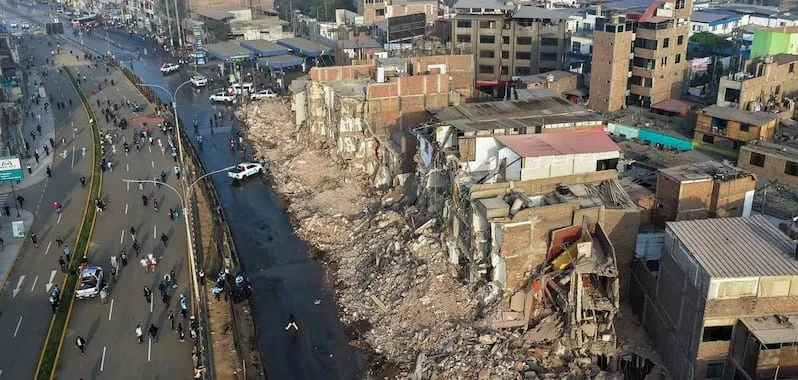
- The Operational Strike: In a synchronized effort, heavy machinery—including tractors, loaders, and dump trucks—was deployed to the site. This phase focused on the swift removal of rubble, debris, and structural remnants left behind by the demolished buildings.
- Ongoing Restoration: Currently, the project is in the "cleanup and maintenance" phase, where the focus has shifted to clearing the remaining debris to ensure the road surface is safe for vehicular and pedestrian traffic.
Supporting Data: The Logistics of Urban Recovery
The scale of this operation is substantial. The use of heavy machinery—specifically trailers and large-scale loaders—highlights the intensity of the debris removal process.
Key Operational Metrics:
- Total Properties Removed: 20 illegal structures demolished to reclaim the public right-of-way.
- Strategic Location: Kilometer 10 of the Carretera Central, a high-traffic zone where congestion levels have historically been critical.
- Coordination: The project involves a multi-agency approach, requiring the synchronization of the Municipal Municipality of Lima (MML) and the municipal government of Ate.
- Security Deployment: The project is supported by a permanent security cordon involving both the National Police of Peru (PNP) and the municipal Serenazgo forces from both Lima and Ate.
The cleanup effort is not just about aesthetics; it is about infrastructure integrity. Removing tons of concrete and structural waste allows engineers to assess the pavement’s condition and plan for long-term road maintenance, which was previously impossible due to the blockages.
Official Responses and Stakeholder Perspectives
The intervention has been framed by municipal authorities as a non-negotiable step toward restoring the "right to the city."
The Municipality’s Stance
Representatives from the MML have emphasized that the recovery of public spaces is a top priority for the current administration. According to official statements, the presence of these illegal structures on public land was a primary driver of the chaotic traffic patterns that have plagued the Ate district for years. By removing these obstacles, the city is prioritizing public safety over private, unauthorized interests.
The Role of Law Enforcement
The National Police of Peru (PNP) has been instrumental in maintaining the peace throughout the demolition and clearing process. Their presence has ensured that the operation proceeded without significant social conflict. This high-visibility security presence serves a dual purpose: it protects the municipal workers operating the heavy machinery and provides a deterrent against any potential attempts to re-occupy the cleared areas.

Implications for the Future of Lima’s Infrastructure
The actions taken on Avenida Nicolás Ayllón carry broad implications for urban planning in Lima.
1. Enhanced Transit Efficiency
By widening the available road space, the city is effectively increasing the "throughput" capacity of the Carretera Central. This is expected to reduce travel times for heavy logistics transport, which in turn lowers the cost of goods moving from the interior to the capital.
2. Pedestrian Safety
Urban environments are often hostile to pedestrians when public sidewalks are usurped by illegal construction. The clearing of the Nicolás Ayllón corridor allows for the potential future installation of proper sidewalks, crosswalks, and lighting, significantly improving the safety of residents in the Ate district.
3. A Precedent for Future Interventions
The success of this operation sends a clear message to other areas of the city where public spaces have been encroached upon. It demonstrates that the MML has the institutional capacity and the political will to reclaim territory that belongs to the public, setting a precedent that will likely be replicated in other high-traffic zones.
4. Long-Term Economic Development
Well-maintained corridors attract investment. When a major artery is clean, safe, and efficient, it becomes more attractive for businesses to operate, leading to local job creation and improved economic vitality for the district of Ate.

Conclusion: A City in Transition
The recovery of the Nicolás Ayllón corridor is a clear example of the complex challenges facing modern, rapidly growing metropolitan areas like Lima. While the demolition of structures and the clearing of debris represent the most visible aspects of the work, the true value lies in the long-term restoration of order and safety for all citizens.
As the Municipality of Lima continues to monitor the area and finalize the cleanup, the focus will undoubtedly shift toward ensuring that the space remains free of future encroachments. This is a critical step in the ongoing effort to modernize Lima’s infrastructure and ensure that its major roads can adequately support the needs of a modern, functioning city.
The cooperation between the Metropolitan Municipality, the district of Ate, and the National Police serves as a model for future infrastructure management. By putting the needs of the public at the center of the agenda, the city is moving closer to its goal of a more accessible, orderly, and safer urban environment.
As the project progresses, residents and commuters alike are expected to see a tangible improvement in their daily routines, marking a significant milestone in the city’s recovery and development plan. Through persistence, legal rigor, and operational excellence, the MML is ensuring that the Avenida Nicolás Ayllón once again serves as a beacon of progress rather than a symbol of urban decay.