Executive Summary: A New Paradigm for Global Copper
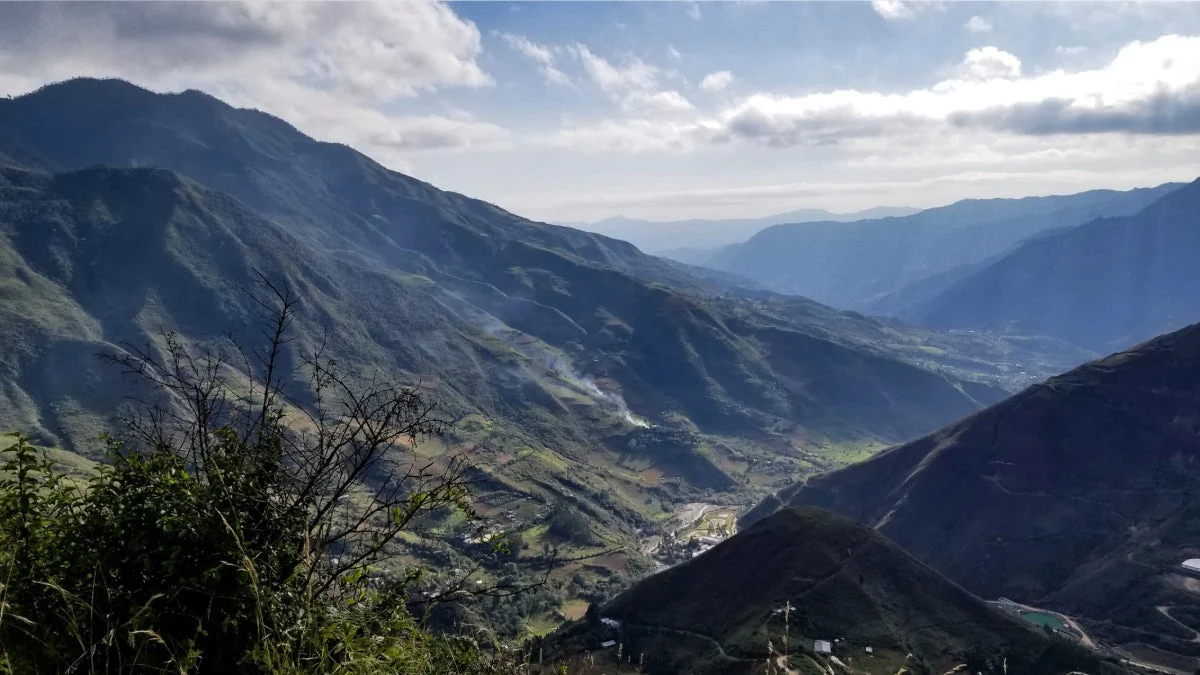
The copper landscape is undergoing a tectonic shift, and Peru is positioned at its epicenter. During the prestigious ProExplo 2026 mining convention—hosted by the Peruvian Institute of Mining Engineers (IIMP)—First Quantum Minerals unveiled a comprehensive technical update on the La Granja project, located in the northern region of Cajamarca. With a staggering 22 million tons of contained copper, the project has been officially reclassified as one of the world’s most significant untapped mineral assets.
This massive deposit is no longer just a "promising prospect"; it is a strategic pillar in the global effort to decarbonize the planet. As the demand for copper accelerates to support the rapid expansion of electric vehicles (EVs), renewable energy infrastructure, and advanced power grids, La Granja’s immense scale and unique geological characteristics make it a focal point for international mining investment.
The Geological Marvel: Understanding La Granja
A Complex Porphyry System
La Granja is not a standard, monolithic deposit. According to Rafael Roberto, Senior Geologist at First Quantum Minerals, the project represents a highly sophisticated system of telescoped copper porphyries, intricately interwoven with an expansive network of hydrothermal breccias.
The mineralization within the deposit is heavily dictated by complex structural controls, specifically trending along northwest and northeast fault lines. This structural complexity is what initially made the deposit difficult to characterize, but it is also what facilitated the massive accumulation of copper over geological time.
The Calcocite Advantage
What truly differentiates La Granja from other massive porphyry deposits is its unusual concentration of hypogene chalcocite. In the world of copper mining, this is a distinct geological luxury. Hypogene chalcocite allows for significantly higher copper grades, which fundamentally improves the project’s economic profile. Higher grades translate to lower extraction costs per pound of copper, offering a competitive edge that few other global assets can match.
Chronology: From Historic Uncertainty to Modern Precision
The history of La Granja is one of evolution in exploration methodology. For decades, the project was subject to disparate interpretations due to the limitations of early 20th-century exploration techniques.
- Initial Exploration Phase: Early drill campaigns were primarily sub-vertical. These boreholes, while well-intentioned, failed to intersect the steeply dipping mineralized structures effectively. This led to a "data distortion" phase where the true scale of the deposit was obscured by incomplete modeling.
- The Reinterpretation Era: Upon taking over the asset, First Quantum Minerals initiated a massive data-mining exercise. They did not merely rely on new drilling; they audited and reinterpreted historical data, accounting for the orientation bias of previous drill holes.
- The 2026 Breakthrough: At ProExplo 2026, the company confirmed that this intensive re-evaluation has allowed for a complete redefinition of the project’s geological units. By integrating structural data with metallurgical insights, the team has finally mapped the "true" extent of the mineralization, resulting in the current estimate of 22 million tons of contained copper.
Supporting Data and Technical Challenges
Taming the Arsenic Variable
No major mining project is without its technical hurdles. La Granja faces a specific challenge regarding the presence of arsenic. In the metallurgical process, arsenic acts as a penalty element, often requiring specialized smelting processes or blending strategies to meet international market standards.
However, the team at First Quantum has turned this challenge into a data-driven opportunity. By mapping the distribution of arsenic alongside the geological structures, they have identified specific "zones of impact." This granularity allows for a more surgical approach to mine planning—essentially enabling the company to sequence the extraction process to manage arsenic levels effectively and mitigate potential economic penalties.
Building a Robust Block Model
The success of the current evaluation lies in the creation of a "robust block model." This digital twin of the ore body integrates three vital variables:
- Geological Lithology: The rock types and their origins.
- Structural Controls: The fault systems and breccia pipes that dictate grade continuity.
- Metallurgical Performance: The recovery rates and impurity levels (like arsenic) across different sectors of the deposit.
This multidimensional approach has effectively slashed the "uncertainty factor," providing stakeholders with a level of confidence that is rarely seen in the pre-feasibility stages of such a massive project.
Strategic Implications: Why La Granja Matters
The Energy Transition Nexus
Copper is often referred to as "the metal of electrification." Every wind turbine, solar array, and battery pack requires significant quantities of high-purity copper. Current market analysis suggests that the world will face a massive supply deficit by the 2030s as legacy mines age and new discoveries fail to keep pace with demand.
La Granja’s 22 million-ton resource is not merely a number; it is a critical buffer against this impending shortfall. Its location in Peru—a mining-friendly jurisdiction with a deep-seated culture of resource extraction—adds to its geopolitical value.
Economic Impact for Peru
For Peru, the development of La Granja represents more than just export revenue. It signifies:
- Regional Development: The project acts as a catalyst for infrastructure investment in Cajamarca, including roads, power lines, and water management systems.
- Technological Transfer: By utilizing advanced geological modeling and complex metallurgical processing, the project elevates the standard of mining technology within the country.
- Human Capital: The project necessitates a highly skilled workforce, creating high-quality, long-term employment opportunities for local engineers, geologists, and technical specialists.
Official Perspective: The First Quantum Outlook
During the IIMP event, representatives from First Quantum Minerals underscored that La Granja is now a crown jewel within their global portfolio. While the company operates across several continents, the sheer scale of the Peruvian asset places it in a league of its own.
"The goal is not just to extract, but to optimize," stated the project team. By shifting away from traditional, broad-brush mining techniques toward a high-precision, data-centric model, First Quantum is demonstrating that the future of mining lies in the integration of artificial intelligence, geological structural analysis, and sophisticated metallurgical management.
Conclusion: The Road Ahead
As the world pivots toward a green economy, the spotlight on La Granja will only intensify. The transition from a misunderstood, complex geological prospect to a world-class, 22-million-ton copper titan is a testament to the power of persistent scientific inquiry and modern technology.
While environmental, social, and technical hurdles remain—as they do for all large-scale mining projects—the technical clarity achieved by the First Quantum team has provided the roadmap for success. La Granja is no longer a "potential" project; it is a critical piece of the global puzzle, waiting to be unlocked. For the people of Cajamarca and the broader global market, the emergence of this copper giant signals a new chapter in the history of sustainable, high-tech mineral production.