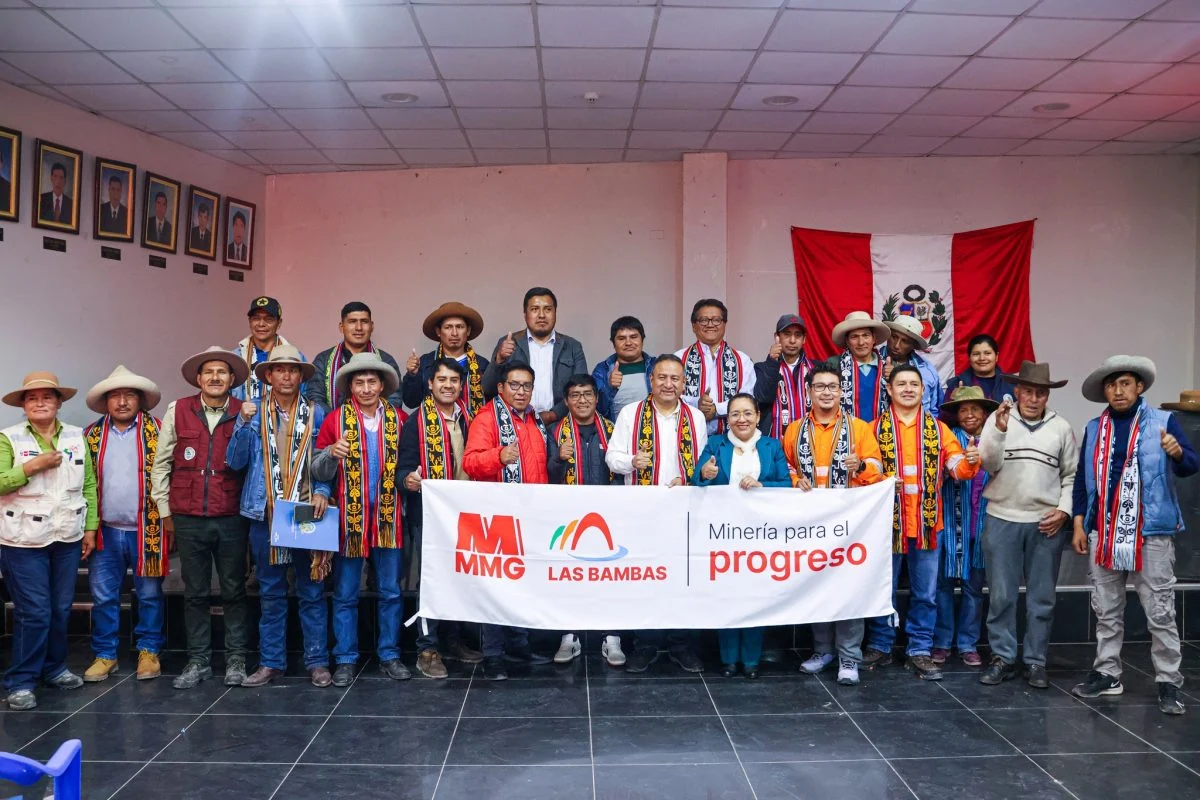
In a significant milestone for regional development in Peru’s southern corridor, Minera Las Bambas and the District Municipality of Ccapacmarca have officially ratified the Interinstitutional Cooperation Agreement No. 405-2026. This landmark pact, signed in the heart of the Chumbivilcas province, represents a concerted effort to bridge long-standing socio-economic gaps and elevate the quality of life for the district’s residents. By formalizing a roadmap for the 2026–2027 period, the agreement serves as a blueprint for how private investment, when coupled with transparent government oversight and community dialogue, can serve as a catalyst for sustainable progress.
Main Facts: The Pillars of Agreement No. 405-2026
The core of the agreement centers on a comprehensive investment package aimed at long-term institutional and social growth. Minera Las Bambas has committed to an annual voluntary contribution of S/ 1.8 million for the next two years, totaling an investment of S/ 3.6 million. These funds are specifically earmarked for the pre-investment phase of critical projects, ensuring that vital infrastructure in education, healthcare, agriculture, and sanitation transitions from concept to reality.
The agreement is not merely a financial transaction but a holistic framework designed to empower local stakeholders. By focusing on capacity building, the partnership seeks to professionalize municipal management, ensuring that local authorities are equipped with the technical tools—particularly through the INVIERTE.PE system—to manage public funds efficiently and effectively.
Chronology: The Road to Consensus
The path to this agreement was paved through months of rigorous, multi-stakeholder dialogue. The process was defined by its inclusivity, involving eight local communities whose input shaped the final terms of the cooperation.
- Initial Engagement (Late 2025): The framework for the agreement began to take shape as representatives from the Ministry of Energy and Mines (MINEM), the Presidency of the Council of Ministers (PCM), and Minera Las Bambas initiated exploratory talks with the Ccapacmarca municipal leadership.
- Stakeholder Consultations (Early 2026): A series of town hall meetings were held, incorporating the voices of the Frente Único, community presidents, women’s organizations, and the agrarian league. These sessions identified the most pressing needs, ranging from medical equipment shortages to the necessity for professional training for local youth.
- The Ratification Ceremony (May 2026): The formal signing ceremony took place at the Ccapacmarca Municipal Auditorium. The event brought together key decision-makers, including the local mayor, representatives from the national government, and high-level management from Las Bambas. The gathering served as a symbolic turning point, moving the district from a history of sporadic engagement to a structured, institutionalized development model.
Supporting Data and Strategic Priorities
The success of this agreement lies in its granular focus on specific developmental sectors. By categorizing the investment into five key pillars, the stakeholders ensure accountability and measurable outcomes:
1. Strengthening Public Institutionalism
A critical component of the deal is the "Technical Assistance Program." This initiative is designed to train municipal officials in the complexities of public investment cycles under the national INVIERTE.PE framework. By reducing the bureaucratic bottlenecks that often hinder rural development, the program aims to increase the municipal budget execution rate. Furthermore, community presidents will undergo biannual training to ensure that rural leadership is aligned with modern governance standards.
2. Youth Empowerment and Professional Development
The agreement introduces the "Professional Support Program," a strategic initiative aimed at preventing brain drain and fostering local talent. Recognizing the challenges faced by high school graduates, the program provides preparatory workshops for university entry and facilitates pre-professional internships within the mining operation and its service providers. This initiative is designed to bridge the gap between academic theory and industry demand.
3. Healthcare Infrastructure
Public health remains a priority in the Chumbivilcas province. In collaboration with the Chumbivilcas Health Network and the NGO VIDA Perú, the partnership ensures the continuous delivery of medical equipment and essential supplies. This logistical support is vital for isolated communities that often struggle with limited access to modern diagnostic tools and medicine.
4. Sustainable Economic Integration
The agreement promotes the inclusion of local suppliers in the mining value chain. By establishing a transparent communication channel for job vacancies and procurement opportunities, Las Bambas commits to a policy of local hiring based on merit and competitiveness, ensuring that the wealth generated by the mine remains within the district.
Official Responses: The Government Perspective
The significance of this partnership was underscored by the Minister of Energy and Mines, Waldir Ayasta, who viewed the event as a success story for the Peruvian extractive sector.
"This agreement is a powerful demonstration of the development opportunities unlocked by mining when founded on dialogue, responsibility, and a steadfast commitment to the community," Minister Ayasta stated. "Our objective is to ensure that the wealth generated by our natural resources is transformed into tangible well-being for all Peruvian families. This is not just an agreement; it is a collaborative pact between the State and the private sector to ensure that development reaches the most remote corners of our country."
Local leaders echoed this sentiment, emphasizing that the presence of the PCM and MINEM provided the necessary confidence to move forward. The participation of the agrarian league and women’s organizations ensured that the agreement addresses the grassroots needs of the population rather than just top-down industrial goals.
Implications: A Model for the Southern Corridor
The ratification of Agreement No. 405-2026 holds profound implications for the social climate in the southern Andean mining corridor. For years, the region has been characterized by tensions between mining operations and local communities. However, this agreement suggests a shift in strategy: moving away from reactive conflict resolution toward proactive, institutionalized development.
Long-term Socio-economic Impact
By funding the "pre-investment" phase, the agreement solves a fundamental problem in Peruvian rural administration: the lack of high-quality technical profiles (Expedientes Técnicos). Many municipalities have the financial resources to build, but lack the technical documentation to initiate projects. By filling this gap, Las Bambas is effectively "de-risking" social investment, making it easier for the government to step in with larger-scale funding for construction and implementation later on.
The Institutional Shift
The inclusion of training for community leaders and municipal staff signifies a move toward institutional sustainability. By creating a generation of trained, knowledgeable local stakeholders, the agreement builds human capital that will benefit the district long after the specific programs conclude.
Strengthening Social License
Perhaps the most vital implication is the reinforcement of the "social license to operate." When a mining company acts as a development partner rather than a mere employer, it fosters a relationship of mutual dependency and trust. By opening its doors to local hiring and local suppliers, Las Bambas is integrating itself into the fabric of Ccapacmarca’s economy, making the company’s success synonymous with the community’s prosperity.
Conclusion: Looking Ahead to 2027
As the agreement moves into its implementation phase, all eyes will be on the efficacy of the programs. The collaboration between the Ministry of Energy and Mines, the local municipality, and Minera Las Bambas serves as a litmus test for the effectiveness of public-private partnerships in rural Peru.
If the goals set for 2026 and 2027 are met—if the municipal staff becomes self-sufficient, if the youth find stable employment, and if the healthcare and sanitation projects move from the drawing board to construction—this model will likely be replicated in other districts throughout the region.
Ultimately, the partnership in Ccapacmarca is more than a legal document; it is an invitation to a future where the extractive industry serves as a bridge to a modernized, prosperous, and self-sustaining rural economy. The commitment shown by all parties involved suggests that the era of confrontation may be giving way to an era of pragmatic, results-oriented cooperation.