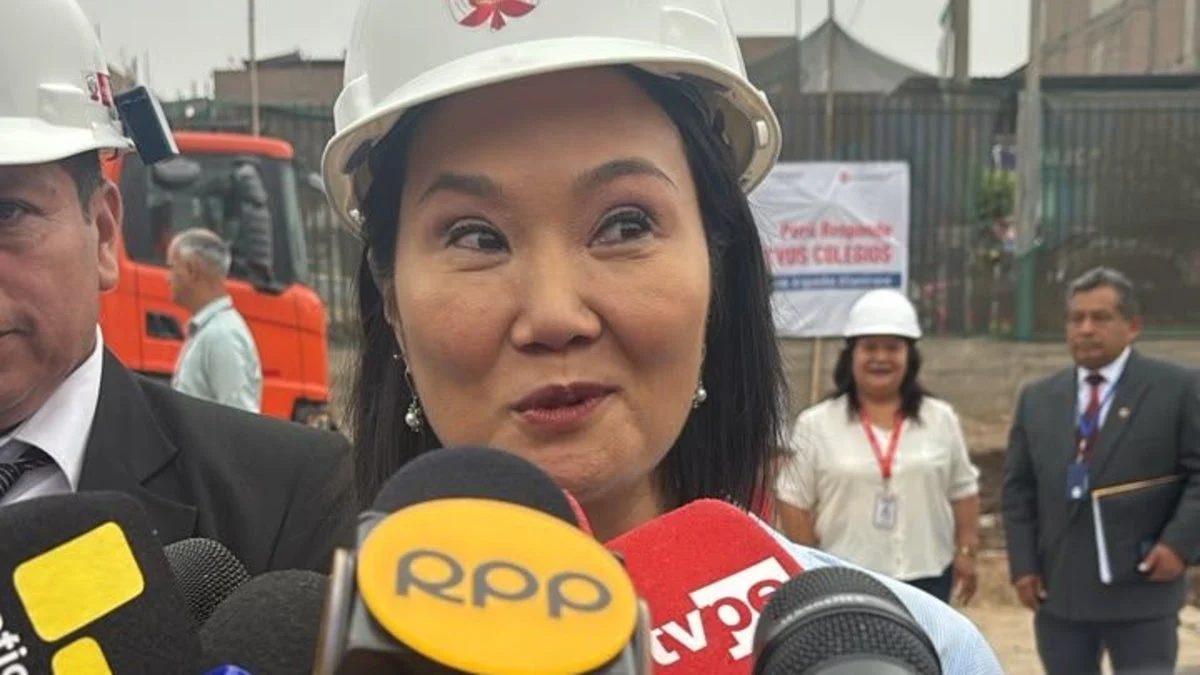
As the milestone of her first 100 days in office approaches, President Keiko Fujimori has offered a candid assessment of her administration’s progress. In a series of statements provided to RPP following a public event in Santa Anita, the President acknowledged the complexities of her early tenure, emphasizing that while significant strides have been made in dismantling criminal networks and reactivating stalled infrastructure projects, her government remains committed to continuous improvement.
A Strategic Focus on National Security
At the core of President Fujimori’s early governance strategy has been an aggressive approach to public safety. Facing rising concerns over organized crime, her administration launched the "Comando Unificado" (Unified Command), a task force designed to streamline intelligence and operational capacity between the Ministry of Transport and Communications (MTC), the Public Ministry, the Armed Forces, and the National Police.
"The balance will be fully presented at the 100-day mark, but I am convinced that we are striking hard at organized criminal organizations," Fujimori stated. She pointed to specific tactical successes, most notably the neutralization of 42 illegal communication antennas within prison facilities. By disrupting the internal connectivity that allows criminal leaders to coordinate extortions and other illicit activities from behind bars, the administration aims to reclaim state control over the penal system.
The President noted that these operations are merely the beginning. The government’s security policy relies on an inter-institutional model, where technical expertise is shared to identify vulnerabilities in the security chain. This collaborative approach, she argued, has already yielded significant captures of high-value targets, signaling a shift toward a more proactive, rather than reactive, policing strategy.
Infrastructure and Economic Reactivation
Beyond the security sector, the President addressed the pressing issue of stagnant public works. A central pillar of her campaign and early administration has been the "destrabar" (unblocking) of thousands of projects that had been paralyzed due to bureaucratic inefficiency, corruption, or legal disputes.
"We have found thousands of projects paralyzed, and we are in the process of securing the necessary financing to make them a reality," the President explained. During her visit to Santa Anita for the groundbreaking ceremony of the José María Arguedas Altamirano School (IE No. 1211), Fujimori framed the event as a blueprint for the future. She set an ambitious goal for her administration: the construction of 2,000 new schools over the remainder of her term.
This infrastructure push is not limited to education. The government is also focusing on water and sanitation, as well as health facilities, aiming to bridge the gap between rural development and urban needs. By involving the private sector in these efforts, the President hopes to create a sustainable model for development that moves beyond state-funded initiatives, fostering public-private partnerships that accelerate completion times for critical public works.
Disaster Preparedness: The El Niño Challenge
Climate resilience has emerged as a mandatory priority for the current administration. With the looming threats posed by the El Niño phenomenon, President Fujimori emphasized that her government has prioritized the cleaning and dredging of riverbeds and critical waterways to mitigate the risk of flooding.
However, she was quick to note that infrastructure alone is insufficient. "This is a joint preparation effort," she remarked, urging citizens to remain vigilant and cooperate with civil defense authorities. The President expressed gratitude toward the private sector, which has provided logistical support and resources to bolster the government’s efforts in preparing the most vulnerable regions for potential weather-related crises.
A Spiritual and Diplomatic Boost: The Visit of Pope Leo XIV
In a significant diplomatic and social development, the President expressed immense satisfaction regarding the confirmed visit of Pope Leo XIV, scheduled for November 11–16. For a nation grappling with social polarization and the challenges of a transition period, the visit is being framed by the administration as a symbolic "balm."
"For us, it is a balm; it is a gift during the adversity we have begun to face," Fujimori said. The administration views the papal visit not only as a diplomatic honor but as a spiritual opportunity to foster national unity. The government is already working on the logistical preparations to receive the Pontiff, whom the President described as having a special place in his heart for the Peruvian people. The visit is expected to bring a momentary reprieve from the intensity of the domestic political climate, allowing the government to focus on themes of social cohesion and solidarity.
Official Responses and Political Implications
The President’s acknowledgment that there are "things to improve" serves as a pragmatic signal to her critics and the public. In a political environment that is often unforgiving of early errors, the admission of ongoing adjustments is a strategic attempt to maintain transparency.
Political analysts suggest that the President’s focus on "tangible results"—such as prison security, school construction, and disaster preparedness—is a calculated effort to distance her administration from the ideological debates that often stall legislative progress. By focusing on the "nuts and bolts" of government, she hopes to build a foundation of credibility that will sustain her through the challenges of the next four years and ten months.
Chronology of Early Actions
- Initial Transition (Day 1–30): Appointment of the cabinet and audit of stalled public projects across ministries.
- The Security Pivot (Day 30–60): Launch of the Unified Command and the commencement of prison security operations, including the takedown of illegal signal-blocking interference.
- Disaster Mitigation (Day 60–90): Implementation of the El Niño emergency plan, focusing on riverbed clearing and regional infrastructure reinforcement.
- The Infrastructure Launch (Ongoing): Commencement of the 2,000-school construction initiative, signaling a shift toward long-term developmental planning.
Conclusion: Looking Toward the 100-Day Mark
As the 100-day deadline approaches, the Fujimori administration is signaling that it is moving past the phase of evaluation and into a phase of execution. The balance sheet, as presented by the President, reflects a government that is attempting to balance the immediate need for security and disaster management with the long-term imperative of building essential public infrastructure.
While challenges remain—particularly in managing public expectations and navigating a complex legislative landscape—the administration’s focus on "unblocking" the state suggests a desire to break with the inertia of previous years. Whether this approach will be sufficient to secure lasting stability and public support remains to be seen, but for now, the President is banking on the idea that concrete results in education and security will prove to be the most effective response to her critics.
The upcoming visit of Pope Leo XIV provides a unique window for the administration to project an image of stability and national purpose, perhaps serving as a catalyst for the next phase of its governance. With nearly five years left in her term, the President has set a high bar for her administration, betting that consistent, albeit incremental, progress will be the key to her ultimate success.