Executive Summary
A significant political fracture has emerged within the "Partido Buen Gobierno" (PBG) following a high-stakes legislative session in the Senate. The party’s leadership has officially confirmed the initiation of disciplinary proceedings against senators Jorge Gavidia and Juver Flores. The core of the controversy stems from the pair’s decision to defy a mandatory party-wide directive to abstain from a critical vote concerning the delegation of legislative powers to the Executive branch. As the PBG grapples with internal dissent, the potential sanctions for the two senators range from formal reprimands to outright expulsion from the parliamentary group, a move that could alter the balance of power in the upper chamber.
The Catalyst: A Breach of Party Discipline
The political tremors began late Wednesday afternoon when the Senate floor convened to deliberate on a sweeping request from the administration of President Keiko Fujimori. The government sought extraordinary legislative powers to address two of the nation’s most pressing concerns: the escalating crisis in citizen security and the looming environmental threats posed by the El Niño climate phenomenon.
While the PBG had reached a consensus during its internal caucus meetings to register an abstention—a strategic move intended to signal neither full support nor outright opposition to the Executive’s proposal—senators Gavidia and Flores broke ranks. Their decision to vote in favor of the delegation of powers was not merely an individual policy disagreement; it was viewed by the party leadership as a direct violation of institutional integrity.
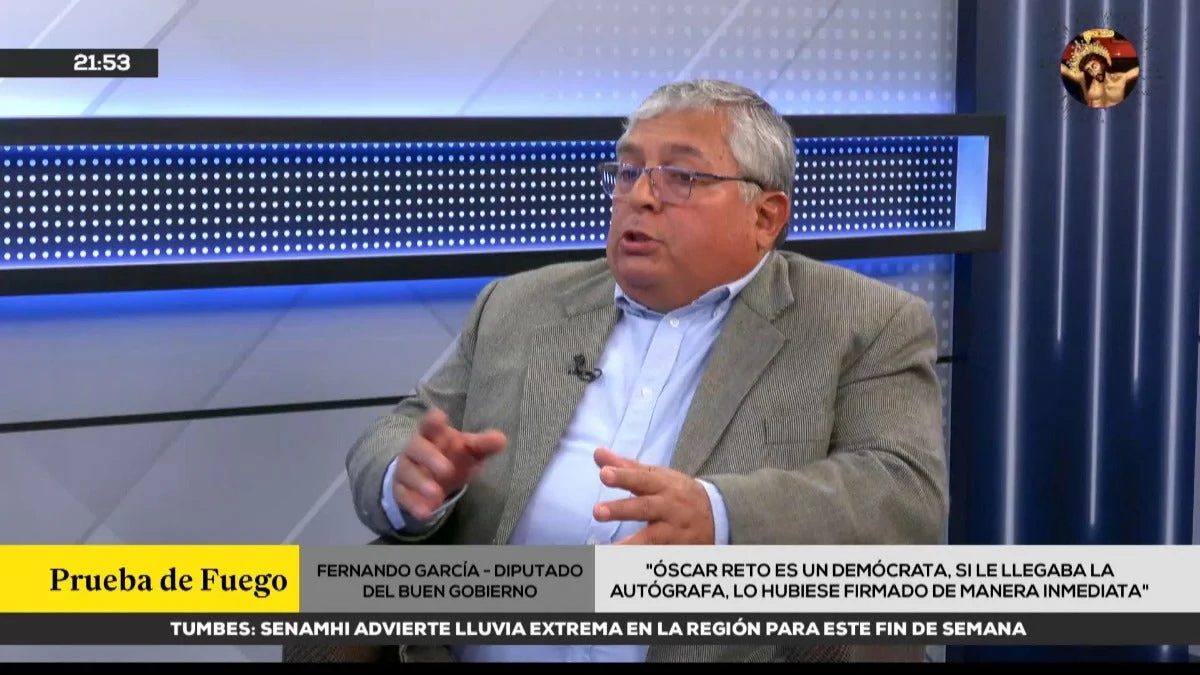
Fernando García, a prominent deputy representing the Buen Gobierno group, did not mince words when addressing the incident during an appearance on the television program Prueba de Fuego. "In the regulations, it is clearly stipulated: the spectrum of disciplinary action ranges from a verbal admonition to total separation from the bancada," García stated. He further noted that the party’s primary objective is to hold a transparent inquiry to understand the rationale behind the senators’ actions.
Chronology of the Legislative Dispute
To understand the gravity of the disciplinary proceedings, one must look at the timeline of events leading up to the fateful Wednesday vote:
- Pre-Vote Caucus (Monday): The Partido Buen Gobierno meets to discuss the government’s proposal. The leadership argues that the request lacks sufficient safeguards. A binding agreement is reached: the party will abstain.
- Senate Commission Review (Tuesday): The Constitutional Commission, under intense pressure from the Executive, adds seven additional items to the existing twenty requested by the Chamber of Deputies. This expansion makes the proposal more controversial.
- The Senate Floor Session (Wednesday): The debate stretches into the afternoon. As the roll call begins, the PBG’s collective stance is expected to be abstention.
- The Defiance: During the voting process, Jorge Gavidia and Juver Flores register their votes in favor of the delegation.
- Public Fallout (Thursday Morning): Deputy Fernando García announces on RPP TV that the party will initiate formal disciplinary proceedings, confirming that neither Gavidia nor Flores had provided prior justification for their departure from the party line.
Supporting Data: The Arithmetic of the Senate
The delegation of powers was approved with a final tally of 35 votes in favor, 18 against, and 6 abstentions. The composition of the "Yes" vote highlights the precarious position of the ruling coalition and the influence of the dissident senators.
The affirmative votes were consolidated by a bloc consisting of Fuerza Popular and Renovación Popular, supplemented by a handful of legislators from other groups, including Obras and Buen Gobierno. Within the "Obras" faction, legislators Daniel Barragán, Roger Astucuri, and Walter Gago also defied their own party directives to support the government.
The inclusion of the seven additional items—beyond the original twenty proposed by the lower house—turned the delegation of powers into a significant expansion of Executive influence. For the PBG leadership, the fact that Gavidia and Flores chose to support such an expansive bill, against the specific instructions of their peers, suggests a misalignment of strategic interests that the party can no longer ignore.
Official Responses and Internal Tensions
The PBG leadership has indicated that the next phase of the investigation will involve a formal invitation for the senators to appear before the joint boards of the two legislative chambers. "We are going to listen to them," García stated. "Until now, they have not provided any official explanation. The commission will evaluate the situation once we hear their side of the story."
The tone of the leadership is one of guarded suspicion. When asked if there was any evidence of "backroom deals" or external inducements that might have influenced the two senators to switch their votes, García remained diplomatic but pointed. "I hope there has not been any kind of commitment of another nature," he remarked, a statement that has fueled intense speculation in political circles regarding whether the Executive branch engaged in direct lobbying to secure the necessary votes.
For Gavidia and Flores, the path ahead is difficult. If the disciplinary committee finds that their actions were motivated by personal interest or outside pressure, the likelihood of expulsion increases. If, however, they can articulate a compelling ideological justification for their vote, they may survive with only a formal censure.
Implications for the Political Landscape
The implications of this incident extend far beyond the internal bylaws of the Partido Buen Gobierno.
1. The Stability of the Legislative-Executive Relationship
This event highlights the volatility of the current legislative environment. With the government relying on a fragile coalition of party-switchers and dissenters, the ability to govern effectively becomes tied to the internal stability of each participating party. If "Buen Gobierno" loses two senators, or if the internal dissent continues, the government’s ability to pass future legislation—particularly those requiring constitutional majorities—could be severely compromised.
2. The Power of Party Discipline
In many parliamentary systems, the "party whip" is the primary tool for ensuring legislative coherence. By openly defying their party, Gavidia and Flores have tested the limits of this system. If the PBG fails to impose a meaningful sanction, it risks appearing weak and fractured, potentially emboldening other members to vote according to their personal or regional interests rather than party mandates. Conversely, an overly harsh punishment could trigger a wider revolt, leading to a potential split in the party.
3. Public Perception and Accountability
The public discourse surrounding this issue is equally fraught. In the context of the El Niño phenomenon and citizen security, voters are looking for decisive action. While some may see the senators’ "Yes" vote as a pragmatic move to ensure the government has the tools to protect the country, others see it as a subversion of the democratic process and a betrayal of the voters who elected them under the PBG banner. The transparency of the upcoming disciplinary hearings will be a critical test for the PBG’s reputation.
Conclusion: A Turning Point
As the disciplinary process unfolds, the Partido Buen Gobierno finds itself at a critical crossroads. The decision to penalize Gavidia and Flores is not just about enforcing internal rules; it is an attempt to define the identity of the party in a polarized legislative landscape.
Will the party emerge more unified, or will this be the beginning of a broader disintegration? The answer lies in the hearings scheduled for the coming weeks. For now, the political eyes of the nation are fixed on the Senate, waiting to see if these two senators will remain part of the party’s future or if they will become the latest examples of the shifting loyalties that define contemporary national politics.
The investigation, as emphasized by Deputy García, is not merely a formality. It is a necessary exercise in accountability, aimed at ensuring that the legislative body operates on a foundation of trust, consistency, and respect for the democratic mandates of the political parties that comprise it. As the legislative agenda continues to press forward, the PBG’s handling of this internal crisis will serve as a bellwether for the stability of the entire Senate.