Introduction
The global landscape of press freedom is currently witnessing a troubling confrontation in Peru, where the intersection of political power and investigative journalism has reached a boiling point. The International Press Institute (IPI), a global network of editors, journalists, and media executives, has issued a searing condemnation regarding the systematic use of legal maneuvers by the Peruvian Congress against veteran investigative journalist Gustavo Gorriti.
This latest escalation is not merely a bureaucratic dispute; it is, according to the IPI, a retaliatory campaign designed to dismantle the credibility of a journalist who played a pivotal role in exposing the most significant corruption scandals in Latin American history. The IPI’s intervention marks a critical juncture in the defense of independent journalism in the region, characterizing the legislative actions as a blatant misuse of state power to silence dissent and obstruct accountability.
The Core Conflict: A Retaliatory Legislative Offensive
At the heart of the controversy lies a decision made on June 12 by the Plenary of the Peruvian Congress. By a majority vote, the legislature approved the final report of the so-called "Muñante Commission." This committee, chaired by Congressman Alejandro Muñante of the Renovación Popular party, recommended criminal investigations against Gorriti and a cadre of judicial operators—including prosecutors, public defenders, and a judge—who were instrumental in the 2019 plea deal between the Brazilian construction giant Odebrecht and the Peruvian state.
The IPI has been unequivocal in its assessment: these actions are not an exercise of legislative oversight, but rather a weaponized legal offensive aimed at punishing Gorriti for his investigative reporting. The IPI asserts that the commission’s focus is a thinly veiled attempt to rewrite the history of the Lava Jato investigations and neutralize those who brought the systemic corruption of the political class to light.
Conflicts of Interest and Political Vendettas
The legitimacy of the "Muñante Commission" has been heavily scrutinized. Observers point to clear, irreconcilable conflicts of interest within the body. The party driving the investigation, Renovación Popular, is itself currently under scrutiny within the broader framework of the Lava Jato case.
Furthermore, the rhetorical environment surrounding the investigation has turned increasingly hostile. Rafael López Aliaga, the leader of Renovación Popular, has engaged in a pattern of public intimidation against Gorriti. The IPI report highlights alarming rhetoric from López Aliaga, who has on multiple occasions suggested that authorities should "take care of" (cargarse) the journalist, even going so far as to state publicly that the political establishment "must get rid of that gentleman once and for all." Such language, coming from a major political leader, creates a climate of extreme vulnerability for the journalist, potentially inviting extrajudicial action under the guise of political discourse.
Chronology of Investigative Impact
To understand the intensity of the current backlash, one must look at the body of work that has made Gorriti a target. His career is marked by a commitment to exposing the "enmeshed" corruption that has historically defined Peru’s power structures.
The Odebrecht and Lava Jato Watershed
Gorriti and his platform, IDL-Reporteros, were the primary architects of the investigation into the Odebrecht bribery scheme in Peru. By uncovering the mechanisms through which the construction giant funneled millions into the campaigns of successive Peruvian presidents, Gorriti provided the empirical foundation for the Lava Jato case. This investigation was not just about a single company; it was a structural exposé that revealed how public contracts were auctioned off to the highest bidder in the halls of government.
The Cuellos Blancos (Lava Juez) Scandal
Beyond Lava Jato, Gorriti’s team broke the "Cuellos Blancos" or "Lava Juez" case. This investigation exposed a criminal network deeply embedded within the judiciary and the National Council of the Magistracy. The recordings released by IDL-Reporteros showed judges and prosecutors negotiating sentences, trading favors, and appointing cronies to sensitive positions. The fallout from these reports led to profound institutional reforms and the removal of dozens of corrupt officials. However, many of those implicated in the early days of the scandal have managed to pivot, and today, critics argue that individuals sympathetic to those exposed by Gorriti have regained influence within the Public Ministry.
The Global Recognition of Press Freedom
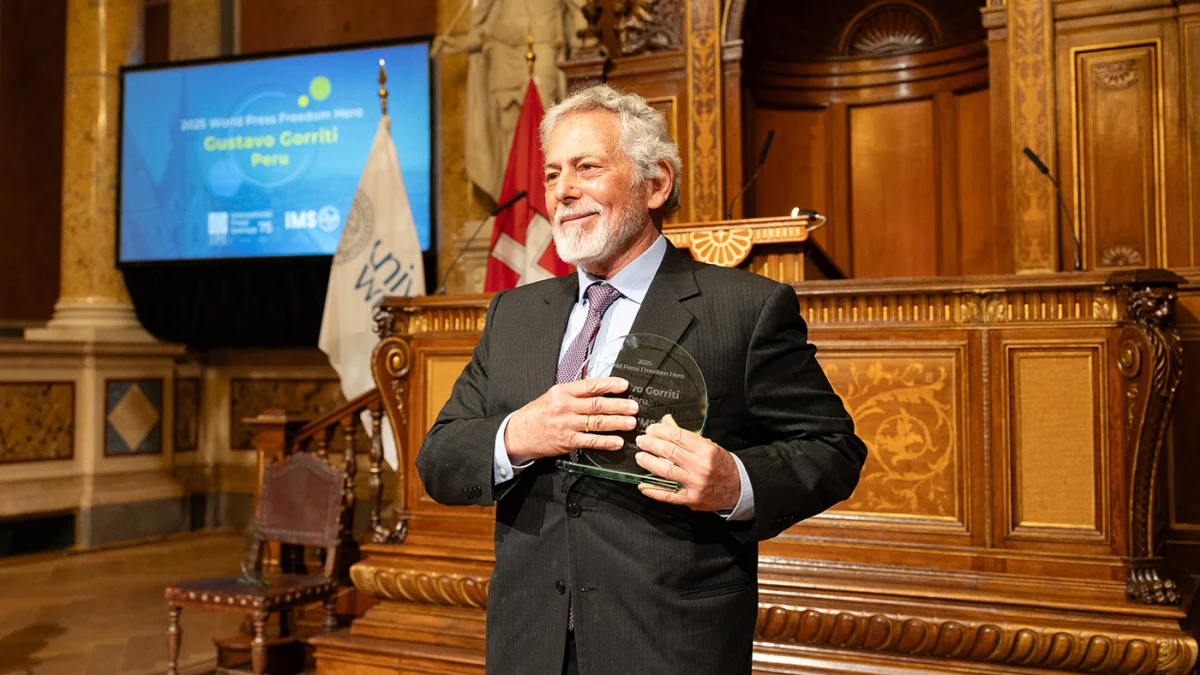
In recognition of his unwavering commitment to truth, even under severe personal risk, the IPI—in conjunction with International Media Support (IMS)—named Gustavo Gorriti a World Press Freedom Hero in 2025. This honor is reserved for journalists who demonstrate extraordinary courage in the face of systemic repression.
The IPI’s recent statement is a testament to the fact that Gorriti’s fight is viewed as a global struggle for democracy. By targeting a recipient of this prestigious award, the Peruvian Congress is effectively signaling its disregard for international standards of human rights and democratic governance.
Official Responses and the Call for Cessation
The IPI’s communiqué, released this Monday, is a stern ultimatum to the Peruvian authorities. The organization has called on the state to:
- Cease all use of political power as a tool of persecution against Gorriti.
- Guarantee the physical and professional safety of the journalist and his team at IDL-Reporteros.
- End the weaponization of the judicial system to silence investigative journalism.
The IPI emphasizes that the "judicialization of politics" (lawfare) is a dangerous trend that erodes the rule of law. When a legislative body uses its subpoena powers to target specific journalists, it undermines the constitutional protection of the press and destroys the public’s ability to access critical information.
Implications: A Darker Path for Peruvian Democracy
The ramifications of this campaign against Gorriti extend far beyond the individual. The situation in Peru serves as a cautionary tale for the region.
1. The Chilling Effect
When a prominent, award-winning journalist is subjected to state-sponsored legal harassment, the message sent to younger or less-resourced journalists is clear: investigate power at your own peril. This creates a "chilling effect" where self-censorship becomes a survival mechanism, leading to a decline in investigative rigor across the national media landscape.
2. Erosion of Institutional Trust
By attacking the very people who expose corruption, the current congressional leadership is effectively signaling that it prioritizes the protection of its members over the integrity of the state. This fosters public cynicism and distrust in the judicial and legislative systems, potentially destabilizing the country further.
3. The "Lava Juez" Backlash
The fact that the entities exposed by the "Cuellos Blancos" investigations are now wielding power against their accusers is a worrying sign of institutional capture. If the systems of justice are being used to investigate those who cleaned them up, the fight against systemic corruption in Peru may be facing an existential reversal.
Conclusion: The Path Forward
The IPI’s intervention is a critical rallying cry for the international community. It highlights that the defense of Gustavo Gorriti is not just about defending one man; it is about defending the principle that journalism is a pillar of a functional democracy.
As the Peruvian Congress proceeds with its agenda, the global eyes of the press freedom community remain fixed on Lima. The situation demands that international bodies, human rights organizations, and democratic allies of Peru exert pressure on the government to ensure that the legislative branch adheres to democratic norms.
Gustavo Gorriti’s work has forced a reckoning in Peruvian society, exposing the rot in the state and demanding a standard of transparency that the political class was unprepared to meet. The current attempts to "get rid of" that voice are a testament to the potency and necessity of his reporting. In the face of such pressure, the protection of his right to work is not just a legal obligation for the Peruvian state—it is a moral imperative for the survival of the country’s democratic institutions. The international community, led by the IPI, has made its stance clear: the weaponization of the law against the truth will not go unnoticed, and the world stands with those who continue to hold power to account.