This Sunday, over 26 million Peruvians will head to the polls to elect the governors, mayors, and council members who will steer the nation’s subnational destiny for the 2027–2030 term. Amidst a political landscape exhausted by intense national electoral cycles and constant central government crises, there is a dangerous temptation to view these regional and municipal elections as a mere administrative formality—a secondary exercise in democracy.
To view them as such would be a profound error. While national politics dominate the headlines, the tangible reality of the average citizen’s life—the quality of the pavement outside their home, the standards of the local school, the efficiency of the regional health clinic, and the reliability of water and sanitation services—is dictated entirely by the decisions made at the municipal and regional levels.
The Chronic Crisis of Execution: A Failure of Management
In June of this year, the alarm was raised regarding a persistent, systemic issue: regional governments possess the mandate and the fiscal resources, but they fundamentally lack the ability to produce results. The data, provided by the Office of the Comptroller General (Contraloría), paints a grim picture of administrative paralysis.
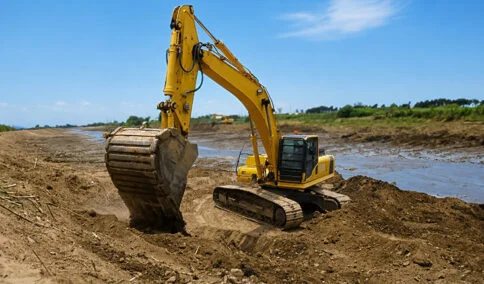
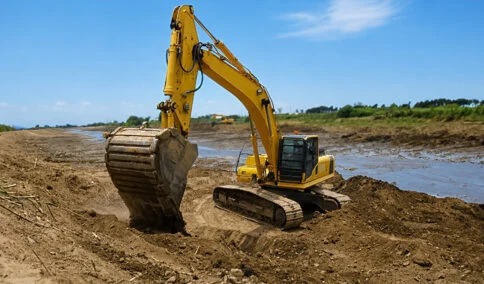
As of the mid-year report, there were more than 2,200 public works projects paralyzed across the country. These projects represent a staggering, unexecuted balance exceeding S/27,000 million (approximately $7.2 billion USD). Two out of every three of these stalled projects are municipal in nature. Perhaps most frustrating to the taxpayer is the fact that over 280 of these projects were more than 90% complete—essentially "ghost" infrastructure that stands as a monument to administrative incompetence, where nearly finished buildings and roads sit decaying because they lack the final administrative push to be delivered to the public.
The Myth of Resource Scarcity
The prevailing narrative often shifts the blame toward a lack of funding or the complexities of the national budget. However, research from ComexPerú reveals that the problem is not a shortage of capital. More than half of the paralyzed projects at the regional level had specific budget allocations earmarked for this year. Furthermore, on average, one-third of the total public investment budget is left unspent annually. The capital is available; the management capacity to deploy it is what is missing.
A Chronology of Stagnation: From Planning to Abandonment
To understand how a project transitions from a campaign promise to an abandoned concrete skeleton, one must look at the lifecycle of public management in Peru:
- The Campaign Promise (The "Inauguration" Phase): Candidates make grand, often unfeasible promises to build hospitals, bridges, or stadiums. These serve as the primary drivers of voter engagement.
- The Expedient Phase (The Technical Hurdle): This is where most projects fail. The drafting of a technical dossier (expediente) requires high-level professional expertise. Often, poorly prepared dossiers lead to cost overruns, legal disputes, and administrative deadlocks.
- The Execution Phase (The Supervision Gap): Once construction begins, the ability to supervise the contractor and resolve technical controversies becomes paramount. In many municipalities, the lack of professional administrative staff leads to a breakdown in communication between the state and the private contractor.
- The Liquidation Phase (The Final Failure): The final legal and accounting procedures required to formally hand over a public work are often ignored or mishandled, leaving the infrastructure in a state of legal limbo.
This cycle is rarely addressed during political debates, as these technical steps do not produce the applause that a ribbon-cutting ceremony does.
Implications for the Voter: The "Manager" Paradigm
Because promising is cheap and executing is difficult, voters must shift their criteria. When casting a ballot this Sunday, citizens should not be looking for the most charismatic speaker, but for the most competent manager. Before marking the ballot, voters should pose three fundamental questions:
- Proven Track Record: Has this candidate successfully managed an organization, a company, or a significant budget before?
- Concrete Deliverables: What specific, ongoing, or stalled project does this candidate commit to finishing, and by what specific date?
- The Team: Who are the technical experts behind the candidate? Public works require engineers, urban planners, and legal experts, not just political operators.
Holding Officials Accountable
For candidates who have already held office, the evaluation should be even more rigorous. Voters should demand transparency regarding their past performance: What did they actually execute? What did they leave paralyzed under their watch? And what outstanding legal or ethical accounts do they have pending?
Experience is only an asset if it is coupled with tangible results. If a candidate claims to be experienced but left behind a wake of incomplete projects, that "experience" is a liability.
Official Responses and the "Lima Excuse"
A perennial feature of regional and municipal politics in Peru is the "blame-game." Whenever a project fails or a service collapses, the local authorities are quick to point toward the central government in Lima, citing bureaucracy, lack of support, or political sabotage.
However, the data suggests that this is often a convenient excuse for local mismanagement. While national-level coordination is necessary, the decentralization process in Peru has provided regional governments with significant autonomy and direct budgetary control. The failure to utilize these tools is a failure of local leadership.
The Path Forward: Beyond Sunday
The democratic responsibility of the citizen does not conclude when the ballot is dropped into the box this Sunday. In fact, that is merely the beginning of a four-year contract.
Starting in January, the true work of citizenship begins:
- Active Surveillance: Citizens must actively monitor the progress of public works in their districts.
- Accountability: Demanding that mayors and governors provide periodic reports on budget execution.
- Rejecting Excuses: Refusing to accept the "blame Lima" narrative when the problem lies within the local municipality’s internal processes.
Conclusion: Contracting a Manager
Ultimately, the upcoming election is not a vote for a platform, a political philosophy, or a charismatic leader. It is an act of human resources. By casting their vote, 26 million Peruvians are effectively "hiring" a manager to handle their community’s resources, infrastructure, and future for the next four years.
Quejarse (complaining) about the failures of the state is easy, but it is ultimately unproductive. The difficult, yet essential, task is to choose wisely at the local level. It is the only way to transform the stagnant landscape of unfinished works into the functional, modern infrastructure that the Peruvian people deserve. This Sunday, remember: you are not electing a politician to give a speech; you are hiring a professional to deliver results.