By Editorial Staff
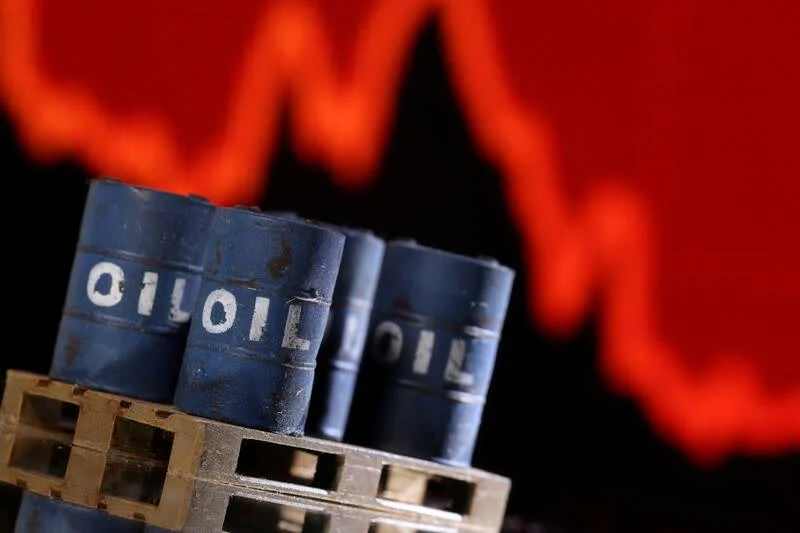
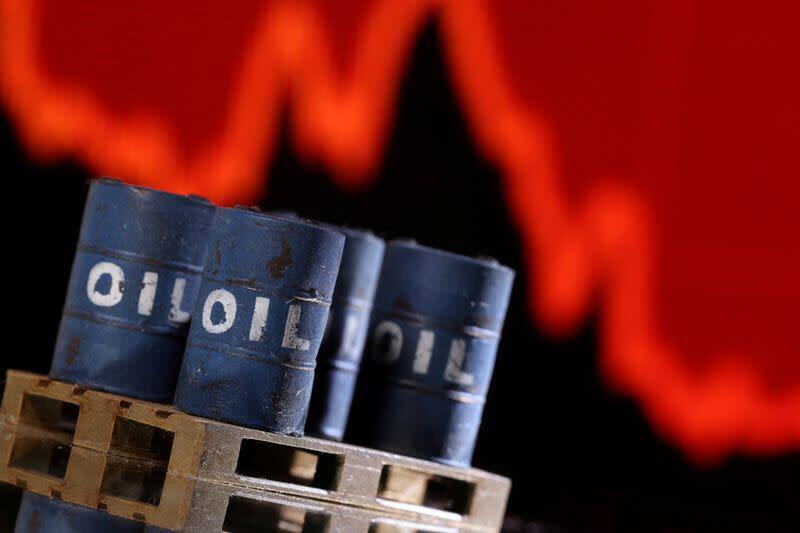
The global energy landscape witnessed a significant shift this Tuesday as the price of Brent crude for November delivery fell by 1.09%, settling at $99.25 per barrel at the close of the London futures market. This decline marks a psychological milestone, as the benchmark "North Sea" crude dropped below the $100 threshold, retreating $1.09 from its previous settlement of $100.34 on the Intercontinental Exchange (ICE). This downward trajectory reflects a market increasingly sensitive to the high-stakes diplomatic maneuvering currently unfolding in New York at the United Nations General Assembly.
The Core Dynamics: Markets React to Geopolitical Thaw
The retreat in oil prices is not merely a technical correction; it is a manifestation of investor optimism regarding the potential for diplomatic breakthroughs in two of the world’s most volatile conflict zones: the ongoing war in Ukraine and the escalating tensions between the United States and Iran.
For months, energy markets have been held hostage by the "geopolitical risk premium"—an added cost to every barrel of oil that reflects the fear of supply disruptions, particularly regarding the Iranian threat to the Strait of Hormuz and the instability in Eastern Europe. As global leaders converge for the UN General Assembly, the prospect of a negotiated settlement has provided a cooling effect on commodity prices. Traders are recalibrating their positions, betting that if these diplomatic efforts gain traction, the necessity for a high-risk premium will diminish, potentially easing supply pressures and lowering energy costs for the global economy.
Chronology of a Volatile Session
The trading day was characterized by intense fluctuations, mirroring the rhetoric emerging from the halls of the United Nations.
- Early Morning: Markets opened with cautious optimism, as investors anticipated a reduction in regional tensions. Brent hovered near the $100 mark.
- Mid-Day Volatility: Following comments from President Donald Trump suggesting that a final resolution to the Iran conflict might be contingent upon post-election domestic political shifts, the market experienced a sharp, temporary spike. Traders interpreted these remarks as a signal that a near-term truce was unlikely, triggering a brief rally in oil prices.
- Afternoon Stabilization: The upward momentum was quickly stifled as further reports emerged regarding back-channel communications between the U.S. and Iranian delegations. The realization that direct, albeit informal, negotiations were underway pulled prices back into negative territory.
- Market Close: The session concluded with Brent firmly established below the $100 barrier, signaling that the market is placing more weight on the potential for long-term de-escalation than on immediate political grandstanding.
Supporting Data and Market Sentiment
The current price of $99.25 reflects a broader trend of market fatigue regarding the "war-driven" price hikes seen earlier in the quarter. Analysts suggest that the market is reaching a point of saturation where the threat of conflict is already "priced in." Any movement toward a diplomatic solution, therefore, results in an outsized downward reaction as investors shed their defensive positions.
Furthermore, the data suggests that the global economy is increasingly fragile under the weight of high energy costs. Central banks and policymakers are watching these fluctuations closely; a sustained drop below $100 would be a welcome relief for inflation-stricken economies, potentially signaling a shift in the trajectory of interest rate policies in the coming quarter.
Official Responses and High-Stakes Diplomacy
The diplomatic narrative at the UN General Assembly is dominated by two primary figures: President Donald Trump and Ukrainian President Volodymyr Zelensky.
The Washington-Tehran Dialogue
President Trump addressed the Assembly with a calculated blend of skepticism and optimism. He suggested that while a definitive deal with Tehran is possible, it would likely be finalized only after the upcoming U.S. legislative elections on November 3. He characterized Iran as being in a "waiting" pattern, watching for the outcome of the American political process.
However, the reality on the ground appears more fluid. Trump confirmed that a three-hour meeting between U.S. government officials and the Iranian delegation took place on the margins of the UN summit. Describing the encounter as "very good," the President hinted at future meetings. Simultaneously, reports from the Associated Press (EFE) indicate that an Iranian official has proposed a concrete confidence-building measure: the reopening of the strategic Strait of Hormuz within seven days, provided that the United States agrees to an immediate easing of military pressure in the region.
The Ukraine Conflict: The Winter Deadline
Regarding the conflict in Ukraine, President Trump offered a surprisingly bullish outlook, stating that the war would conclude "faster than people think." This sentiment is echoed by the Ukrainian leadership, albeit with a different focus. President Zelensky arrived in New York with a clear objective: to secure international backing for a comprehensive ceasefire proposal. Zelensky has explicitly expressed his hope that President Trump can leverage his position to facilitate an end to the hostilities "before the winter," emphasizing the humanitarian and logistical urgency of halting the conflict as temperatures drop.
Implications for the Global Energy Market
The ripple effects of these diplomatic developments are profound. Should the negotiations in New York lead to a formal de-escalation, the implications for the global energy sector would be multifaceted:
- Supply Chain Normalization: If the Strait of Hormuz remains open and secure, a significant portion of the global crude supply chain—previously threatened by naval blockades and military posturing—will stabilize. This would likely drive prices further down as the risk of a "supply shock" evaporates.
- OPEC+ Strategy: A sustained dip below $100 per barrel will undoubtedly force the hand of OPEC+ nations. Member states, many of whom rely on oil revenues to balance their national budgets, may look toward production cuts to defend higher price floors. However, if diplomatic resolutions make the world more stable, the "leverage" these nations hold over the global economy will decrease significantly.
- Inflationary Relief: For the global consumer, the decline of oil prices is the most direct path to curbing inflation. Lower energy costs translate into cheaper logistics, manufacturing, and transport, which could act as a catalyst for a global economic recovery in the final quarter of the year.
- Geopolitical Realignment: The willingness of both the U.S. and Iran to engage in lengthy, formal meetings signals a shift from purely confrontational rhetoric to transactional diplomacy. If this persists, it could mark the beginning of a new, albeit fragile, era of stability in the Middle East.
Conclusion: A Market at a Crossroads
As the UN General Assembly continues its sessions, the energy market remains at a pivotal crossroads. The fall of Brent crude below the $100 mark is a testament to the power of diplomacy to sway market sentiment as much as—if not more than—physical supply and demand metrics.
While the volatility seen on Tuesday highlights the uncertainty that remains, the underlying trend suggests a market desperate for resolution. Whether the promises of "very good" meetings and "faster" endings to conflicts materialize into tangible treaties remains to be seen. For now, traders and global stakeholders are holding their breath, watching New York as the final arbiter of where oil prices—and by extension, the global economy—will head in the coming weeks. The transition from a state of "perpetual risk" to one of "potential peace" has begun, and the world’s energy markets are the first to register the change.