The assassination of journalist and regional gubernatorial candidate Susy Aponte Polo, widely known as "China Polo," has ignited a firestorm of political controversy and public outrage across Peru. The brutal execution, which took place in broad daylight at a bustling market in Caraz, Áncash, has not only claimed the life of a political figure but has also cast a long, dark shadow over the administration of President Keiko Fujimori. As the nation grapples with the fallout, the silence emanating from the executive branch is increasingly viewed as an indictment of the state’s ability to protect its citizens and uphold the rule of law.
The Tragedy in Caraz: A Summary of Events
On the afternoon of Saturday, September 15, the political landscape of the Áncash region was irrevocably altered. Susy Aponte, who was actively campaigning for the regional government, was gunned down in a premeditated attack at a market in the province of Huaylas. The brazen nature of the murder—carried out in a public space—has sent shockwaves through the community, highlighting the rising tide of violence targeting political actors and journalists in regional Peru.
Following the shooting, local authorities and the National Police (PNP) moved quickly to secure the scene. The Public Ministry confirmed the arrest of two individuals in flagrante delicto, who are currently being held as the primary suspects in the assassination. However, the apprehension of the material executors has done little to assuage the public’s fear. Instead, the focus has shifted toward the systemic implications of the murder, particularly given the victim’s recent history of public denunciations against high-ranking security officials.
Chronology of a Foretold Death
The tragedy did not occur in a vacuum. A review of the days leading up to the assassination reveals a harrowing trail of warnings that were seemingly ignored by the authorities.
- September 10: Susy Aponte publishes a video on her Facebook page, "China Polo Dominical," in which she publicly discloses that she has received three death threats via telephone, originating from various penal facilities. In the video, she explicitly names General Víctor Revoredo, then-head of the Directorate of Criminal Investigation (DIRINCRI), alleging that he had ordered an attack against her life.
- September 10–14: Aponte asserts that she filed formal complaints with the relevant state entities, seeking protection and an investigation into the alleged involvement of high-ranking police officials in a conspiracy against her.
- September 15: Aponte is assassinated in the market of Caraz. Reports indicate that at least one of the suspects had been staying at a local hotel prior to the attack.
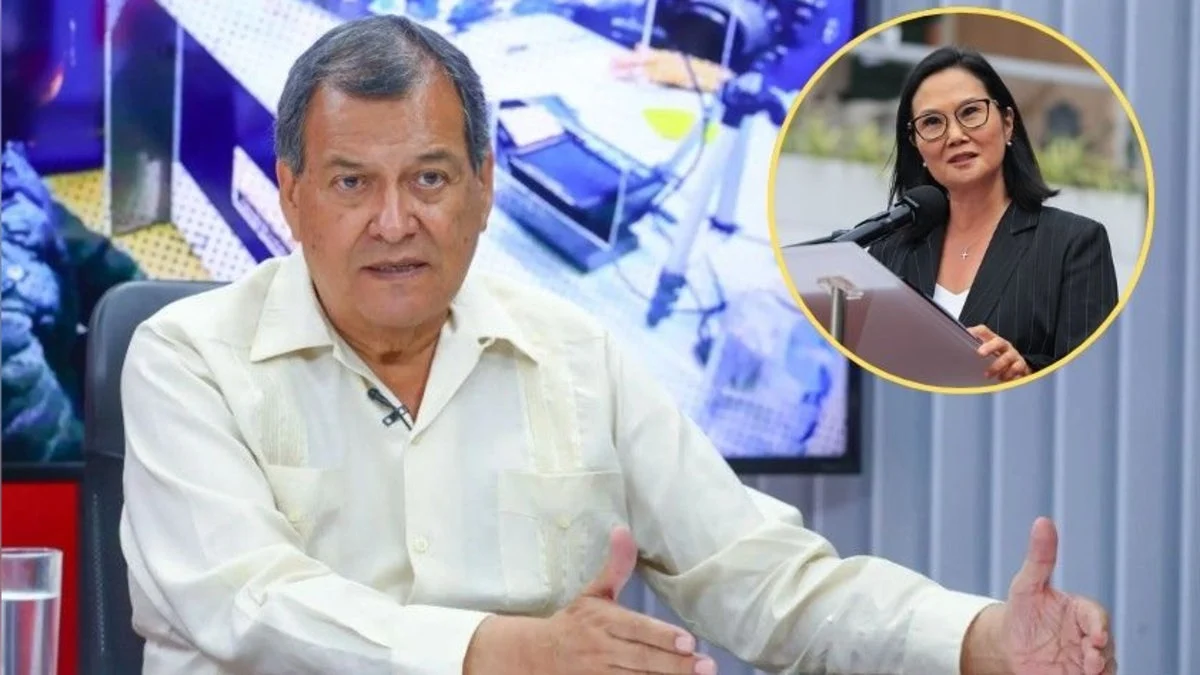
- September 16–17: The Partido del Buen Gobierno (PBG), led by former Defense Minister Jorge Nieto Montesinos, issues a scathing denunciation of the government’s silence.
- September 18: The Ministry of the Interior announces a sweeping reshuffle of the National Police high command, which includes the removal of General Víctor Revoredo from the DIRINCRI.
The Partido del Buen Gobierno and the Demand for Accountability
The Partido del Buen Gobierno has emerged as the loudest critic of the current administration’s handling of the crisis. In a formal statement, the organization condemned the "deafening silence" of President Keiko Fujimori’s government, arguing that it serves only to deepen the climate of terror and distrust among the citizenry.
"The country demands truth, and truth without delay," the PBG stated. "The Minister of the Interior should have already provided public explanations regarding this extremely grave event. This silence is an offense to the nation and generates more distrust and fear within the population."
The organization’s leadership has posed pointed, existential questions that reflect a growing anxiety about the infiltration of organized crime into state institutions: "Is it true that we are facing a narco-state? Is it true that the order was given by a high-ranking police officer? Is it true that this death seeks to silence denunciations of police corruption? Peru wants answers. Enough with the impunity."
Official Investigations: The Path to Justice
The Public Ministry has launched a high-priority investigation into the crime, characterizing it as a case of contract killing (sicariato). Provincial Prosecutor Raúl Godos Sedán, supported by Deputy Prosecutor Sheyla Romero Zárate, is leading the legal efforts to secure justice.
The ongoing judicial efforts include:
- Forensic Analysis: Conducting atomic absorption tests on the suspects to confirm their involvement in the shooting.
- Digital Evidence: Obtaining surveillance footage from the hotel where one of the suspects was residing as of September 15.
- Testimonies: Taking statements from bystanders and victims who were injured by stray bullets during the attack.
- Autopsy: Completing the legal necropsy of the victim to substantiate the cause of death and forensic details.
The Attorney General’s office has emphasized that these are "urgent and non-postponable proceedings," recognizing the pressure to provide a transparent conclusion to the case in a climate of extreme national sensitivity.
The Revoredo Controversy and Institutional Reshuffling
The assassination has coincided with a major shake-up within the National Police of the Peru. Shortly after the murder, the Ministry of the Interior released a Supreme Resolution detailing the reassignment of over 20 general-rank officers. Among the most significant reassignments is that of General Víctor Revoredo, the individual whom Aponte had explicitly accused of orchestrating an attack against her.
General Revoredo, previously the chief of the DIRINCRI, has been reassigned to the Directorate of International Affairs (DIRASINT). While the government maintains that these reassignments are routine, critics—including the Partido del Buen Gobierno—view the timing as highly suspicious. The move has raised questions about whether the government is attempting to protect a high-ranking officer from scrutiny or if it is an attempt to mitigate institutional damage in the wake of Aponte’s public allegations.
Implications: A Nation at a Crossroads
The death of Susy Aponte is more than just a crime; it is a symptom of a deeper malaise in Peruvian governance. Several key implications have emerged:
1. The Vulnerability of Regional Journalism
Aponte’s role as both a journalist and a candidate made her a powerful voice for accountability in Áncash. Her murder sends a chilling message to regional reporters who investigate local corruption, suggesting that the cost of truth-telling can be one’s life.
2. Distrust in the Security Apparatus
The fact that a victim publicly accused a high-ranking police general of threatening her, only to be murdered days later, has shattered public confidence in the National Police. When the institution charged with providing security is perceived as the source of the threat, the social contract effectively collapses.
3. The Test of the Fujimori Administration
The administration of President Keiko Fujimori now faces a pivotal test of its legitimacy. If the investigation into the murder is perceived as a "whitewash"—or if the connections between the suspects and the high command are not thoroughly explored—the government risks a total loss of credibility. The demand for "no more impunity" is not merely a slogan; it is a requirement for political survival in a country where citizens are increasingly weary of institutional corruption.
4. The Specter of the Narco-State
The mention of a "narco-state" by political leaders is a significant escalation in rhetoric. It reflects the widespread fear that criminal enterprises have gained enough power to neutralize political opponents and subvert the police. The government’s failure to address this specific fear with transparency and concrete action will likely fuel further protests and political instability in the coming months.
Conclusion
As the investigation into the murder of Susy Aponte continues, the eyes of the Peruvian public remain fixed on the Ministry of the Interior and the Presidency. The death of "China Polo" has become a rallying point for those who believe that the state has been compromised by the very elements it is sworn to combat. Whether this tragedy leads to a genuine house-cleaning of the police force or simply becomes another cold case in the annals of Peruvian political violence remains to be seen. What is certain, however, is that the silence from the halls of power is no longer sustainable. The nation is waiting for answers, and in the current climate, justice delayed may well be justice denied.