
By Financial Desk Editorial Team
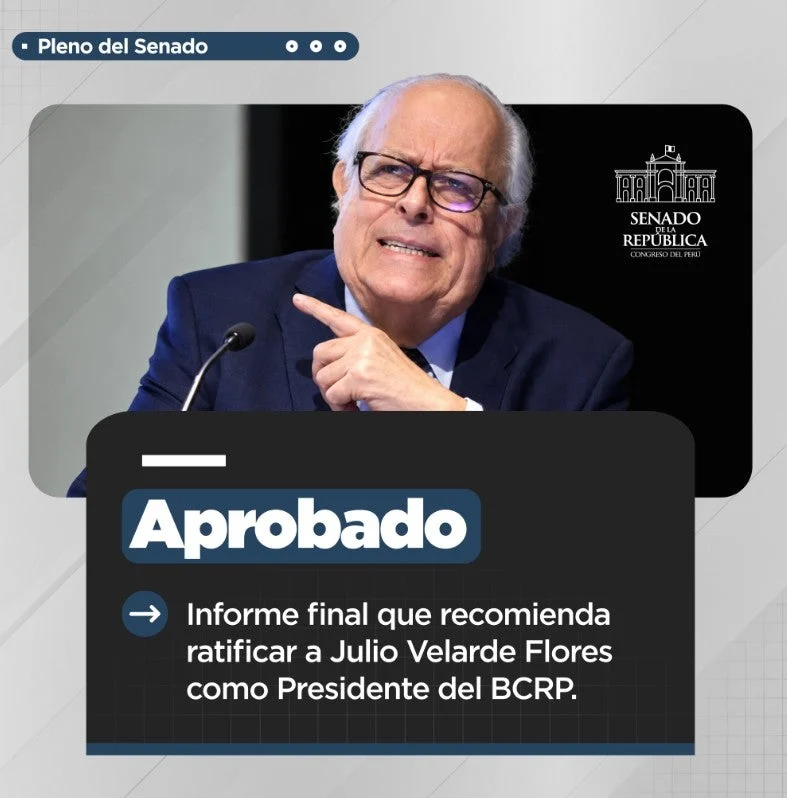
In a decisive move aimed at preserving macroeconomic stability, the Senate of the Republic of Peru has officially ratified the appointment of Julio Velarde as President of the Board of Directors of the Central Reserve Bank of Peru (BCRP). The confirmation, which secures Velarde’s leadership through the 2026–2031 term, underscores the nation’s commitment to institutional continuity amidst a shifting political landscape.
The vote concluded with 40 senators in favor, 12 against, and zero abstentions, reflecting a broad, albeit contested, consensus on the necessity of maintaining a steady hand at the helm of the country’s monetary authority.
Main Facts: A Clear Mandate for Institutional Stability
The plenary session of the Senate served as the final hurdle for Velarde’s reappointment. The ratification followed a comprehensive review by the Commission of Special Procedures, which concluded that Velarde not only meets all legal and constitutional requirements for the role but also stands as the most qualified candidate to steer the BCRP through the upcoming five-year cycle.
The Commission’s report explicitly stated that there are no legal impediments or conflicts of interest that would disqualify the veteran economist. Furthermore, the report emphasized that Velarde’s extensive track record and technical proficiency are essential for ensuring monetary stability and managing inflation targets—the core mandate of the central bank.
The executive branch, led by President Keiko Fujimori, had previously formalized the proposal for Velarde’s reappointment on August 21, signaling an administration intent on prioritizing economic technicality over political turnover.
A Chronology of Two Decades of Monetary Stewardship
To understand the weight of this ratification, one must examine the timeline of Julio Velarde’s tenure, which has spanned some of the most volatile periods in Peruvian economic history.
- 2006: Julio Velarde is first appointed as President of the BCRP by the then-administration of Alan García. His arrival was initially met with a mix of cautious optimism and skepticism, as he inherited an economy transitioning into a period of unprecedented growth.
- 2006–2016: Throughout the first decade, Velarde oversaw the consolidation of the BCRP’s autonomy. His policies focused on inflation targeting and the accumulation of international reserves, which acted as a buffer during the 2008 global financial crisis.
- 2016–2021: As the political climate in Peru became increasingly fractured, the BCRP under Velarde became a rare pillar of institutional stability. His ability to remain "above the fray" earned him international accolades and domestic respect from diverse sectors of the business community.
- 2021–2026: Navigating the economic fallout of the global pandemic and domestic political turmoil, Velarde’s leadership was frequently cited as the primary factor preventing a total loss of investor confidence in the Peruvian Sol.
- 2026: With his confirmation by the Senate, Velarde enters his third decade of leadership. This current term is set to conclude in 2031, effectively cementing his legacy as one of the longest-serving and most influential central bank governors in Latin American history.
Supporting Data: Why Experience Matters
The arguments in favor of Velarde’s reappointment are rooted in quantitative performance. Throughout his tenure, the BCRP has successfully managed to keep inflation within target ranges, despite global supply chain disruptions and volatile commodity prices.
Financial analysts point to the bank’s "technical independence" as the primary reason for the Sol’s relative resilience compared to other regional currencies. Under Velarde, the BCRP has maintained a prudent monetary policy, characterized by:
- Inflation Control: Consistently keeping inflation at among the lowest levels in the region.
- Reserve Management: Maintaining robust international reserves that provide the liquidity necessary to intervene in foreign exchange markets when volatility threatens economic stability.
- Institutional Credibility: A high degree of transparency in communication, which has helped anchor expectations among businesses and consumers alike.
The Senate’s decision to ratify him rests on the belief that replacing a figure with such high international credibility could trigger market instability, increase sovereign risk premiums, and undermine the long-term investment climate.
The Debate: Official Responses and Political Friction
Despite the comfortable margin of victory in the Senate, the confirmation was not without its detractors. The floor debate highlighted the deep ideological divides present in the Peruvian legislature.
The Opposition’s Stance
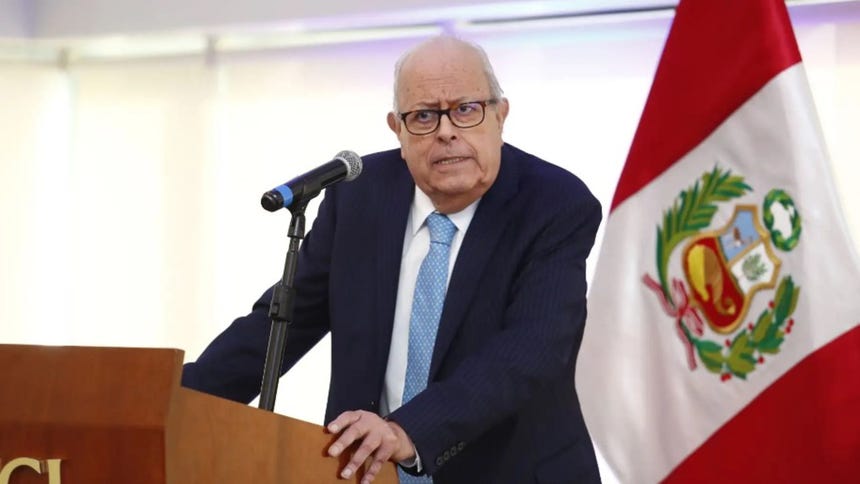
Humberto Morales, representing the Juntos por el Perú bloc, voiced strong opposition to the reappointment. During the plenary session, Morales criticized the Senate’s review process, describing it as "watered down" (pasada por agua tibia). His primary objection centered on the perceived closeness of Velarde to the private sector and major financial institutions. Morales argued that a more rigorous investigation into these potential conflicts of interest was required, suggesting that the "technocratic consensus" often overlooks the needs of the working class.
The Defense of Stability
Conversely, José Arista of the Fuerza Popular party defended the reappointment as a matter of national priority. Arista emphasized that in an environment of global economic uncertainty, the government should prioritize "proven competence" over political experimentation. "It is vital for the nation to retain officials who deliver results and perform at an excellent level, rather than seeking change for the sake of change," Arista remarked during his intervention.
The Conditional Support
Roger Astucuri, representing the Partido Cívico Obras, provided a pragmatic, albeit cautious, perspective. While voting in favor, he explicitly stated that his support was not a "blank check." Astucuri noted that his legislative role would shift toward rigorous oversight, ensuring that the BCRP remains transparent, independent, and accountable to the public as it manages the nation’s monetary assets.
The Path Ahead: Implications for 2026–2031
The ratification of Julio Velarde carries significant weight for the next five years of Peruvian economic life. His continued presence suggests that the fundamental pillars of Peru’s economic policy—fiscal discipline, inflation targeting, and institutional autonomy—will remain largely unchanged.
1. Market Confidence
International markets, including credit rating agencies, have historically reacted positively to news of Velarde’s tenure extension. This confirmation provides a "stability anchor" for foreign direct investment (FDI), assuring stakeholders that the central bank will not be subject to erratic policy shifts.
2. Monetary Policy Challenges
The 2026–2031 term will not be without challenges. The BCRP will need to navigate the complexities of a changing global economy, including the rise of digital currencies, potential shifts in global trade alliances, and the ongoing need to support domestic recovery in a post-pandemic world. Velarde’s experience will be tested as the bank balances the need for growth with the imperative of price stability.
3. The Future of Institutionalism
The debate in the Senate also touched upon a broader question: the relationship between politics and the BCRP. While Velarde’s reappointment ensures continuity, it also keeps the spotlight on the bank’s independence. Critics like Morales have signaled that the discourse surrounding the BCRP will likely shift toward greater demands for accountability, forcing the central bank to find new ways to communicate its complex technical decisions to a broader, more skeptical public.
Conclusion: A Veteran for Uncertain Times
The Senate’s vote to ratify Julio Velarde is a testament to the high regard in which he is held by the Peruvian political establishment and the financial sector. By securing his leadership for another five-year term, the legislature has chosen the path of continuity and predictability.
As Velarde enters his third decade of service, he carries the burden of maintaining the country’s economic health in an era of global volatility. While his supporters celebrate the decision as a victory for pragmatism, the vocal opposition serves as a reminder that even the most respected institutions must constantly justify their independence and relevance in a democratic society.
For now, the message from the Senate is clear: in a world of variables, the continuity of the Central Reserve Bank’s leadership remains a constant. As Peru looks toward 2031, the economic steering wheel remains in familiar, steady hands.