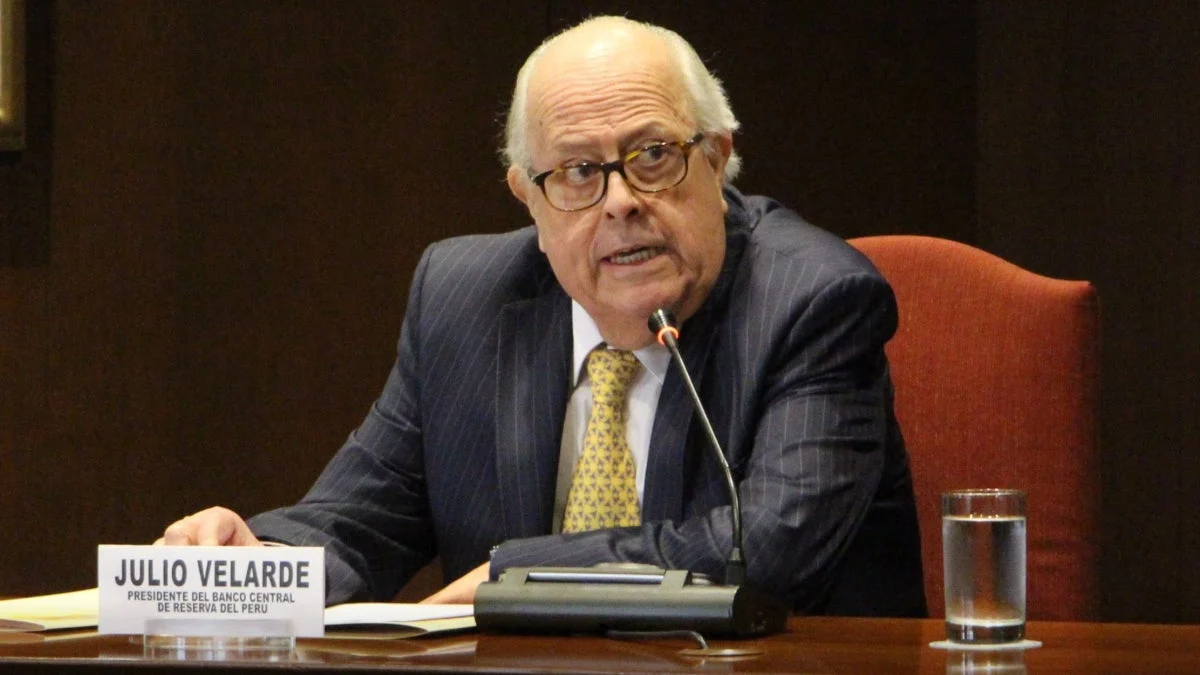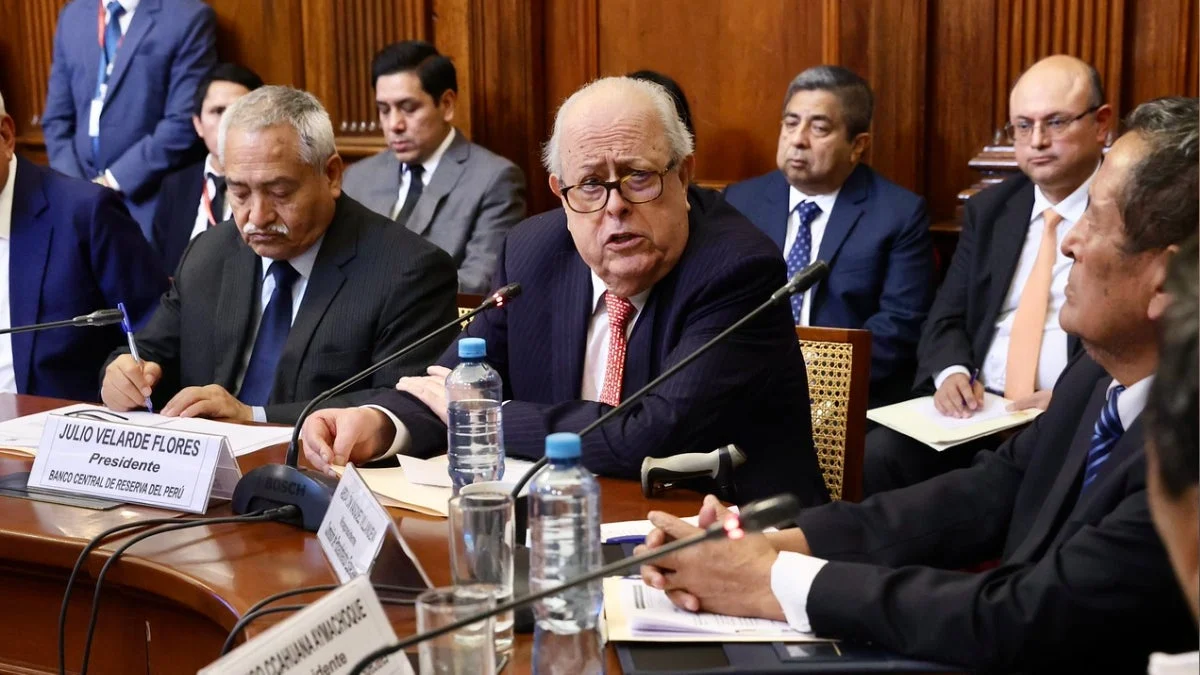
In a high-stakes session before the Senate’s Commission of Special Procedures, Julio Velarde, the long-standing president of the Central Reserve Bank of Peru (BCR), offered a masterclass in monetary prudence. As he faces the process for his fifth consecutive ratification to lead the institution, Velarde’s testimony underscored a central philosophy that has anchored the Peruvian economy for two decades: stability over speculation.
At the heart of the debate was the composition of Peru’s international reserves—specifically, the role of gold. As global markets fluctuate and commodity prices capture headlines, Velarde reaffirmed that Peru maintains approximately 7% of its international reserves in gold, a figure significantly higher than the global average of 2% to 3%. His testimony served as both a policy explanation and a firm rejection of the notion that the central bank should act as a commodity trader.
The Mandate of Stability: Two Decades of Institutional Strength
Julio Velarde’s tenure at the helm of the BCR has been characterized by an unwavering commitment to inflation targeting and currency stability. During his address to the Senate, Velarde emphasized that the institution’s primary objective remains the maintenance of monetary and price stability.
"The primary objective of the Central Bank is monetary and price stability. I believe we have fulfilled that objective quite well," Velarde stated. This record of stability is not merely a bureaucratic claim; it is the bedrock upon which Peru’s macroeconomic resilience has been built. Under his leadership, the BCR has navigated global financial crises, local political instability, and pandemic-induced economic shocks, consistently maintaining a level of institutional credibility that is rare in the Latin American context.
Chronology of a Debate: Gold Prices and Central Bank Policy
The discussion regarding the BCR’s gold holdings is framed by the dramatic volatility of the precious metal in international markets. In 2024, the price of gold reached unprecedented heights, surpassing $5,000 per ounce before correcting toward the $4,500 range.
Key Milestones in the Gold Debate:
- Historical Context: For decades, the BCR has maintained a diversified portfolio of international reserves, prioritizing liquidity and safety.
- The Price Surge (2024): The rapid appreciation of gold sparked interest among lawmakers regarding whether Peru was "missing out" on potential gains by not aggressively expanding its gold reserves.
- The Congressional Session (September 2024): The Commission of Special Procedures summoned Velarde to discuss his reappointment and, concurrently, his views on the country’s reserve management.
- The Response: Velarde’s testimony clarified that the BCR is not an investment fund designed to gamble on mineral cycles, but a steward of national financial security.
The Economics of Volatility: Why 7% is the "Sweet Spot"
When asked why Peru does not increase its gold holdings further, Velarde provided a nuanced explanation grounded in risk management. While Peru’s 7% holding is already higher than the global average, increasing this exposure significantly would introduce undue risk to the nation’s balance sheet.
The Risk-Return Analysis
Velarde was categorical: "It is not the job of the Central Bank to be buying minerals. If we were to justify buying gold, one could just as easily justify buying copper, silver, or other commodities."
The president of the BCR underscored the fundamental difference between a central bank and an investment firm. Gold is an asset with high volatility. While the potential for gains exists, the potential for losses—which would affect the country’s liquidity and overall credit rating—is equally high. He pointed to the recent experience of Chile, which re-entered the gold market only to see prices drop from $5,200 to $4,300 per ounce, serving as a cautionary tale of the perils of market timing.
Global Benchmarks
Velarde contrasted Peru’s strategy with other nations, noting that major holders like the United States, Germany, and Italy have not actively purchased gold for decades—in Italy’s case, for over 150 years. These nations hold gold as a strategic, long-term hedge against systemic risk, not as a speculative trade. For Peru, which held $96,518 million in Net International Reserves (RIN) as of August 2024, the current 7% allocation provides a balanced buffer that secures the nation without overexposing it to the whims of the commodities market.
The Ethical Quandary: The Shadow of Illegal Mining
A significant portion of the hearing was dedicated to the intersection of national reserves and the scourge of illegal mining. Critics have occasionally suggested that the BCR could "absorb" the gold produced by small-scale miners to formalize the industry. Velarde’s rejection of this idea was both ethical and pragmatic.
"The problem with gold is that when it comes from illegal activities, buying it does not make it legal. The Central Bank would be laundering it, but it would not cease to be illegal," Velarde argued.
His position highlights a critical distinction: the BCR is an administrative and financial authority, not a law enforcement agency or a corporate buyer of raw materials. By purchasing gold from questionable sources, the institution would essentially be providing a veneer of legitimacy to a criminal enterprise that causes severe environmental degradation and social instability in regions like Madre de Dios.
The Problem of Formal Channels
Velarde acknowledged that much of the gold extracted illegally in Peru is eventually "laundered" through formal export channels, utilizing authorized processing plants to mask its illicit origin. He noted that the previously high volume of gold smuggled into Bolivia has shifted, with more of the illicit metal now entering the formal export chain within Peru itself.
Implications for Public Policy and State Presence
The discussion concluded with a stark assessment of the state’s role in the mining sector. Velarde emphasized that the issue of illegal mining is a structural problem that demands a multisectoral response, not a monetary one.
The Need for State Presence
"What is missing is the presence of the State and a search for ways to satisfy these small-scale miners so they can work in an orderly fashion," Velarde noted. He argued that the government must provide the necessary legal and logistical framework for small miners to formalize their operations.
For the BCR, the implication is clear: the bank must remain an independent, technocratic body that focuses on its core mandate. By avoiding the temptation to interfere in the mining sector or speculate on commodity prices, the BCR protects its autonomy and the stability of the Peruvian Sol.
Conclusion: A Philosophy of Prudence
The testimony of Julio Velarde before the Senate serves as a vital reminder of the role of a central bank in a developing economy. In a political climate often dominated by populist demands and short-term fixes, Velarde’s adherence to rigorous risk analysis and institutional boundaries stands out.
Peru’s current reserve policy, while conservative, has provided the country with a cushion that many of its regional neighbors envy. By maintaining a measured 7% in gold and resisting the calls to enter the volatile business of mineral trading, the BCR continues to prioritize the long-term health of the Peruvian economy. As the Senate considers his fifth term, the message is clear: stability is not the result of exciting trades or reactive policies, but of the consistent, disciplined, and often quiet application of sound economic principles.