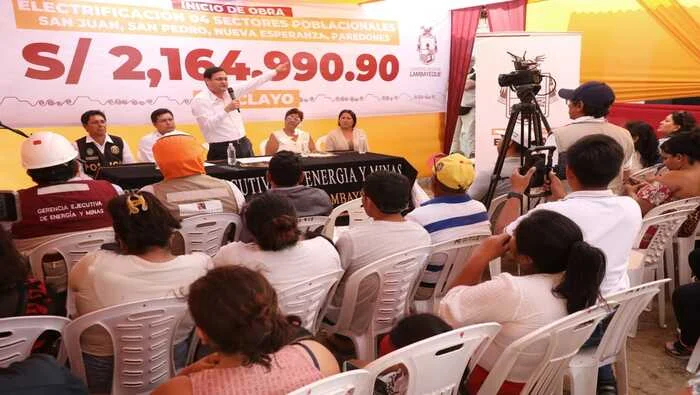
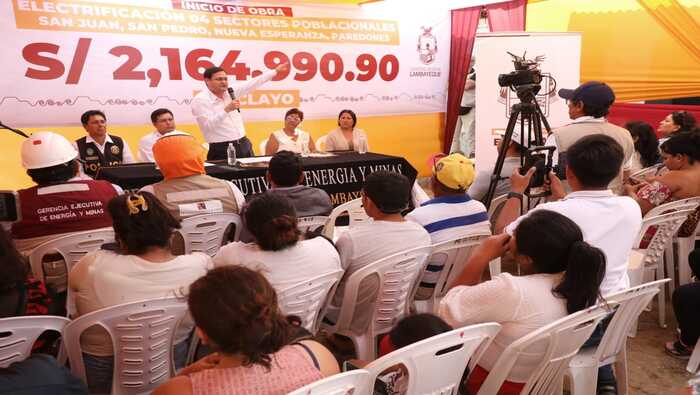
CHICLAYO, PERU – In a significant stride towards eradicating historical energy access disparities, the Government of Lambayeque has officially commenced a crucial electrification project. The ceremony marking the placement of the inaugural pole signaled the formal initiation of works designed to bring reliable and modern electricity to four peripheral urban sectors across the districts of La Victoria, Pimentel, and Chiclayo. This ambitious undertaking, spearheaded by the Regional Government of Lambayeque, represents a pivotal moment for communities that have long been deprived of basic public services.
The project, valued at over S/ 2.1 million (approximately $570,000 USD), is meticulously planned to transform the lives of hundreds of families. It involves the comprehensive deployment of 3.8 kilometers of self-supporting power lines, the installation of 48 robust 13-meter concrete poles, and an additional 160 poles of 9 meters. Complementing this new infrastructure will be 134 energy-efficient 55W LED streetlights, promising improved safety and visibility, along with a complete suite of six three-phase transformers of varying capacities to ensure robust and stable power distribution.
Initially, this vital public infrastructure is slated to benefit approximately 500 families in the localities of San Juan, San Pedro, Nueva Esperanza, and Paredones. However, projections indicate that this number will likely expand, with plans for further site assessments expected to extend the benefits to over 600 households. This expansion underscores the project’s commitment to inclusivity and its potential to uplift a broader segment of the population.
A Commitment to Dignity and Progress
Governor Jorge Luis Pérez Flores of Lambayeque underscored the profound significance of this initiative during his address at the commencement ceremony. He emphasized that the project is not merely about installing electrical infrastructure but about bestowing dignity and light upon areas that have been overlooked for decades, often existing in the shadows of the region’s more developed urban centers.
"This is more than just an infrastructure project; it is a project of dignity," Governor Pérez Flores stated. "For too long, these communities have been left behind. Today, we are bringing them into the light, not just literally, but by providing them with the fundamental services that enable progress and a better quality of life."
The governor also took the opportunity to address any criticisms regarding the regional government’s involvement in urban sanitation and electrification projects. He firmly asserted that the resources being utilized are derived directly from the tax contributions of the region’s citizens, highlighting the responsible stewardship of public funds. He unequivocally defended the regional government’s mandate to address essential social gaps, emphasizing that such interventions are not only permissible but crucial for the well-being of the populace.
"The resources we are investing here are the fruits of the hard work and tax contributions of the people of Lambayeque," Governor Pérez Flores declared. "We will not shy away from our responsibility to ensure that every citizen, regardless of their location, has access to basic services. Our legal framework fully supports these efforts to close social divides and foster inclusive development."
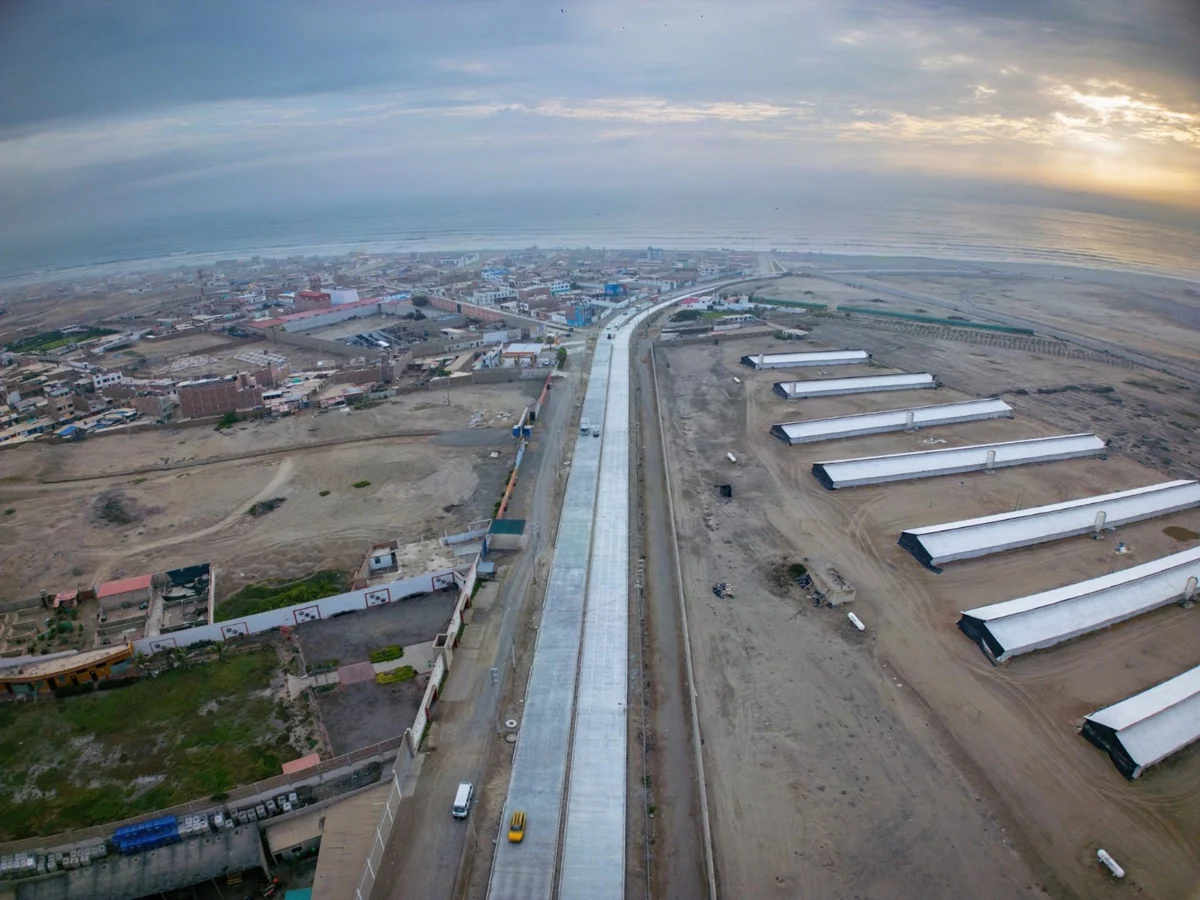
He further reaffirmed the regional government’s unwavering commitment to pursuing integrated infrastructure projects in parallel with electrification efforts. This includes the ongoing development of critical road networks, such as further segments of the Autopista del Sol, and the future management of water and sewage systems for peri-urban areas, signaling a holistic approach to regional development.
Strategic Planning and Future-Oriented Design
The technical intricacies and strategic foresight behind the project were elaborated upon by Adner Rojas Pérez, the Executive Manager of Energy and Mines. He revealed that his department was instrumental in the project’s entire lifecycle, from its initial conceptualization during the pre-investment phase through to the meticulous development of the technical specifications.
"Our team has been dedicated to ensuring that this project is not only functional but also sustainable and forward-looking," Rojas Pérez explained. "We have meticulously planned every aspect, from the type of wiring to the capacity of the transformers, to meet the current and future energy needs of these communities."
A key highlight of the project, according to Rojas Pérez, is its deliberate design to foster productive development. The inclusion of a three-phase electrical system is a strategic decision intended to empower local residents and entrepreneurs. This robust system will provide the necessary capacity for individuals and small businesses to establish and expand local enterprises, potentially stimulating economic growth within these previously underserved areas.
"The three-phase system is a game-changer," Rojas Pérez emphasized. "It means that residents will have the power to run small workshops, engage in manufacturing, and develop businesses that were simply not feasible with the limited or non-existent electricity supply they had before. This is about creating opportunities and fostering economic self-sufficiency."
Upon the successful completion of the construction phase, the newly installed electrical infrastructure will be formally transferred to Electronorte, the concessionaire responsible for its ongoing operation, maintenance, and regular billing. This transition is a critical step that will enable the beneficiaries to access valuable state subsidies. These include vital programs such as the Fondo de Inclusión Social Energético (FISE), which aims to broaden energy access for low-income households, and the Fondo de Compensación Social Eléctrico (FOSE), designed to provide financial relief for electricity costs, ensuring that the benefits of electrification are affordable and sustainable for all.
Voices of Gratitude and Hope
The culmination of years of persistent advocacy was palpable as neighborhood leaders from the affected sectors expressed their profound satisfaction and heartfelt gratitude. Charito del Pilar Rodríguez Farfán, a representative from the Huaca San Juan sector, articulated the deep appreciation of her community.
"After so many years of knocking on doors, of waiting, and of hoping, this day has finally arrived," Rodríguez Farfán shared with emotion. "We are deeply thankful to the authorities and the regional government for their perseverance. This project will directly benefit over 600 families in our sector, transforming our daily lives and opening up new possibilities for our children."
Echoing these sentiments, Manelik Merino Herrera, representing the San Pedro sector, described the commencement of the works as a "dream come true" for the residents who had patiently awaited the arrival of electricity for many years. She lauded the collaborative effort between the community and the regional government as instrumental in achieving this collective well-being.
"For us, electricity was a luxury we could only dream of," Merino Herrera stated. "Today, that dream is becoming a reality. This is the result of a strong partnership and a shared vision for a better future for our communities. We are immensely grateful for the commitment shown by Governor Pérez Flores and his team."
Project Details and Scope of Work
The "Creation of Domestic Electric Supply Service in Urban Areas in Four Peripheral Sectors of the Districts of La Victoria, Pimentel, and Chiclayo" project is a comprehensive initiative designed to address critical infrastructure deficits. The investment of over S/ 2.1 million is allocated towards:
- Network Expansion: The deployment of 3.8 kilometers of modern, self-supporting power lines, ensuring efficient and reliable energy transmission.
- Pole Installation: The erection of 48 durable 13-meter concrete poles and 160 9-meter poles to support the new electrical grid, providing a sturdy and long-lasting framework.
- Advanced Lighting: The installation of 134 high-efficiency 55W LED luminaires, enhancing public safety, improving visibility, and contributing to energy conservation.
- Transformer Capacity: The integration of six three-phase transformers of diverse capacities, crucial for distributing electricity effectively and meeting the varied demands of residential and potential commercial users.
Historical Context and Future Implications
The electrification of these peripheral sectors represents a significant step in closing what has been termed "historical electrification gaps" in Peru. For decades, many peri-urban and rural communities have been excluded from the benefits of modern electrical grids, leading to a disparity in living standards, educational opportunities, and economic potential. The lack of electricity has often meant reliance on less efficient and more costly alternatives, such as kerosene lamps, and has limited the adoption of essential appliances and technologies that are commonplace in more developed areas.
This project, therefore, has profound implications that extend beyond the immediate provision of power:
- Improved Quality of Life: Access to electricity will enable households to use modern appliances, improve home lighting for studying and other activities, and enhance overall living conditions.
- Enhanced Public Safety: The installation of LED streetlights will significantly improve safety in public spaces, reducing the risk of accidents and deterring crime, particularly during nighttime hours.
- Economic Development and Entrepreneurship: The three-phase power system is a critical enabler for local economic growth. It will empower residents to start and expand small businesses, workshops, and potentially even small-scale industries, creating local employment opportunities and fostering economic self-sufficiency.
- Educational Advancement: Reliable electricity will allow students to study more effectively at home, access digital learning resources, and ultimately improve educational outcomes.
- Health Benefits: Reduced reliance on traditional lighting methods like kerosene lamps will contribute to better indoor air quality and reduce associated health risks.
- Social Inclusion: By bringing essential services to previously marginalized communities, the project promotes social inclusion and reduces the urban-rural divide, ensuring that all citizens can participate more fully in the economic and social life of the region.
The successful execution and long-term operation of this electrification project by the Government of Lambayeque, in partnership with Electronorte, sets a precedent for addressing similar infrastructure deficits across the region and the nation. It is a testament to the power of strategic planning, community engagement, and a government’s commitment to ensuring that no community is left in the dark. The project’s success will undoubtedly pave the way for further investments in essential public services, driving inclusive growth and improving the lives of countless citizens.