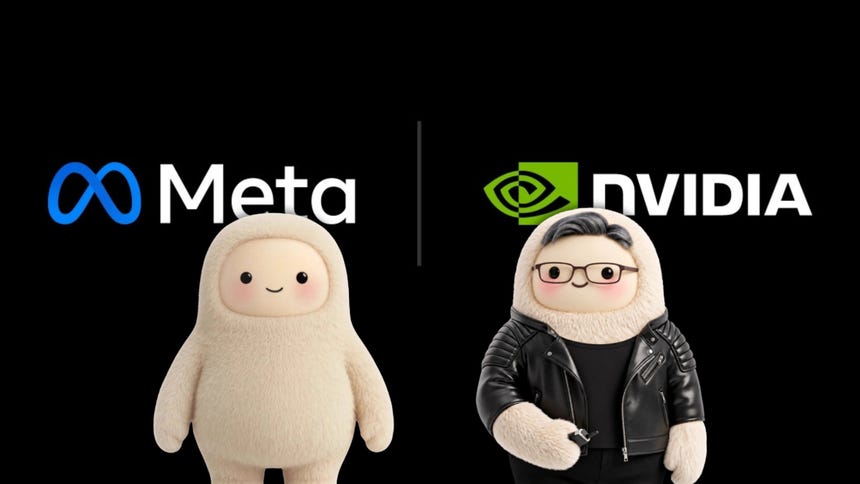
In a move that underscores the escalating arms race for artificial intelligence supremacy, Meta Platforms Inc. has announced a massive expansion of its strategic partnerships with semiconductor titans Nvidia and AMD. As Mark Zuckerberg’s company pivots toward an AI-first infrastructure, it has secured critical support from the two most important players in the hardware space. By integrating cutting-edge computing architectures from both firms, Meta is not only scaling its operational capacity but also solidifying the technological foundation for its next generation of intelligent agents: the "Muse" model family.
Main Facts: A Dual-Engine Strategy for Scaling Intelligence
Meta’s latest operational update clarifies a long-held industry speculation: the company is diversifying its hardware supply chain to avoid bottlenecks while maximizing the performance of its proprietary AI models. The announcement confirms that Meta is simultaneously leveraging Nvidia’s flagship compute platforms and AMD’s high-performance EPYC and Instinct architectures to power its massive data center ecosystem.
The core of the partnership involves two distinct but complementary tracks:
- The Nvidia Collaboration: Focuses on the high-octane requirements of training and executing the Muse model family. This involves the deployment of next-generation hardware, including the Vera Rubin architectures and Vera CPUs, supported by Spectrum-X Ethernet and BlueField-4 networking platforms.
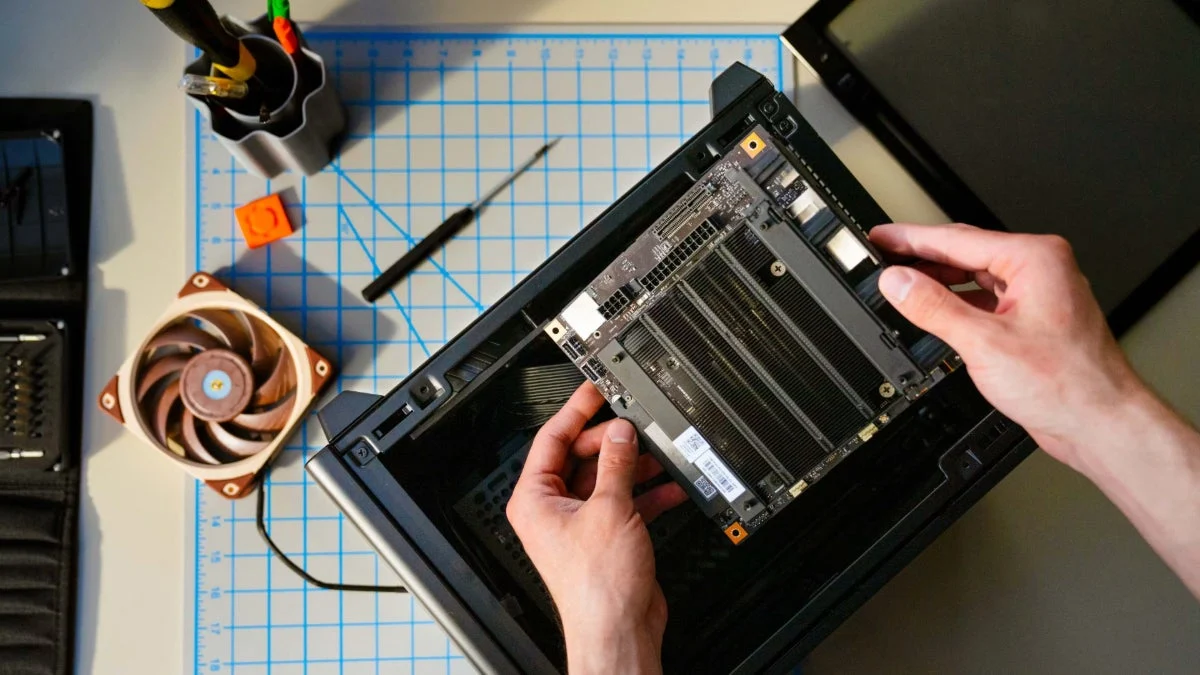
- The AMD Collaboration: Centers on the deployment of Helios systems—Meta’s specialized infrastructure tier—which integrates EPYC processors and Instinct GPU accelerators. This partnership is designed to optimize large-scale inference, classification, and recommendation workloads, while also developing custom silicon tailored specifically to Meta’s internal needs.
Beyond the hardware supply, both companies have made significant financial commitments to Meta’s ecosystem, with Nvidia pledging $3 billion and AMD pledging $1 billion in share purchases, signaling a long-term alignment of corporate interests.
Chronology: The Road to the Muse Ecosystem
The path to this multi-vendor synergy did not happen overnight. It is the result of a multi-year effort by Meta to transition from a social-media-first company to an AI-infrastructure powerhouse.
- Early 2024: Meta begins to signal a shift in capital expenditure, emphasizing the need for massive GPU clusters to support Llama 3 and future iterations of its generative models.
- Mid-2024: Internal testing of the "Helios" server architecture begins at Meta’s data centers. These systems were designed from the ground up to minimize latency in model training.
- Late 2025: Meta announces the internal development of the "Muse" family of models, which focus on multimodal capabilities and autonomous agentic behavior.
- October 2026: Official announcement of the expanded partnerships. Nvidia and AMD confirm their roles as primary infrastructure providers, with both companies solidifying their involvement through substantial capital investments in Meta’s equity.
Supporting Data: Infrastructure Under the Hood
The scale of the hardware required to sustain Meta’s vision is staggering. To understand why Meta is working with both giants, one must look at the technical specifications of the hardware involved:
The Nvidia Ecosystem (The Training Engine)
Nvidia’s contribution is focused on peak-performance training. The "Vera Rubin" architecture represents a paradigm shift in how Meta handles massive datasets. By integrating the BlueField-4 Data Processing Units (DPUs), Meta can offload network and security tasks from the main processors, effectively creating a "cleaner" environment for the Muse models to train without interference. The Spectrum-X Ethernet platform ensures that these thousands of GPUs act as a single cohesive unit, reducing the "inter-node" communication delay that typically plagues large-scale training runs.

The AMD Ecosystem (The Versatile Workhorse)
AMD’s role is increasingly focused on the "Helios" platform. The deployment of AMD EPYC processors allows Meta to run high-density compute tasks that require extensive memory bandwidth. Furthermore, the inclusion of custom-designed Instinct GPUs indicates that Meta is no longer content with off-the-shelf silicon. By working with AMD to design custom accelerators, Meta is optimizing its hardware specifically for its recommendation engines—the algorithms that dictate what billions of users see on their Facebook and Instagram feeds daily.
The Oversight Layer: OpenShell and Sentry
The partnership isn’t just about raw power; it is about control. Meta, Nvidia, and AMD are collaborating on software tools like OpenShell and Sentry. These are diagnostic frameworks designed to monitor the "health" of an AI agent. As Muse models become more autonomous, the risk of "hallucinations" or erratic behavior increases. These tools provide the necessary transparency to monitor the execution of AI agents in real-time.
Official Responses and Strategic Rationale
In statements released alongside the news, the leadership of all three companies emphasized the "collaborative" nature of these agreements.
Meta’s infrastructure team noted that this is not a "zero-sum game" where one provider replaces another. Rather, it is a tiered approach. "We are building an infrastructure that is resilient, scalable, and heterogeneous," a Meta spokesperson noted. "By partnering with both Nvidia and AMD, we ensure that we are not dependent on a single manufacturing chain, while also gaining access to the unique strengths of each company’s software and hardware design."
Nvidia’s leadership highlighted that the collaboration is about more than hardware—it’s about the software ecosystem. By integrating the Muse models into the Nvidia stack, they are ensuring that their proprietary CUDA-based tools remain the gold standard for AI development.
AMD, meanwhile, framed the $1 billion investment and the deployment of Helios as a validation of its "open-source, flexible architecture" approach. By offering custom-designed GPUs, AMD is positioning itself as the "developer’s choice" for companies that want to move beyond the constraints of a single-vendor lock-in.
Implications: What This Means for the Industry
The implications of this multi-billion dollar alliance are profound, affecting everything from market competition to the future of consumer AI.
1. The End of the Single-Provider Era
For years, the industry operated under the assumption that Nvidia was the sole arbiter of AI success. Meta’s strategy proves that the "Big Tech" players are now powerful enough to dictate their own hardware terms. By partnering with AMD, Meta has effectively forced a more competitive pricing and innovation cycle in the semiconductor market.
2. The Rise of "Agentic" AI
The "Muse" model family is designed to be more than just a chatbot; it is an agent. This implies a future where AI performs tasks on behalf of the user—booking flights, managing calendars, and summarizing complex data streams. The sheer computing power required for this level of autonomy is orders of magnitude higher than standard LLMs, justifying the massive capital expenditure announced by all three parties.
3. Market Stability and Shareholder Confidence
The decision by Nvidia and AMD to purchase Meta shares is a masterstroke of corporate alignment. It binds the fates of these companies together. Investors see this as a signal that the demand for AI hardware is not a bubble, but a long-term capital-intensive reality. By putting their own capital into Meta, Nvidia and AMD are effectively saying, "We believe in the revenue-generating potential of Meta’s future AI services."
4. Software as the New Battlefield
While the hardware (GPUs and CPUs) gets the headlines, the real war is happening in the software layer—specifically in the tools like Sentry and OpenShell. As Meta builds more powerful agents, the ability to govern, monitor, and regulate these agents becomes the most valuable intellectual property in the stack. Whoever controls the "governance" software for AI will likely define the safety standards for the rest of the industry.
Conclusion
Meta’s dual-pronged alliance with Nvidia and AMD marks a turning point in the trajectory of the artificial intelligence sector. By balancing the raw power of Nvidia’s Rubin architecture with the customized, high-density performance of AMD’s Helios systems, Meta is building a robust, fault-tolerant infrastructure capable of supporting the next decade of AI development. As the Muse model family matures, the world will likely see a shift toward more autonomous, agent-based digital experiences, all powered by a hardware foundation that has been meticulously curated to ensure that the lights in the data center never go out.