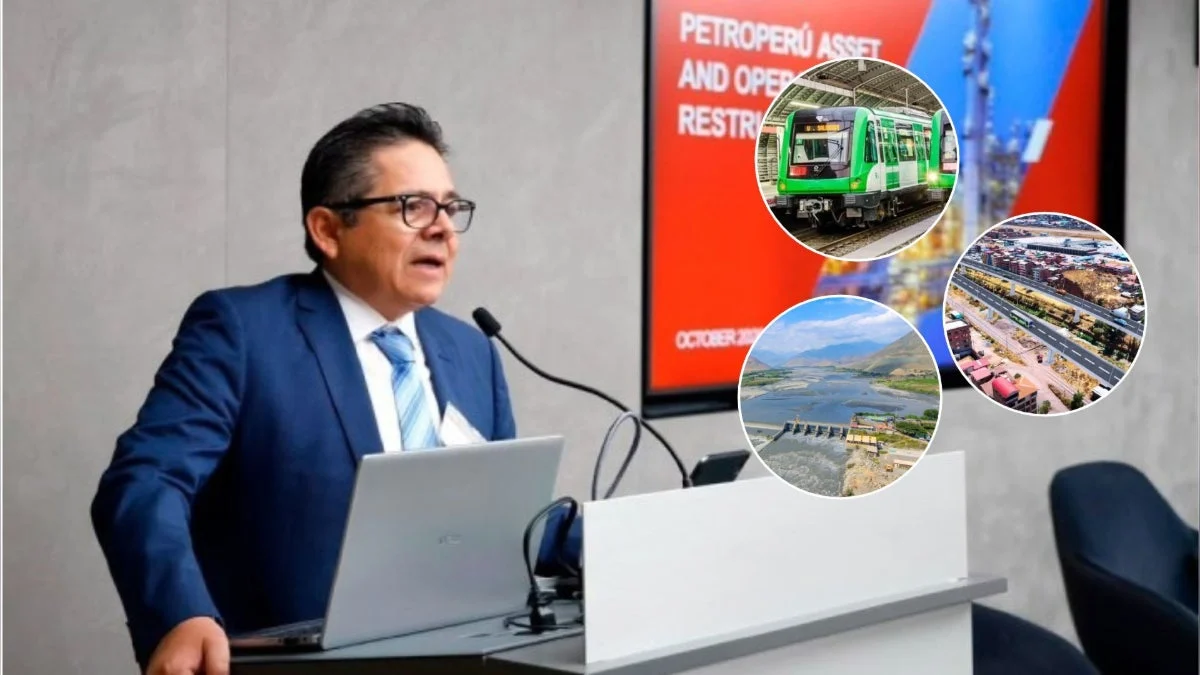
In a strategic move to solidify its position as a premier destination for global capital, the Peruvian government, through its investment promotion agency ProInversión, unveiled a massive infrastructure portfolio exceeding $50 billion for the 2026–2030 period. The presentation took place during the XIX inPERU Roadshow in New York, a high-level diplomatic and financial mission that brought together the nation’s top economic architects and representatives from Wall Street’s most influential firms.
The ambitious plan, which spans 24 regions across the country, seeks to modernize Peru’s core infrastructure through Public-Private Partnerships (PPPs) and asset-based projects. By targeting sectors as diverse as energy, transportation, sanitation, and social infrastructure, the government aims to catalyze long-term economic growth while improving the quality of life for approximately 30 million citizens.
The Core Portfolio: A Roadmap for National Development
The $50 billion portfolio is not merely a collection of isolated projects; it is a holistic vision for national integration. ProInversión’s executive director, Luis Del Carpio, detailed the composition of this investment vehicle, which includes 87 distinct projects and eight contractual addenda.
The strategic distribution of these initiatives ensures that the benefits of modernization are not confined to the capital, Lima, but are spread across all 24 regions of the country. The sectors represented in this portfolio include:
- Transportation and Connectivity: Upgrading ports, airports, and road networks to facilitate regional trade.
- Energy and Utilities: Expanding natural gas distribution networks and strengthening electrical transmission grids to meet growing industrial demand.
- Social Infrastructure: Significant investments in health and education facilities to bridge the rural-urban development gap.
- Essential Services: Large-scale water and sanitation projects designed to provide universal access to clean water.
- Productive Sectors: Irrigation projects to bolster the agricultural export industry, as well as mining and tourism infrastructure.
Chronology of Execution: The 2026 Milestone
The immediate focus for the Peruvian government is the final quarter of 2026. ProInversión has set a concrete target to finalize initiatives and contractual modifications totaling approximately $2.3 billion within this window.
This short-term execution plan is critical for establishing investor confidence. Key highlights for the end of 2026 include:
- The Chimbote Port Terminal: A vital hub that will improve logistics and export capacity in the northern-central region.
- Natural Gas Expansion: A major project involving Cálidda to extend domestic gas networks, reducing household costs and industrial reliance on imported fuels.
- Electrical Transmission Upgrades: Strengthening the National Interconnected System (SEIN) to ensure energy security and support the transition toward renewable energy integration.
Mega-Projects: The $35 Billion Transportation Frontier
Beyond the core $50 billion portfolio, ProInversión showcased a separate, highly anticipated pipeline of transport mega-projects currently under evaluation. These initiatives, with a referential investment value exceeding $35 billion, represent the backbone of Peru’s future logistics landscape.
Strategic Rail and Transit Initiatives
The government is prioritizing the development of high-impact rail corridors designed to reduce transit times and carbon footprints. Among the most prominent are:
- Andahuaylas-Marcona Railway: Aimed at unlocking the logistical potential of the southern mining corridor.
- Lima-Ica and Lima-Barranca Rail Lines: Essential for regional integration and decongesting the heavy traffic flowing into the capital.
- Metro de Lima Lines 3 and 4: These subway expansions are critical to transforming urban mobility in one of Latin America’s most populous cities.
Corridors of Connectivity
ProInversión highlighted the development of three strategic trans-Andean corridors—North, Central, and South. These routes are designed to act as vital arteries connecting the Pacific coast with the Andes, the Amazon basin, and eventually, the Brazilian market. By fostering these links, Peru aims to become a regional logistics hub, leveraging its port infrastructure to provide Brazil with a more efficient gateway to the Asian markets.
Official Responses: Structural Reforms and Economic Stability
The roadshow served as a platform for Minister of Economy and Finance (MEF) Elmer Cuba to reassure international markets of Peru’s commitment to fiscal discipline and market-friendly reforms. Addressing an audience at Bank of America and Goldman Sachs, Minister Cuba emphasized that Peru’s macroeconomic resilience is rooted in its institutionalized openness to global capital.
"Our economy is defined by the freedom of capital entry and exit, which has served as a bedrock for investor confidence for decades," Minister Cuba stated. He outlined several structural pillars currently being advanced by the government:
- Productivity and Formalization: Implementing labor reforms to integrate a larger segment of the workforce into the formal economy.
- Financial Inclusion: Broadening access to banking services to ensure that the economic growth generated by these infrastructure projects filters down to small and medium-sized enterprises.
- Public Investment Efficiency: The formation of high-level committees tasked with streamlining the public investment cycle, reducing bureaucracy, and ensuring that funds for infrastructure are spent with maximum transparency and impact.
Fiscal Preparedness
Recognizing the volatility of the global climate and the potential impact of the El Niño phenomenon, Minister Cuba also addressed the government’s preventive fiscal strategy. "We are creating mechanisms to ensure that, in the event of climate-related shocks, we have the liquidity to support affected households and maintain critical public assets like schools and hospitals," he noted. This proactive approach includes the funding of previously stalled public works, which the government is now revitalizing to ensure they contribute to the national output.
Implications for the Global Investor Community
The XIX inPERU Roadshow, held on October 26–27 in New York, brought together over 80 representatives from Peru’s public and private sectors, including the Governor of the Central Bank (BCRP), Julio Velarde. The presence of such high-ranking officials underscored the unified message being sent to the global financial community: Peru is open for business and is actively seeking partners for long-term development.
Bridging the Gap Between Interest and Action
Mercedes Aráoz, President of inPERU, highlighted the qualitative challenge facing the country. "The interest from global funds is palpable," Aráoz stated. "The real challenge for us is the conversion—transforming that interest into tangible contracts, completed projects, and visible improvements in the daily lives of our people."
The implications for international investors are significant. Peru offers:
- A Solid Macroeconomic Track Record: One of the most stable currencies and inflation profiles in Latin America.
- Legal Security: Robust legal frameworks that protect foreign investments under international standards.
- Untapped Potential: A massive deficit in infrastructure that provides a "first-mover" advantage for firms specializing in energy, logistics, and smart-city technologies.
Conclusion: A Vision for 2030 and Beyond
As the government moves forward with this $50 billion+ agenda, the integration of public policy and private sector expertise will be the deciding factor in the success of these projects. The roadmap presented in New York is more than a list of construction goals; it is a blueprint for regional development, logistical efficiency, and social equity.
With the support of global financial institutions and a clear commitment to structural reform, Peru is positioning itself to navigate the complexities of the global economy while building the physical foundations of a modern, competitive, and inclusive nation. The next four years will be a defining period, as the government attempts to transition from the planning phase to the reality of concrete and steel, signaling a new chapter in the country’s growth story.