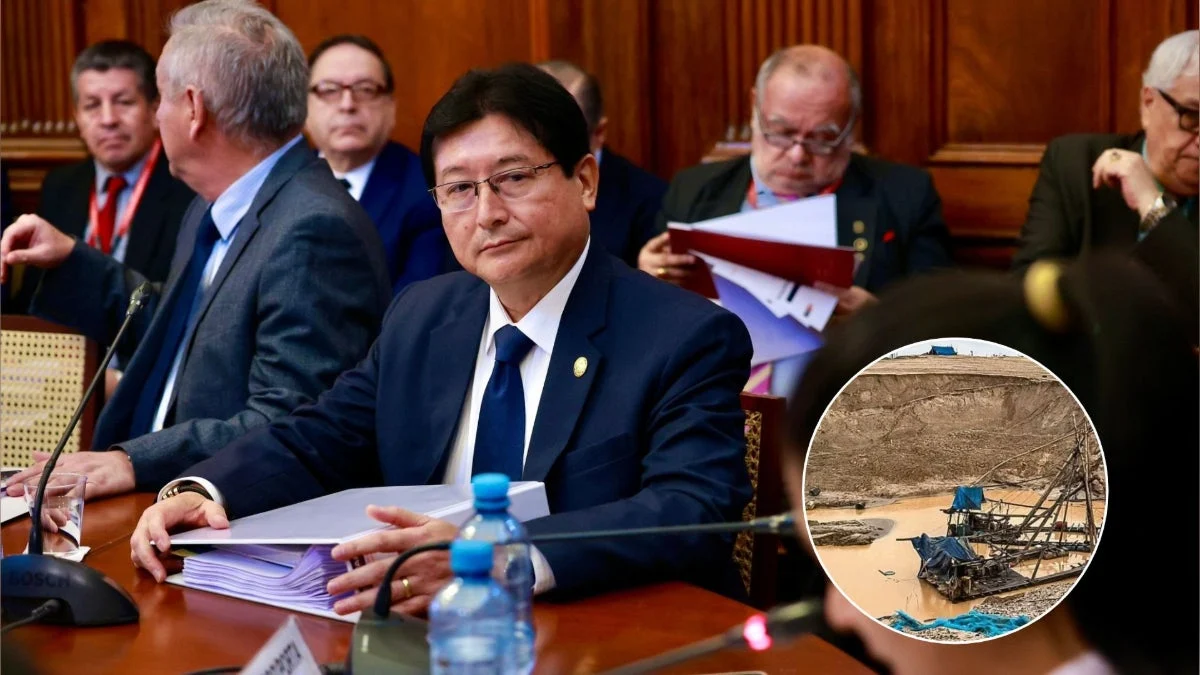
The Peruvian government has unveiled a comprehensive legislative overhaul aimed at addressing one of the country’s most persistent economic and social challenges: the formalization of small-scale and artisanal mining. Through the proposed Law for Small-Scale Mining and Artisanal Mining (Ley MAPE), the Ministry of Energy and Mines (Minem) is shifting its strategy from mere oversight to active facilitation, aiming to bridge the gap between titleholders of mining concessions and the thousands of independent miners operating within their boundaries.
The initiative, championed by the Minister of Energy and Mines, Guillermo Shinno, introduces a carrot-and-stick approach. It offers significant economic incentives to concession holders who formalize their relationships with artisanal miners while clarifying the murky waters of legal and environmental liability. By creating a dedicated agency—the Organismo Nacional para el Fortalecimiento de la Pequeña Minería y Minería Artesanal (Formape)—the government hopes to centralize administrative burdens and provide a clear, stable path toward legality.
The Core Strategy: Incentivizing Cooperation
The fundamental problem in the Peruvian mining sector is the presence of "inactive" concessions—areas granted to entities that are not currently performing exploration or exploitation activities. Often, these areas are occupied by small-scale or informal miners who lack legal standing.
Minister Shinno estimates that approximately 70% of third-party concessions currently hosting informal mining activity belong to small-scale producers. The government’s stance is firm: concession holders must either utilize their rights or allow others to do so through legal exploitation contracts.
To encourage this, the Ley MAPE proposes:
- Reduced Economic Burden: Concessionaires who sign a contract of at least three years with artisanal miners will be permitted to pay the "Small Mining Producer" (PPM) rate for their rights of validity (derecho de vigencia).
- Tax and Penalty Exemptions: These signees will be fully exempt from the heavy penalties typically applied to inactive or under-utilized mining areas.
"We need to compel them," Minister Shinno stated before the Energy and Mines Commission of the Chamber of Deputies. "Either you work the land, or you facilitate a formal exploitation agreement."
Chronology of a Regulatory Shift
The path to the Ley MAPE is the culmination of years of failed attempts to curb informality through the Register of Integral Formalization of Mining (Reinfo).
- Pre-2026: The persistence of Reinfo as a tool for formalization proved insufficient, with many miners trapped in a perpetual state of "in-process" status without achieving full legal compliance.
- Current Legislative Push: The Ministry of Energy and Mines introduced the project to replace or augment the existing Reinfo framework to close loopholes that have allowed illegal activity to persist under the guise of formalization.
- January 1, 2027: The proposed date for the commencement of the "Consolidation Regime." This temporary window, ending on June 30, 2028, will act as the final bridge for miners currently in the system to meet compliance requirements.
- Post-2028: The transition to a permanent "Ordinary Regime," where only those who have achieved full compliance will be permitted to operate.
Environmental and Legal Liability: Redefining the Rules
One of the primary deterrents for concession holders in entering into agreements with small-scale miners has been the "fear of liability." Under current regulations, a concession holder can be held responsible for the environmental damages or safety failures occurring on their land, even if they have no direct involvement in the specific operation.
The Ley MAPE seeks to dismantle this barrier through a clear bifurcation of responsibilities:
- Contractual Autonomy: If a formal contract of exploitation or cession exists, the small-scale or artisanal miner assumes full, exclusive responsibility for compliance with environmental, safety, and health standards.
- Solidary Liability: In the absence of a formal contract, the concession holder remains jointly and severally liable with the operator for environmental damage, provided the state authority can prove a nexus between the titleholder and the activity.
- Automatic Resolution: Perhaps the most significant change is the provision that any formal confirmation of environmental non-compliance by authorities will trigger an automatic dissolution of the exploitation contract. This serves as a self-policing mechanism, incentivizing the concession holder to ensure their partners remain compliant.
Supporting Data and Strategic Rationale
The Ministry’s decision to focus on the small-scale mining sector is supported by the sheer scale of the population involved. While the government did not provide exhaustive granular data in the initial presentation regarding the origin of all 70% of occupied concessions, the logic is clear: the artisanal sector acts as a massive employer in rural and remote regions.
By centralizing procedures through Formape, the government aims to solve the "bureaucratic maze." Currently, a miner must deal with regional authorities, environmental agencies, and national ministries simultaneously. Formape is intended to serve as a "one-stop-shop" for:
- Environmental Evaluation: Tailored specifically to the risk profile of small-scale operations.
- Trawling/Traceability: Implementing systems to track gold and mineral production to ensure it does not stem from illegal exploitation in protected areas.
- Operational Authorization: Managing the start or restart of activities in a way that respects the territorial and environmental constraints of the region.
Official Responses and Stakeholder Implications
The proposal has sparked intense debate. Proponents of the bill argue that it provides the legal security necessary for capital to flow into the small-scale sector. If a concession holder knows they will not be penalized for an environmental accident caused by a third party, they are far more likely to sign a lease agreement.
However, critics point to the complexity of enforcement. Can the state effectively monitor thousands of small, remote sites to ensure the "automatic resolution" clause is enforced? Furthermore, small-scale miners themselves have expressed concern that the new requirements—particularly those related to environmental standards—might be prohibitively expensive or technically complex for operators who have historically worked outside the formal system.
Minister Shinno addressed these concerns by emphasizing that the requirements will be "proportional to the risk." The Ministry is betting that by simplifying the process and reducing the cost of entry, the sheer volume of legalized miners will create a safer and more transparent industry.
Implications for the Future of Peruvian Mining
The Ley MAPE represents a paradigm shift. For decades, the Peruvian state treated small-scale mining as an annoyance to be contained. The current proposal acknowledges it as a permanent feature of the national economy that must be managed through integration rather than exclusion.
The Economic Impact
By formalizing these operations, the state stands to gain from increased tax revenues and better control over the mineral supply chain. For the miners, formalization provides access to banking, credit, and the ability to sell their product at fair market prices, rather than being forced into the black market by the lack of proper documentation.
The Environmental Outlook
The environmental impact is the most critical variable. By holding small-scale miners directly responsible, and by requiring concession holders to oversee their partners or risk their own licenses, the government is introducing an accountability mechanism that was previously missing. The "proportional" environmental standards, if implemented correctly, could drastically reduce the use of mercury and the contamination of water sources—the two most pressing environmental issues in artisanal mining regions.
Long-term Stability
The ultimate goal is to phase out the culture of "perpetual formalization." The 2027–2028 consolidation window is designed to be a hard deadline. After June 30, 2028, the government hopes that the informal sector will have been reduced to a manageable, regulated subset of the industry, leaving behind only those who are willing and able to comply with the legal, social, and environmental standards of modern mining.
In conclusion, the Ley MAPE is a high-stakes legislative gamble. It requires the cooperation of the private sector, the buy-in of artisanal miners, and the administrative competence of the new Formape agency. If successful, it could provide a blueprint for other developing nations struggling with similar issues of informal resource extraction. If it fails, it may further entrench the very problems it seeks to solve. For now, the eyes of the nation are on the Chamber of Deputies as they debate the final text of the law, a document that could define the next decade of Peruvian mineral wealth.