Executive Summary: A Race Against the Climate
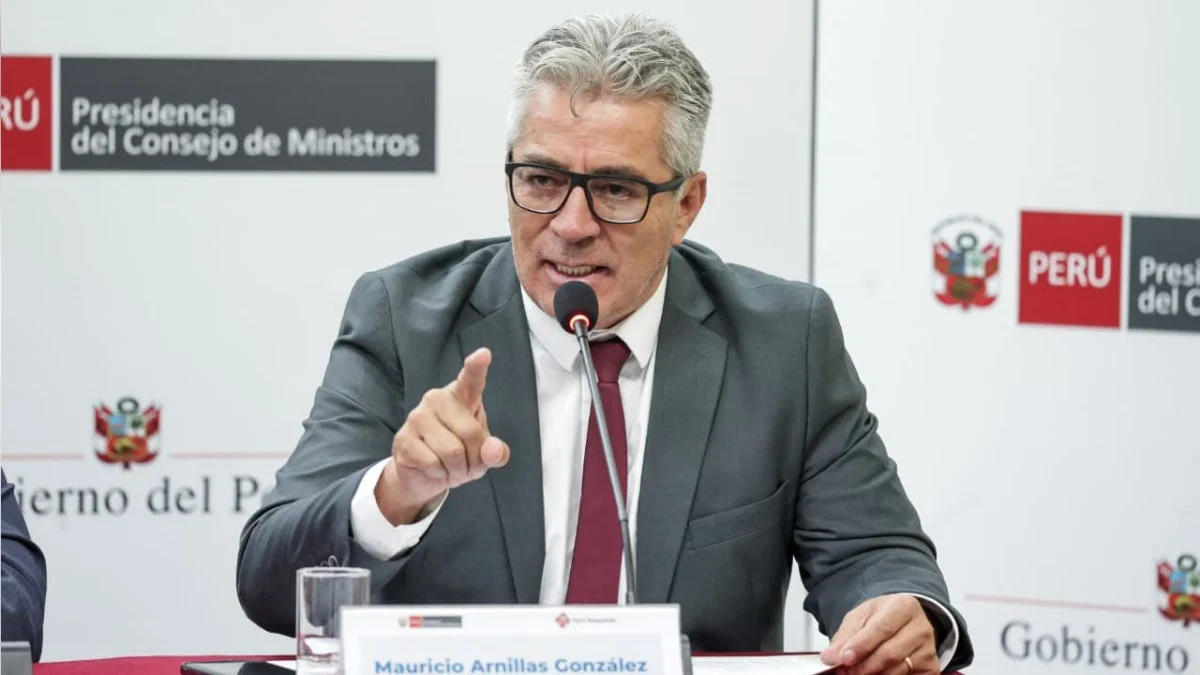
As the shadow of the El Niño phenomenon looms over Peru, the national government has issued a sobering reality check to citizens residing in high-risk zones. Minister of Housing, Construction, and Sanitation, Mauricio Arnillas, has delivered a blunt assessment: the state lacks the logistical and financial capacity to manage a mass relocation of families currently living in dangerous ravines and riverbeds.
With the rainy season expected to intensify by mid-November, the government is engaged in a frantic, round-the-clock effort to mitigate potential disasters through desilting (descolmatación) operations. However, officials emphasize that infrastructure alone cannot protect those who remain in the direct path of impending floods and mudslides. The core message from the Executive branch is clear: personal responsibility and proactive evacuation are now the primary lines of defense against a natural event that historically leaves devastation in its wake.
Chronology of a Looming Crisis
The current state of emergency is not a sudden development but the culmination of months of climate monitoring and historical pattern analysis.
- Early September: Meteorological agencies began reporting abnormal warming in the equatorial Pacific, officially signaling the arrival of El Niño.
- Early October: Initial, unseasonal rains began to manifest in various regions, serving as a "warning shot" for the more severe weather patterns to come.
- Mid-October: Minister Mauricio Arnillas issued his first public warning, specifically addressing families inhabiting torrenteras (ravines/dry riverbeds), urging them to abandon their dwellings.
- Late October: The Ministry of Housing increased the intensity of its mitigation work, moving to two shifts per day for heavy machinery engaged in desilting riverbeds.
- November Forecast: Meteorological experts and the Ministry of Agrarian Development and Irrigation (Midagri) have pinpointed the period between November 15 and the end of the month as the threshold for the onset of high-intensity, persistent rainfall.
Supporting Data: The Geography of Danger
The crisis is defined by a precarious intersection of topography and human settlement. Many of the families identified by the Ministry of Housing live in areas that are technically geological "death traps." These ravines serve as natural drainage channels for the Andes; when heavy rains occur, these channels become conduits for huaicos—massive, high-velocity mudslides that carry boulders, debris, and water.
According to preliminary government assessments, the challenge is not just the lack of housing, but the cycle of displacement. Minister Arnillas highlighted a recurring, tragic phenomenon: families are displaced by floods, receive emergency aid, and subsequently return to the exact same high-risk ravines to rebuild their homes. This cycle of vulnerability has created a logistical nightmare for urban planners and disaster risk management agencies.
The Ministry of Agrarian Development and Irrigation, led by Marco Vinelli, has corroborated the urgency. Vinelli noted that the current October rainfall is merely a precursor to the systemic moisture influx expected in November. With the ground already saturated in some areas, the infiltration capacity is low, meaning that even moderate rainfall in the coming weeks will likely result in immediate runoff and flash flooding.
Official Responses and Strategic Limitations
The government’s response strategy is bifurcated into two main prongs: physical intervention and public advocacy.
The Engineering Front: Desilting Operations
The state is currently mobilizing a massive fleet of heavy machinery. The primary objective is "descolmatación"—the removal of accumulated sediment, trash, and debris from riverbeds and ravines to maximize their water-carrying capacity. By clearing these channels, the government hopes to guide floodwaters away from populated centers.
Minister Arnillas defended the pace of these operations, noting that crews are working double shifts. "We are working to desilt the ravines and riverbeds to avoid overflows in the coming months," he stated during a press briefing near the Las Nazarenas church. However, he was quick to qualify these efforts, stating, "The machinery is working at full capacity, but that is not enough."
The Advocacy Front: A Call for "Consciousness"
The shift in rhetoric from the government marks a transition from "government-led protection" to "citizen-led mitigation." The Minister’s repeated calls for the population to "take consciousness of the situation" reflect a recognition that the state’s resources are finite.
"The state cannot cover everything," Arnillas argued. "Each family must take responsibility. When the water enters, families are harmed, they leave, and then they return to the ravine. They continue to build houses in the middle of the channel. They have to realize the danger they are in."
This candid acknowledgment suggests a potential shift in policy, where the government may focus more on providing temporary evacuation shelters rather than attempting to provide permanent, state-funded housing solutions for every family displaced by the upcoming Niño event.
Implications: A Society at the Crossroads
The implications of this situation are multifaceted, touching upon social, economic, and political dimensions.
Socio-Economic Vulnerability
The populations living in these high-risk areas are predominantly low-income families who have settled in these regions due to a lack of affordable housing in safe, urbanized zones. The economic impact of the coming rains could be catastrophic for these families, leading to the loss of years of capital investment in their homes, as well as the loss of household goods and livestock.
The Political Burden of Disaster Management
For the Executive branch, the situation is a political tightrope. If the government is perceived as failing to protect citizens, it faces accusations of negligence. Conversely, if it attempts to forcefully relocate thousands of families without providing adequate alternatives, it faces social unrest and protests. By framing the crisis as a matter of "shared responsibility," the government is attempting to preemptively manage expectations regarding the limits of state support.
Long-term Urban Planning
The crisis has reignited the debate regarding the lack of formal urban planning in Peru. For decades, informal settlements have sprawled into the peripheries of cities, often occupying hazardous terrain. The current El Niño event serves as a brutal reminder that the lack of institutional control over land use has created a recurring humanitarian crisis. The long-term implication is that Peru must invest significantly more in land-use regulation and affordable housing in safe areas if it is to break the cycle of disaster-and-reconstruction.
Environmental Uncertainty
The uncertainty surrounding the exact timing of the "peak" rains—with some experts citing November 15 and others pointing to the end of the month—complicates the government’s ability to mobilize resources effectively. This uncertainty underscores the limitations of meteorological forecasting in a changing climate. As the window for preparation narrows, the pressure on regional and local governments to coordinate with the central government becomes the single most critical factor in mitigating the loss of life.
Final Outlook
As Peru approaches the mid-November deadline for the arrival of the most intense rains, the situation remains highly fluid. While the government continues its desperate race to clear river channels, the ultimate outcome rests on the willingness of high-risk populations to heed official warnings and relocate.
The narrative presented by Ministers Arnillas and Vinelli is one of hard truths: nature is an unstoppable force, and while the state can mitigate some of its impacts, the survival of families in vulnerable areas depends on their own recognition of the danger. The coming weeks will test not only the strength of the country’s infrastructure but the efficacy of its disaster communication and the resilience of its most vulnerable citizens. As the clouds gather over the Peruvian landscape, the message from the capital is clear: prepare, move, and do not underestimate the power of the rain.