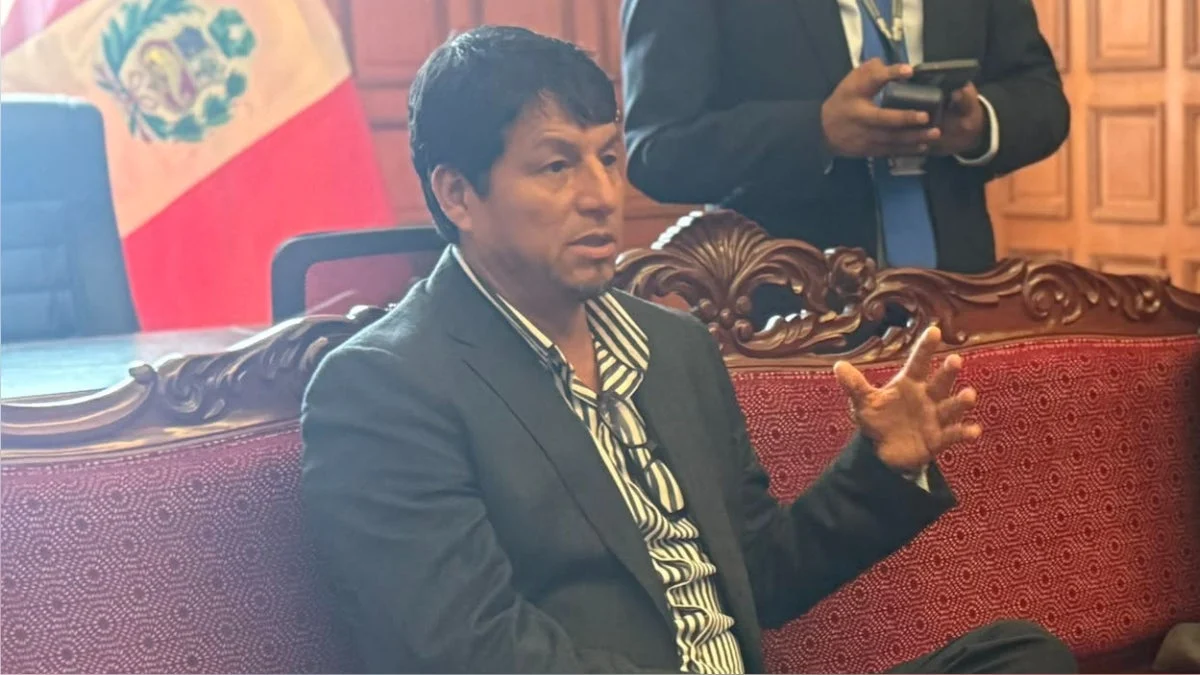
In a significant procedural development regarding the ongoing investigation into Congressman Julián Pérez, the Peruvian judiciary has formally denied a request to exclude critical medical evidence from the prosecution’s case file. Supreme Court Judge Juan Carlos Checkley ruled that the medical certificate documenting injuries sustained by the legislator’s former partner is both admissible and legally obtained, dealing a blow to the defense’s efforts to suppress the evidence.
The decision, handed down on October 19, marks a pivotal moment in the investigation against the Juntos por el Perú lawmaker, who is currently under preliminary investigation for the alleged commission of crimes against women and family members.
The Core of the Legal Dispute
The controversy centers on a medical-legal certificate issued on July 30, following the detention of Congressman Julián Pérez. The document, which serves as a cornerstone of the prosecution’s case, details physical injuries—specifically bruising (ecchymosis)—found on the arms and legs of the complainant.
On August 17, legal counsel for the legislator filed a "tutela de derechos" (a motion for the protection of procedural rights), arguing that the document should be declared "illicit evidence." The defense asserted that the examination failed to comply with the stringent medical-legal protocols established by the Institute of Legal Medicine. Specifically, the defense alleged that the document lacked the necessary detailed information, proper documentation, and adherence to the regulatory framework required for such forensic assessments. According to the defense, these procedural lapses violated the fundamental rights and constitutional guarantees afforded to the congressman as an accused party.
Chronology of the Case
To understand the weight of Judge Checkley’s recent ruling, it is necessary to examine the timeline of events that led to the current legal impasse:
- July 30: Following an alleged incident of physical aggression, the complainant underwent a forensic examination conducted by the Clinical Forensic Unit of the Public Ministry’s Institute of Legal Medicine. This examination resulted in the issuance of the medical-legal certificate now in dispute.
- August 17: The legal team representing Julián Pérez filed a request for "tutela de derechos" before the Supreme Court, seeking the total exclusion of the medical certificate from the case file.
- October 19: Judge Juan Carlos Checkley issued a formal resolution, effectively rejecting the defense’s request. The judge determined that the evidence was obtained within the scope of a regular, lawful criminal procedure and refused to suppress it.
- Current Status: The case remains in the preliminary investigation phase under the jurisdiction of the Supreme Prosecutor for Family Affairs.
Judicial Rationale: Why the Evidence Stands
In his resolution, Judge Checkley provided a rigorous breakdown of why the defense’s arguments failed to meet the legal threshold for excluding evidence. The judge emphasized that the examination was conducted by an authorized medical expert from the Institute of Legal Medicine, an agency specifically tasked with providing objective technical analysis for the Public Ministry.
Regarding the defense’s claim that the document did not adhere to the "Medical-Legal Guide for the Comprehensive Assessment of Bodily Injuries," Judge Checkley was firm. He noted that while the defense sought to invalidate the document based on technical omissions, the certificate nonetheless represented a professional assessment performed by a government-sanctioned medical expert.
"In conclusion, the questioned medical certificate does not constitute illicit or irregular evidence," the resolution stated. "Therefore, its exclusion is not warranted, and the request for the protection of rights is deemed unfounded."
The judge clarified that the document serves as an accurate representation of the physical evidence observed by the medical professional at the time of the initial examination. By validating the evidence, the court has ensured that the prosecution can proceed with its case, utilizing the physical findings as part of the body of evidence against the legislator.
Implications for the Legislative and Judicial System
The denial of the motion to exclude evidence carries profound implications, both for the specific case against Julián Pérez and for the broader landscape of domestic violence prosecution in Peru.
1. Strengthening the Prosecution’s Hand
For the Public Ministry, this ruling is a significant victory. By confirming the admissibility of the medical-legal certificate, the prosecution maintains its ability to anchor its allegations of physical violence in objective, forensic data. In cases of domestic violence, where witness accounts can often be contested, forensic evidence is frequently the most reliable bridge between an allegation and a formal indictment.
2. The Limits of Procedural Defense
The defense’s attempt to use "tutela de derechos" to disqualify forensic reports is a common strategy in high-profile criminal cases. By attempting to focus on procedural minutiae rather than the substance of the injuries, the defense sought to limit the scope of the investigation. The court’s rejection of this motion signals a judicial preference for the substantive truth—the assessment of injuries—over purely technical, administrative challenges to the form of the reporting.
3. Political Accountability
Julián Pérez, as a sitting member of the legislature, holds a position of public trust. The fact that he is under investigation for alleged violence against a family member has already stirred considerable public debate. The judiciary’s refusal to suppress evidence ensures that the legal process will continue to move forward, effectively signaling that no special procedural threshold—or "shield"—will be granted to lawmakers when it comes to the verification of evidence in criminal matters.
Broader Context: Domestic Violence in Peru
The case of Julián Pérez exists within a national climate of heightened sensitivity regarding gender-based violence. Peru has long struggled with high rates of domestic abuse, and the judicial system has been under constant pressure to reform its approach to victim protection and the swift processing of cases.
The rigorous scrutiny of the medical-legal certificate in this case underscores the high standard of proof required by the courts. However, the ruling also highlights the judiciary’s commitment to ensuring that forensic evidence, once obtained, is not easily discarded. This serves as a warning to potential defendants that procedural challenges regarding forensic documentation will not be accepted as a means to circumvent a fair and thorough investigation.
Looking Ahead: What Happens Next?
As the preliminary investigation continues, the focus will likely shift to the collection of further witness testimonies and additional forensic corroboration. The validation of the medical-legal certificate now allows the Supreme Prosecutor for Family Affairs to incorporate the report into the wider discovery process.
If the evidence continues to mount, the Public Ministry may proceed to request an indictment or a formal trial. Given the congressman’s status, this will likely involve complex legal maneuvers, potentially including questions of parliamentary immunity or further procedural motions by the defense.
However, for now, the path forward is clear: the judicial system has affirmed the integrity of the initial evidence. For the complainant, the ruling represents a significant step in having her injuries formally recognized within the framework of a criminal investigation. For Congressman Julián Pérez, the legal road ahead has become significantly more challenging, as the evidence he sought to exclude will now be a permanent and admissible part of the official record.
The case remains a bellwether for how the Peruvian legal system handles allegations of violence when the accused holds political power, testing the independence of the judiciary and the consistency of its procedural standards. As the investigation progresses, the eyes of the public and legal observers alike will remain fixed on the Supreme Court, waiting to see if the weight of the evidence will lead to a formal trial and a final adjudication of the charges.