By Financial News Desk
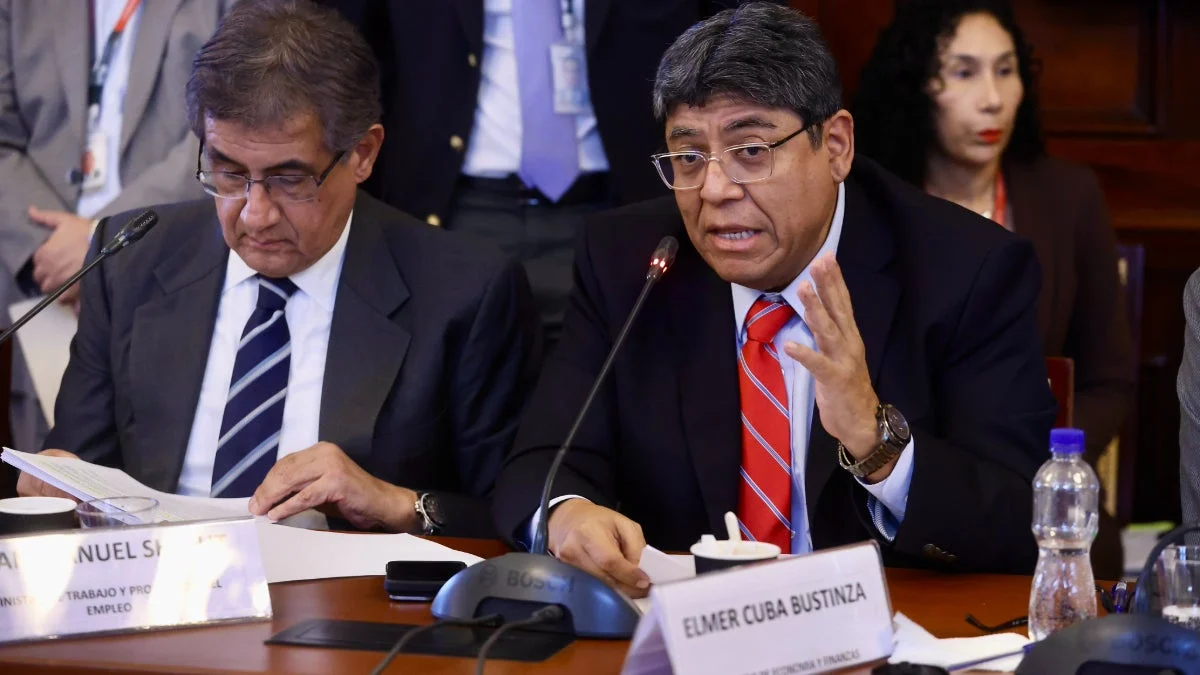
In a pointed critique of current fiscal policy, Minister of Economy and Finance (MEF) Elmer Cuba has launched a direct challenge against the legislative framework currently imposing caps on interest rates within the formal banking sector. During a pivotal presentation before the Commission of Constitution, Regulation, and Foreign Relations, Minister Cuba argued that the well-intentioned policy—designed to curb usury—has inadvertently birthed a "pro-usury" environment, effectively disenfranchising the most vulnerable economic actors and driving them toward predatory, unregulated lending markets.
The Minister’s testimony, delivered as part of a broader discussion on the government’s request for legislative powers, serves as a rallying cry for financial deregulation aimed at fostering inclusion rather than restricting market access.
The Core Argument: Why Caps Are Creating a Shadow Economy
At the heart of Minister Cuba’s critique is the fundamental misunderstanding of the market dynamics governing micro-finance. He posits that the Peruvian credit market is not monolithic; rather, it is divided into two distinct, non-overlapping sectors.
The first sector comprises large and medium-sized enterprises. These entities enjoy access to established banking institutions where competition remains high and interest rates are dictated by market efficiency and risk profiles. For this segment, the current legislative caps are largely irrelevant, as their operational capacity naturally keeps their borrowing costs well below the legal ceilings.
The second sector—the primary focus of Cuba’s concern—consists of micro-enterprises and individual consumers who lack the collateral or credit history required by major commercial banks. This segment relies heavily on non-banking financial institutions (NBFIs), including rural credit unions, municipal savings banks, and cooperatives. These institutions operate on a business model that accounts for higher risk, allowing them to provide credit to populations that would otherwise be excluded from the financial system.
Minister Cuba argues that by imposing artificial ceilings on interest rates, the law renders it impossible for these NBFIs to cover the administrative and risk costs inherent in lending to high-risk micro-borrowers. Consequently, these institutions are forced to withdraw their services, leaving a vacuum in the market. This vacuum, he asserts, is immediately filled by the "gota a gota" (drop-by-drop) lenders—informal, often predatory syndicates that operate entirely outside the supervision of the Superintendency of Banking, Insurance, and Private Pension Funds (SBS).
Chronology of the Debate: From Policy Intent to Economic Backlash
The trajectory of the interest rate cap law has been marked by significant political and economic friction.
- Initial Implementation: The legislation was originally championed as a social protection measure, intended to shield consumers from "abusive" interest rates during periods of economic instability. Proponents argued that by setting a ceiling, the government would democratize credit access.
- The Early Warning Phase: Economists and representatives from the micro-finance sector warned early on that the caps would lead to credit rationing. Their predictions centered on the idea that lenders would prioritize low-risk borrowers, effectively shutting out those with moderate-to-high risk profiles.
- The Data Accumulation Phase: Over the past few years, the Central Reserve Bank of Peru (BCR) began tracking the migration of borrowers from the formal financial system to informal, unregulated channels. The correlation between the enforcement of the rate caps and the shrinking of the micro-loan portfolio became increasingly apparent.
- The Current Confrontation: The present debate arises from the administration’s formal request for legislative faculties. The government, under the leadership of President Keiko Fujimori, has explicitly included the repeal of these interest rate caps as a critical component of its economic recovery agenda.
Supporting Data: The 500,000-Borrower Exodus
Minister Cuba’s argument is not merely anecdotal; it is anchored in hard data provided by the Central Reserve Bank. During his testimony, he highlighted a startling figure: approximately 500,000 credit lines have been displaced from the regulated financial system into the arms of informal, usurious lenders in recent years.
This statistic serves as a quantitative condemnation of the current policy. For the Ministry of Economy and Finance, these 500,000 individuals represent a failure of public policy. Instead of protecting these borrowers from high costs, the government has inadvertently stripped them of legal protections, transparency, and the potential to build a formal credit history.
"There are 500,000 credits that have been pushed into the hands of usurers because of this cap law," Cuba stated. "We are not talking about hypothetical risks; we are talking about real people whose financial livelihoods have been forced into the shadows."
The implications of this shift are profound. Informal lenders do not operate under the scrutiny of the SBS, nor do they adhere to consumer protection regulations. Interest rates in the "gota a gota" market often reach levels far exceeding the legal caps the government sought to replace, often accompanied by coercive collection practices that threaten the social fabric of the communities where they operate.
Official Responses and Stakeholder Involvement
Minister Cuba has called for a radical shift in the parliamentary approach to this issue. He urged the members of the Commission to expand the scope of their consultations, insisting that they hear from the very people and institutions most affected by the legislation.
The Voice of the NBFIs
The Minister explicitly requested that representatives from municipal savings banks, rural cajas, and cooperatives be invited to testify. He argues that these entities are the front-line soldiers in the battle against financial informality. By removing the caps, these institutions would regain the flexibility required to price their products according to risk, allowing them to compete effectively against the informal sector.
The Voice of the Borrowers
Crucially, Cuba challenged the legislators to listen to the micro-entrepreneurs who have been forced to turn to usurers. By hearing the stories of those who have been shut out of the formal banking system, the commission would be confronted with the reality of how the legislation has marginalized, rather than empowered, the small business sector.
Broadening the Horizon: The Legislative Agenda
The repeal of the interest rate caps is only one facet of the government’s broader economic plan. Minister Cuba framed the request for legislative faculties as a comprehensive effort to modernize the Peruvian economy. Among the other pillars of this proposal are:
- Investment Promotion: Streamlining the regulatory environment to attract both domestic and foreign private investment.
- Public Works via Taxes (Obras por Impuestos): Expanding the scope of this mechanism to accelerate infrastructure development in underserved regions.
- Fiscal Reform: A comprehensive overhaul of the tax regime for micro and small enterprises (MYPEs) to reduce the administrative burden and encourage formalization.
- Budgetary Efficiency: Improving the transparency and efficacy of the public budget to ensure that government spending translates into tangible social outcomes.
Implications: A Crossroads for Financial Inclusion
The debate over interest rate caps represents a fundamental disagreement on the role of the state in market mechanics. The proponents of the caps argue from a position of social justice, fearing that the removal of these limits will lead to predatory practices by banks. Conversely, the Ministry of Economy and Finance argues that the state’s role should be to foster competition and regulatory oversight, rather than imposing price controls that lead to market distortion.
If the government succeeds in its request to repeal the caps, the challenge will be to ensure that formal financial institutions actually extend credit to the newly "liberated" market segments. If the caps remain, the Minister warns that the trend toward informality will only accelerate, further undermining the stability of the Peruvian financial system and the economic health of its most vulnerable citizens.
As the Commission of Constitution continues its deliberations, the nation watches closely. The outcome of this debate will not only determine the cost of borrowing for thousands of Peruvians but will also signal the direction of the government’s economic philosophy: whether it chooses to prioritize rigid, populist regulation or a more nuanced, market-driven approach to financial inclusion.
Minister Cuba’s final message to the commission was clear: "This is a policy of true inclusion. We are asking you to look at the data, listen to the affected stakeholders, and recognize that the path to a stronger, more formal economy is through competition and access, not through caps that serve only to fuel the usurers."
As the legislative session continues, the tension between the legislative branch and the executive remains high, with the fate of the nation’s micro-credit market hanging in the balance. The resolution of this impasse will serve as a bellwether for the country’s broader economic reforms and its commitment to fostering an environment where small businesses can thrive without falling prey to the shadows of the informal economy.