Executive Summary: A Milestone for Peruvian Education
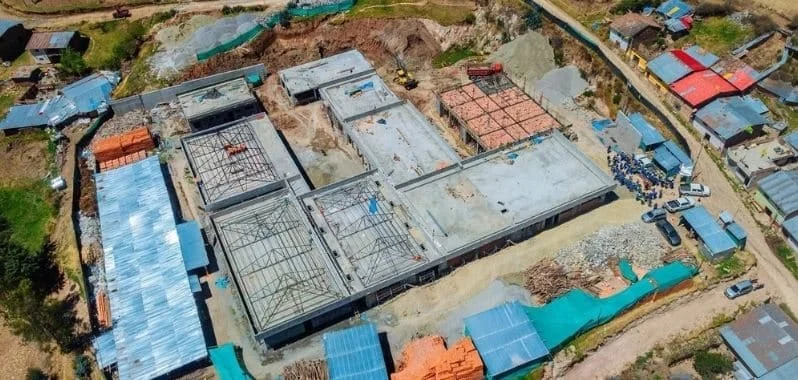
The construction of the Colegio de Alto Rendimiento (COAR) in Huancavelica, a flagship project for the Peruvian education sector, is officially accelerating. Following a period of slowed progress caused by complex geological challenges, the project—a centerpiece of the "COAR Centro" initiative—is moving forward with renewed momentum. With a total investment of S/ 104.47 million, this state-of-the-art facility is set to provide a transformative educational environment for over 300 students.
Executed under the Public-Private Partnership (APP) model, this project represents a significant shift in how Peru manages educational infrastructure. By leveraging private sector expertise for design, construction, and maintenance, the government aims to ensure that high-potential students in the Andean region have access to facilities that rival the best in the country.
Technical Hurdles and Engineering Solutions
The delay in the project was not administrative, but rather a direct result of the unique geological composition of the Huancavelica site. The project team encountered significant challenges due to a high water table (napa freática) and unstable, swampy soil conditions. These factors posed a major risk to the structural integrity of the campus, requiring an immediate reassessment of the foundation strategy.
Engineering the Future
To overcome these obstacles, the engineering team implemented a series of robust interventions:

- Deep Foundation Stabilization: The installation of 900 micropilotes (micropiles) was critical to securing the structure against the shifting ground.
- Subsurface Drainage: A complex system of subdrains was integrated across the site to manage the high water table and prevent flooding or soil saturation.
- Perimeter Security: A reinforced boundary wall, spanning over 1,200 linear meters, was constructed with deep foundations, standing three meters high to ensure safety and site containment.
These measures, while time-consuming, ensure that the facility will withstand the harsh environmental conditions of the region for decades to come, providing a secure sanctuary for learning.
The APP Model: A New Paradigm for Public Schools
The COAR Huancavelica is not merely a construction project; it is the pioneer of the education sector’s Public-Private Partnership (APP) framework in Peru. Under this 20-year concession, the division of labor is clearly defined to maximize efficiency:
- Public Ownership: The school remains a public institution. Enrollment, curriculum, and administration of the educational experience remain under the jurisdiction of the Ministry of Education.
- Private Concessionaire Responsibilities: The firm Marhnos is tasked with the comprehensive delivery of the project, including design, capital investment, maintenance of the physical plant, and the provision of specialized support services.
- Sustainability: By offloading the maintenance and technical management to a specialized private entity, the government avoids the common pitfalls of public building degradation, ensuring that the facility remains modern and functional throughout the 20-year term.
Facility Specifications: A Modern Campus
The vision for the Huancavelica COAR is to create a hub of innovation. The design specifications go far beyond traditional classrooms, focusing on an integrated learning ecosystem:
- Advanced Connectivity: The campus will feature high-speed fiber-optic infrastructure, essential for digital literacy and research.
- Specialized Learning Zones: Beyond standard classrooms, the campus includes dedicated workshops for technical and creative arts.
- Utility Efficiency: The school incorporates modern plumbing and heating systems, including GLP-based hot water, and a comprehensive pluvial (rainwater) drainage system to mitigate the effects of the Andean rainy season.
Economic and Social Impact
The project is a significant economic engine for the region of Huancavelica. Currently, more than 250 workers—ranging from high-level engineers and technical specialists to general construction laborers—are employed on-site. A key priority of the project has been the utilization of local labor, ensuring that the investment directly benefits the community it serves.

By creating jobs and demanding specialized construction services, the COAR project is stimulating the local economy while simultaneously preparing the next generation of regional leaders.
Chronology of Development
- Project Initiation: Inclusion of the COAR Huancavelica within the "COAR Centro" national package under the APP model.
- Geological Assessment Phase: Discovery of the high water table and swampy soil conditions, leading to the necessity of structural redesign.
- Mitigation Phase: Execution of the micropile foundation project and the construction of the 1,200-meter reinforced perimeter fence.
- Resumption Phase: The current stage, where construction pace has increased significantly, with a renewed commitment from the concessionaire (Marhnos) to meet the original contractual delivery timelines.
Official Perspective and Future Outlook
The concessionaire, Marhnos, has reaffirmed its commitment to the project, noting that the technical difficulties have been successfully mitigated. "We have navigated the most challenging aspects of the site’s geology," a spokesperson noted, confirming that despite the temporary slowdown, the project remains on track to meet the established contractual deadlines.
The Ministry of Education continues to monitor the progress closely, viewing this as a litmus test for future APP school projects across the nation. The success of the Huancavelica COAR will likely dictate the speed and scale at which similar infrastructure projects are rolled out in other regions.
Implications for Peruvian Education
The implications of the COAR Huancavelica are profound. By successfully delivering a high-quality, resilient structure in a challenging environment, the project proves that public-private cooperation can solve long-standing issues in the education sector.

Strategic Importance:
- Regional Equality: Providing world-class facilities to students in Huancavelica reduces the "capital-centric" bias in Peruvian education.
- Infrastructure Longevity: The investment in sophisticated foundations and maintenance protocols suggests a shift away from the "build and neglect" cycle that has historically plagued public infrastructure in Peru.
- The Blueprint for Tomorrow: If this project succeeds, it provides a replicable, scalable model for the construction of specialized educational facilities across rural and semi-urban Peru, potentially unlocking billions in investment potential.
Conclusion: A Commitment to the Future
As the dust settles from the foundation work and the vertical construction begins to rise, the COAR Huancavelica stands as a testament to persistence. While the terrain was difficult, the resolve of the engineers and the collaborative nature of the APP model have proven that these hurdles are not insurmountable.
The project is more than just concrete and steel; it is a promise to the youth of Huancavelica. When completed, it will serve as a beacon of academic excellence, equipped with the technology and infrastructure necessary to compete in a globalized world. As the site continues to bustle with activity, the community looks forward to the day the doors open, marking the beginning of a new era for education in the heart of the Andes.
For those interested in following the development of this project, additional updates can be found through the official channels of the Ministry of Education and the project’s dedicated bulletins, ensuring transparency for all stakeholders involved in the realization of this vital national asset.