Executive Summary: A Shield Against the Andean Cold
In a significant effort to bolster social infrastructure in Peru’s most vulnerable regions, the Ministry of Housing, Construction, and Sanitation (MVCS) has accelerated the deployment of its "Wasiymi" housing program. This initiative is currently focused on the district of Llalli, located in the Melgar province of the Puno region, where the government is overseeing the construction of 113 specialized rural homes.
Designed specifically to withstand the extreme environmental conditions of the high-altitude Andes, these structures serve as both a humanitarian response to seasonal frost and a long-term strategy to improve the quality of life for over 400 residents. With a financial commitment exceeding S/5.79 million, the project represents a pivotal shift toward sustainable, culturally sensitive, and technologically advanced rural development.
The Technical Ingenuity of Wasiymi Homes
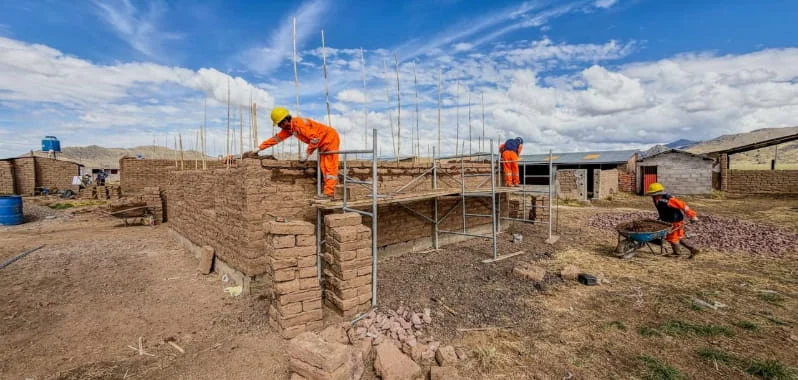
The Wasiymi housing model is not merely a shelter; it is a thermal engineering achievement tailored to the harsh realities of the Peruvian highlands. Each unit spans 52 square meters and is constructed utilizing reinforced adobe, a traditional material modernized for current structural safety standards.
Architectural Features and Thermal Efficiency
The core challenge in the Puno region is the dramatic fluctuation in temperature, which can drop to sub-zero levels during the winter months. To combat this, the Wasiymi design incorporates several critical features:
- Thermal Insulation: The walls are constructed from 40-centimeter-thick adobe, which serves as a natural heat sink, absorbing solar radiation during the day and releasing it slowly throughout the night.
- Structural Integrity: To ensure safety in a region prone to seismic activity, the adobe is reinforced with split bamboo (caña de bambú chancada). This hybrid construction method provides both flexibility and resilience.
- The "Tapón" Entryway: Each home includes a buffer zone or airlock entrance. This area serves as a physical barrier that prevents the direct ingress of icy winds, maintaining a stable internal temperature in the living quarters.
- Spatial Configuration: Beyond the entry buffer, the homes are divided into a functional kitchen-dining area, a multi-purpose room for family activities, and two dedicated bedrooms, ensuring privacy and hygiene.
Chronology of the Project
The realization of the Llalli housing project is the result of a multi-stage process involving local government coordination, site assessment, and logistical execution.

- Initial Planning and Assessment (2025): The MVCS, in conjunction with the Program for Rural Housing (PNVR), identified the most critical pockets of poverty and climate risk within the Melgar province.
- Procurement and Site Selection (Early 2026): Nine rural population centers were selected: Checasica Alto, Hayllani, Huanacuyo, Icantaña, Kahuasiri Alto, Sucre, Tablaccacca, Ticarjani, and Tocra.
- Groundbreaking and Material Procurement (Mid-2026): Following the allocation of the S/5.79 million budget, construction began. The focus was on sourcing materials that are both locally available and sustainable.
- Current Status (July 2026): As of the latest update, the project is in the active construction phase, with teams working to complete the 113 units before the peak of the frost season concludes.
Supporting Data and Socio-Economic Context
The Melgar province is historically one of the regions most severely affected by the "friaje" (cold waves) that strike the southern Andes. For decades, traditional housing in these remote areas lacked the thermal properties necessary to prevent respiratory illnesses, which remain a leading cause of morbidity among rural children and the elderly.
The Impact of Investment
By investing over S/5.79 million into these 113 households, the government is effectively spending approximately S/51,238 per unit. While this may appear as a significant expenditure, the cost-benefit analysis favors the project when considering the reduction in public health expenses. Fewer hospitalizations for cold-related ailments and a lower mortality rate among the vulnerable population represent substantial long-term savings for the national healthcare system.
Furthermore, the focus on local construction materials creates a micro-economy within the province. By utilizing adobe and bamboo—materials that are often sourced from or near the region—the program stimulates local labor and promotes traditional construction techniques that are environmentally friendly.
Official Perspectives: The Government’s Commitment
Minister of Housing, Construction, and Sanitation, Wilder Sifuentes Quilcate, has emphasized that the Wasiymi program is the cornerstone of the administration’s rural policy.
"These 113 Wasiymi units are more than bricks and mortar; they are symbols of state presence in areas that have been ignored for too long," Sifuentes stated during a recent briefing. "Our priority is to provide a home that acts as a shield. When a family is protected from the cold, they are better positioned to work, learn, and contribute to their community. We are closing the gap between urban development and rural necessity."

The ministry maintains that this is not a one-off intervention. The current success in Llalli is intended to serve as a blueprint for subsequent phases in other high-altitude provinces across Arequipa, Cusco, and Moquegua, where similar environmental conditions persist.
Implications for Rural Development
The implementation of the Wasiymi model holds broader implications for the Peruvian government’s national development strategy.
1. Climate Change Adaptation
As climate change continues to make weather patterns more erratic, the importance of "climate-proof" infrastructure becomes paramount. The Wasiymi project demonstrates that the state can adopt proactive adaptation strategies rather than reactive emergency relief.
2. Social Inclusion
The focus on rural population centers—often overlooked due to their distance from major urban centers—is a vital step in addressing social inequality. By bringing modern housing standards to the residents of remote areas like Ticarjani and Tocra, the state is validating the rights of rural citizens to decent living conditions.
3. Seismic Safety as a Baseline
Peru is a country of high seismic risk. The integration of seismic reinforcement into the Wasiymi model ensures that these homes do not just protect against the cold, but also against natural disasters, effectively future-proofing the rural housing stock.

Conclusion: A Future-Forward Approach
The construction of 113 bioclimatic and sismorresistentes homes in the district of Llalli represents a significant milestone for the MVCS. By merging traditional Andean construction techniques with modern engineering, the government is creating a sustainable pathway toward improving rural welfare.
As the project approaches completion, the focus will likely shift toward post-occupancy monitoring to evaluate the real-world thermal performance of the homes. If the project continues to meet its objectives, it will solidify the Wasiymi model as the standard for rural social housing in Peru. For the 400-plus residents of these nine rural centers, the upcoming seasons will no longer be defined by the fear of the frost, but by the security of a warm, safe, and durable home.
This initiative underscores the necessity of state intervention in the most isolated regions of the country, proving that with adequate funding, technical expertise, and a commitment to the most vulnerable, the cycle of poverty and environmental vulnerability can indeed be broken.